QQ:3002763590


客服电话:021-61998208
我们是专业的科研试剂供应服务商
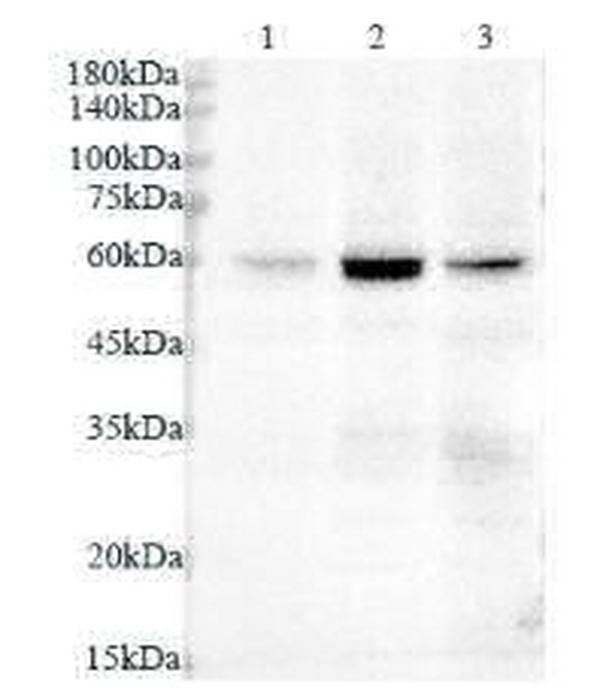
Anti OTUB2 polyclonal antibody
Anti OTUB2 polyclonal antibodyThis gene encodes one of several deubiquitylating enzymes. Ubiquitin modification of proteins is needed for their stability and function,to reverse the process, deubiquityling enzymes remove ubiquitin. This protein contains an OTU domain and binds Ubal (ubiquitin aldehyde),an active cysteine protease site is present in the OTU domain.

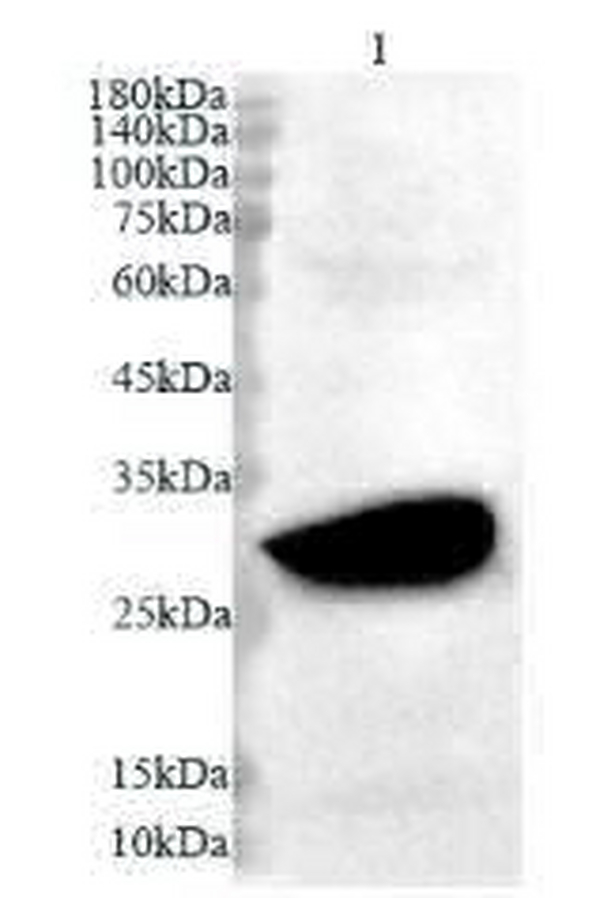
Anti TRAF6 polyclonal antibody
Anti TRAF6 polyclonal antibodyTRAF6 is a member of the TNF receptor associated factor (TRAF) protein family. TRAF6 is recognized as a signal transducer, which activates the NF-κB pathway in response to pro-inflammatory cytokines. TRAF6 has E3 ligase activity and is responsible for inducing Lys-63 (K63)-linked poly-ubiquitination chains, functioning together with E2 Ubc13/Uev1A complex to mediate IKK activation TRAF6 plays a crucial role in the regulation of the innate and adaptive immune responses.
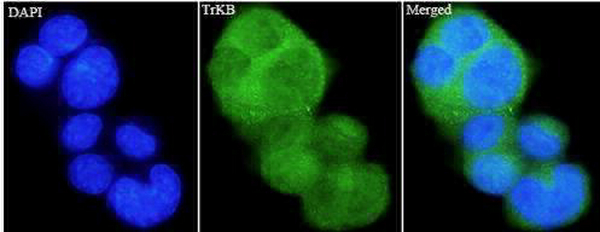
Anti TrKB polyclonal antibody
Anti TrKB polyclonal antibodyThe Trk family of nerve growth factor receptors includes Trk A(also referfed to as Trk A gp140),Trk B and Trk C. The prototype member of this gene family, Trk A, encodes a 140 kDa cell surface receptor, gp140, the expression of which is restricted in vivo to neurons of the sensory spinal and cranial gangliaof neurocrest origin. Nerve growth factor (NGF) stimulates tyrosine phosphorylation of Trk gp 140 in neural cell lines and in embryonic dorsal root ganglia. By comparison, BDNF and to a lesser extent, NT-3, but not NGF, can induce tyrosine phophorylayion of Trk B gp 145. The third member of the Trk receptor family, Trk C incodes a 140 kDa protein, Trk C gp140, that is preferentially expressed in brain tissue and primarily functions as a receptor for NT-3.An additional component of the Trk receptor complex, NGFR p175, binds to neurotrophic factors with low affinity but is required for efficient signaling. NGFR p175 accelerates Trk activation and may recrui
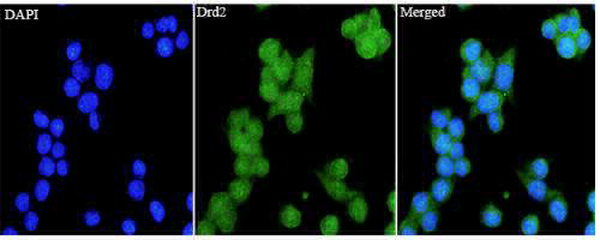
Anti Drd2 polyclonal antibody
Anti Drd2 polyclonal antibodyDRD2, also named as D2DR and D2R, belongs to the G-protein coupled receptor 1 family. It is one of the five types (D1 to D5) of receptors for dopamine. The activity of DRD2 is mediated by G proteins which inhibit adenylyl cyclase. Defects in DRD2 are associated with dystonia type 11 (DYT11). The antibody is specific to DRD2.
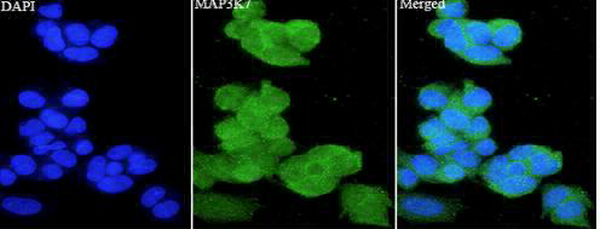
Anti MAP3K7 polyclonal antibody
Anti MAP3K7 polyclonal antibodyMAP3K7(Mitogen-activated protein kinase kinase kinase 7) is also named as TAK1 and belongs to the MAP kinase kinase kinase subfamily.It plays an important role in the cascades of cellular responses evoked by changes in the environment.It has been linked to interleukin-1 receptor and tumor necrosis factor receptor signaling (PMID: 16186825).It has 4 isoforms (53-55 kDa,64-70 kDa and 75-80 kDa)produced by alternative splicing.
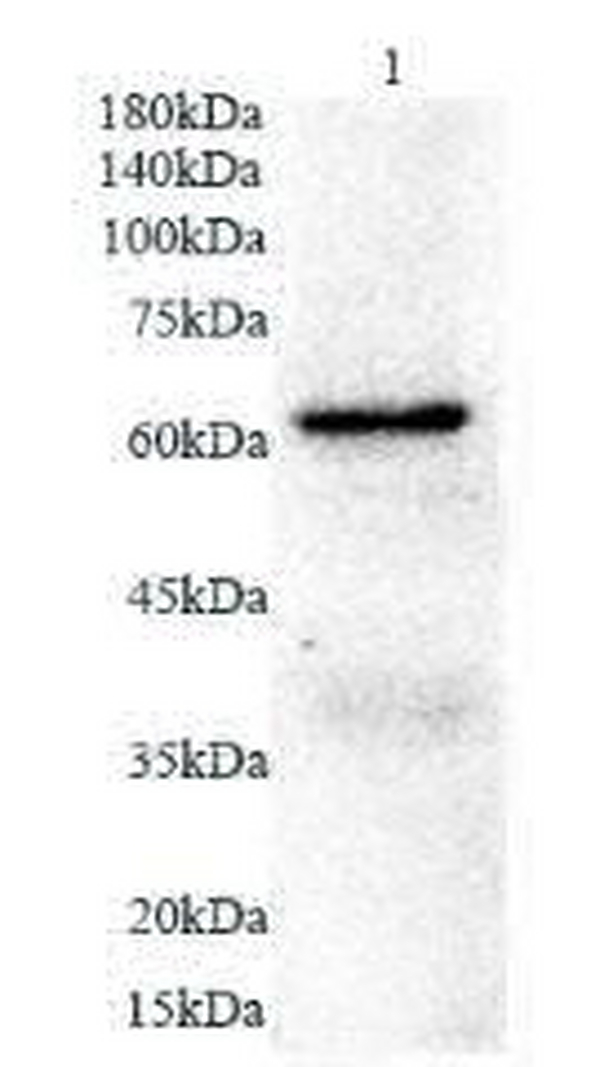
Anti GAD65 polyclonal antibody
Anti GAD65 polyclonal antibodyGAD2, also named as GAD65, belongs to the group II decarboxylase family. GAD2 catalyzes the production of GABA. It is responsible for the synthesis of the essential neurotransmitter gamma-aminobutyric acid (GABA) from L-glutamic acid. GAD2 is expressed in nervous and endocrine systems and are thought to be involved in synaptic transmission and insulin secretion. Autoantibodies against GAD2 may serve as markers for type I diabetes. Many individuals suffering from an adult onset disorder known as Stiff Person Syndrome (SPS) also express autoantibodies to GAD2. The antibody is specific to GAD2.
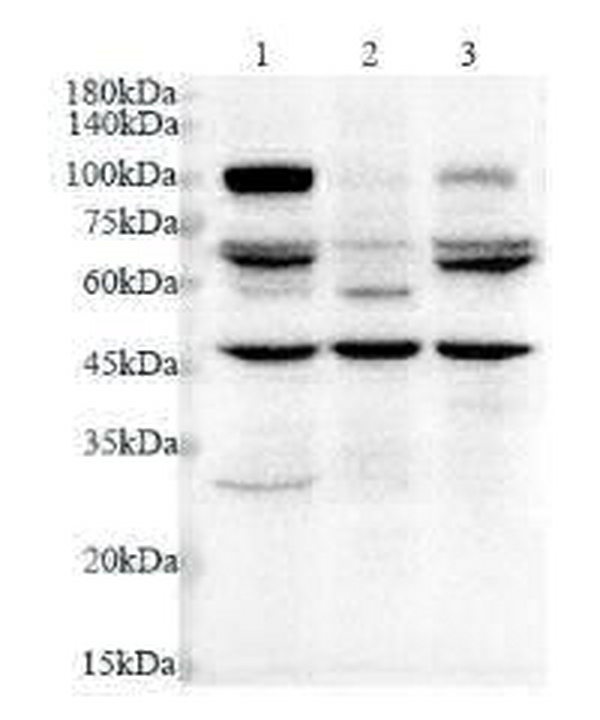
Anti HDAC10 polyclonal antibody
Anti HDAC10 polyclonal antibodyThe enzymes responsible for the reversible acetylation/ deacetylation process of histones are histone acetyltransferases (HATs) and histone deacetylases (HDACs), respectively. HATs act as transcriptional coactivators and HDACs are part of transcriptional corepressor complexes. Mammalian HDACs can be divided into three classes according to sequence homology. Class I consists of the yeast Rpd3 like proteins HDAC1, HDAC2, HDAC3, and HDAC8. Class II consists of the yeast Hda1 like proteins HDAC10, HDAC5, HDAC6, HDAC7, HDAC9, and HDAC10. Class III comprises the yeast Sir2 like proteins. Whereas class I HDACs are ubiquitously expressed, most class II HDACs are tissue specific. HDAC10 is similar to HDAC6, both containing a unique putative second catalytic domain not found in other HDACs. However, this domain is not functional in HDAC10. The deacetylase activity of class II HDACs is regulated by subcellular localization. HDAC10 was localized to both the nucleus a
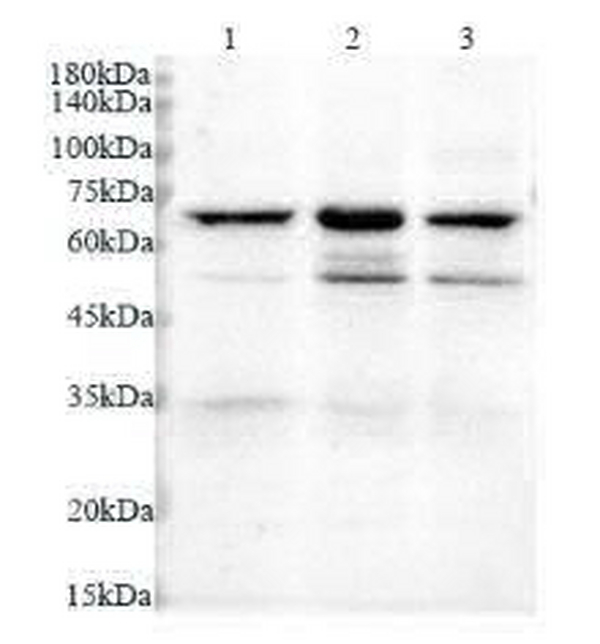
Anti GLUT4 polyclonal antibody
Anti GLUT4 polyclonal antibodyGLUT4 is a member of GLUT family of transmembrane hexose transporters. It is an insulin receptor that mediates insulin-stimulated glucose transport in fat and muscle where it is predominantly expressed. In response to insulin stimulation, GLUT4 experienced translocation from trans-Golgi network to plasma membrane. The impairment of GLUT4 translocation is associated with diabetes.
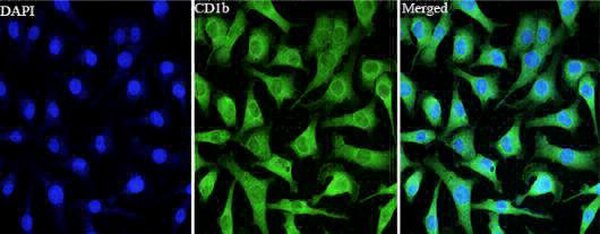
Anti CD1b polyclonal antibody
Anti CD1b polyclonal antibodyThis gene encodes a member of the CD1 family of transmembrane glycoproteins, which are structurally related to the major histocompatibility complex (MHC) proteins and form heterodimers with beta-2-microglobulin. The CD1 proteins mediate the presentation of primarily lipid and glycolipid antigens of self or microbial origin to T cells. The human genome contains five CD1 family genes organized in a cluster on chromosome 1. The CD1 family members are thought to differ in their cellular localization and specificity for particular lipid ligands. The protein encoded by this gene localizes to late endosomes and lysosomes via a tyrosine-based motif in the cytoplasmic tail, and requires vesicular acidification to bind lipid antigens.
最新动态
-
Anti-GNGT1 KL20092-001(50ul)
2021-10-11 -
Anti-GNGT1 antibody(50ul) KL20093-001
2021-10-11 -

骨组织快速脱钙液Ⅰ
2021-09-07 -
外泌体(exosomes)染色试剂盒
2021-09-07 -
外泌体(exosomes)吸附抑制剂
2021-09-07
热门标签
- Histone H3 rabbit Polyclonal Antibody Histone H3抗体
- EGFR rabbit Polyclonal Antibody EGFR抗体
- Cy3 Conjugated
- AbFluor™ 555 Conjugated
- AbFluor™ 680 Conjugated
- AbFluor™ 350 Conjugated
- AbFluor™ 647 Conjugated
- AbFluor™ 594 Conjugated
- AbFluor™ 405 Conjugated
- Cy5 Conjugated
- AbFluor™ 488 Conjugated
- Cyclophilin B抗体 Cyclophilin B Monoclonal Antibody(2B10)
- COX IV抗体 COX IV Monoclonal Antibody(6C8)
- PCNA抗体 PCNA Monoclonal Antibody(12D10)
- FAK rabbit Polyclonal Antibody FAK抗体
邮箱:3002763590@qq.com
电话:021-61998208

扫码关注微信公众号