QQ:3002763590


客服电话:021-61998208
我们是专业的科研试剂供应服务商
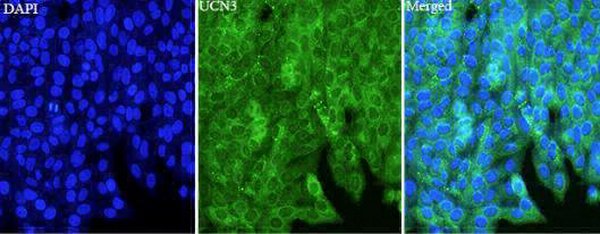
Anti UCN3 polyclonal antibody
Anti UCN3 polyclonal antibodyUrocortin 3 is a member of the sauvagine/corticotropin-releasing factor/urotensin I family. It is structurally related to the corticotropin-releasing factor (CRF) gene and the encoded product is an endogenous ligand for CRF type 2 receptors. In the brain it may be responsible for the effects of stress on appetite. In spite of the gene family name similarity, the product of this gene has no sequence similarity to urotensin II.
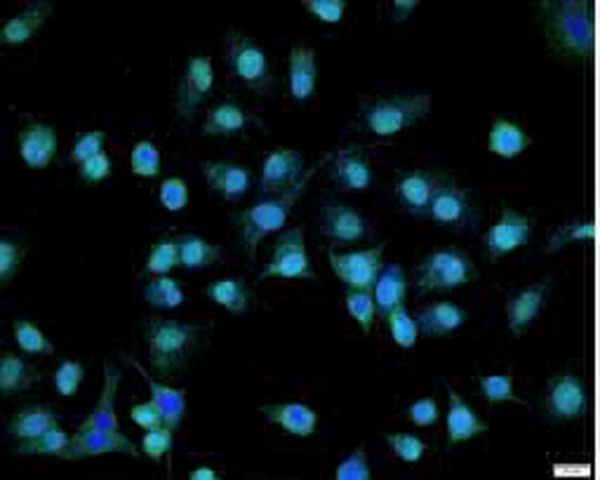
Anti NSE polyclonal antibody
Anti NSE polyclonal antibodyNSE, also named as ENO2, belongs to the enolase family. Enolases are cytoplasmic glycolytic enzymes that may be involved in differentiation. The enolase has three isoenzymes, alpha, beta and gamma. The alpha form is expressed in most tissues, whereas the beta form is expressed in muscle tissue. The gamma enolase (ENO2), a homodimer, is primarily localized in neurons and neuroendocrine cells and is a cancer diagnostic marker for brain tumors (PMID:7520111). ENO2 plays a role in the glycolysis-related energy pathway and might be involved in higher metabolic activity during the day than at night, at least in part.
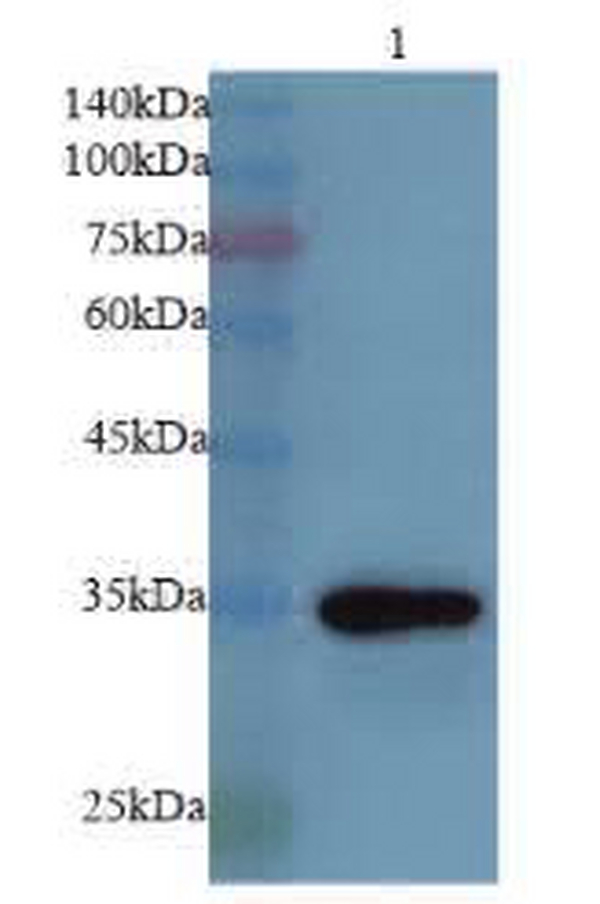
Anti CDK2 polyclonal antibody
Anti CDK2 polyclonal antibodyCDK2(Cyclin-dependent kinase 2) is also named as CDKN2 and belongs to the protein kinase superfamily,CMGC Ser/Thr protein kinase family, CDC2/CDKX subfamily.It is involved in the control of the cell cycle,essential for meiosis, but dispensable for mitosis.It has 2 isoforms produced by alternative splicing.
Anti CDK5 polyclonal antibody
Anti CDK5 polyclonal antibodyCyclin-dependent kinase 5 (CDK5), belongs to the cyclin-dependent kinase family, is a proline-directed serine/threonine-protein kinase that essential for neuronal cell cycle arrest and differentiation and may be involved in apoptotic cell death in neuronal diseases by triggering abortive cell cycle re-entry. CDK5 predominantly expressed in neurons where it phosphorylates both high molecular weight neurofilaments and microtubule-associated protein tau.
Anti CDKN1A polyclonal antibody
Anti CDKN1A polyclonal antibodyCDKN1A (p21, CIP1, WAF1) is a cyclin-dependent kinase inhibitor. CDKN1A binds to and inhibits the activity of cyclin-CDK2 or -CDK4 complexes, and thus functions as a regulator of cell cycle progression at the G1 phase. The expression of CDKN1A is induced by wild-type but not mutant p53 protein, through which CDKN1A mediates the p53-dependent cell cycle G1 phase arrest in response to a variety of stress stimuli. CDKN1A can interact with proliferating cell nuclear antigen (PCNA), and plays a regulatory role in S phase DNA replication and DNA damage repair. CDKN1A was reported to be specifically cleaved by CASP3-like caspases, which thus leads to a dramatic activation of CDK2, and may be instrumental in the execution of apoptosis following caspase activation. Two alternatively spliced variants, which encode an identical protein, have been reported.
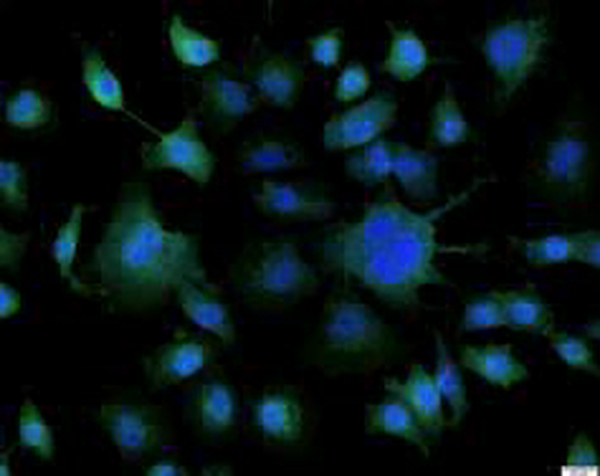
Anti DAO polyclonal antibody
Anti DAO polyclonal antibodyD-amino acid oxidase (DAO),with MW of 39 kDa, is a flavoprotein which uses flavin adenine dinucleotide as its prosthetic group. Its substrates include a wide variety of D-amino acids, but it is inactive on the naturally occurring L-amino acids. DAO may play a role in the pathophysiology of schizophrenia and act as a detoxifying agent which removes D-amino acids that accumulate during aging.
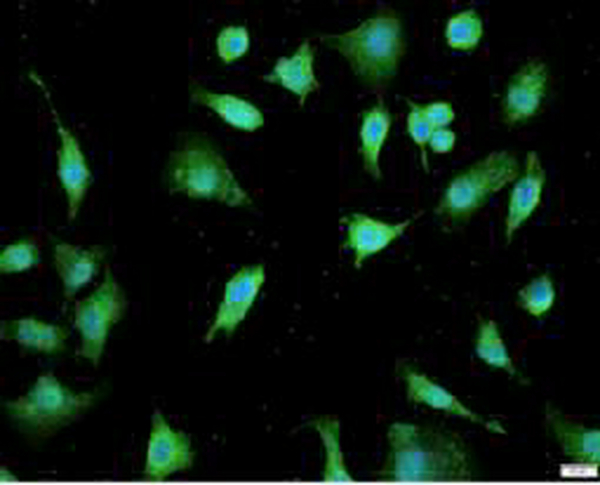
Anti DKK1 polyclonal antibody
Anti DKK1 polyclonal antibodyDKK1, also named a SK and Dickkopf-1, belongs to the dickkopf family. DKKs play an important role in vertebrate development, where they locally inhibit Wnt regulated processes such as antero-posterior axial patterning, limb development, somitogenesis and eye formation. In the adult, Dkks are implicated in bone formation and bone disease, cancer and Alzheimer disease. SDS-PAGE and Western blot analysis demonstrated that DKK1 is expressed as a 35-kD doublet protein, which is larger than the deduced molecular mass of 26 kD. Sometime DKK1 is expressed as a 42- to 50-kD secreted protein, with little change observed after glycanase treatment.
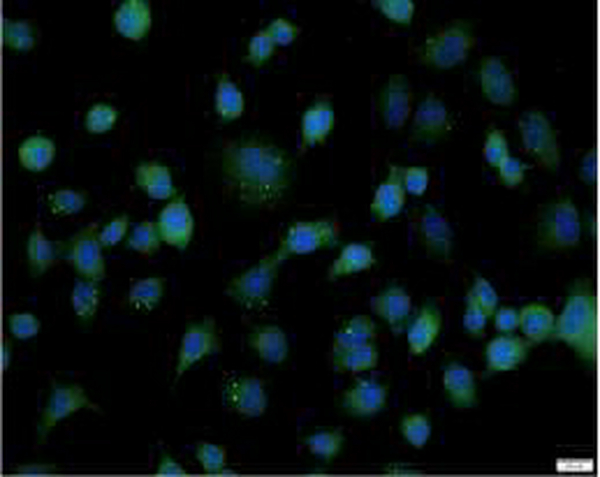
Anti DKK2 polyclonal antibody
Anti DKK2 polyclonal antibodyhe Wnt genes are a group of well conserved, cysteine-rich secreted glycoproteins that are required for numerous develop-mental processes including embryogenesis, asymmetric cell division and central nervous system (CNS) patternins. Wnt association with the seven membrane spanning receptor Frizzled, activates Dishevelled, which downregulates glycogen synthase kinase (GSK) through serine phosphorylation, causing the accumulation of b-Catenin and subsequent regulation of developmentally significant Wnt target genes. The Dickkopf family of secreted inhibitors of Wnt signaling ensures proper morphological development by antagonizing different stages of the Wnt cascade. Dkk-2 (Dickkopf-2) is a 259-amino acid secreted protein that is composed of an N-terminal signal peptide and 2 conserved cysteine-rich domains, which are separated by a 50-55-amino acid linker region.
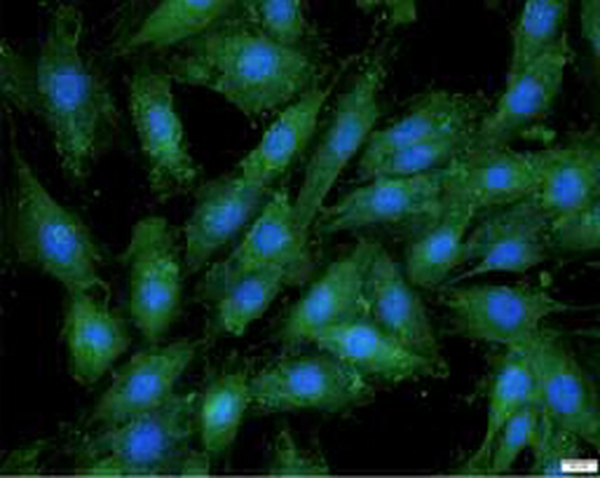
Anti EGR1 polyclonal antibody
Anti EGR1 polyclonal antibodyEGR1, also named as Early growth response protein 1, is a 543 amino acid protein, which belongs to the EGR C2H2-type zinc-finger protein family. EGR1 as a transcriptional regulator recognizes and binds to the DNA sequence 5'-GCG(T/G)GGGCG-3'(EGR-site) in the promoter region of target genes and binds double-stranded target DNA, irrespective of the cytosine methylation status. EGR1 regulates the transcription of numerous target genes, and thereby plays an important role in regulating the response to growth factors, DNA damage, and ischemia. EGR1 activates expression of p53/TP53 and TGFB1, and thereby helps prevent tumor formation and plays a role in the regulation of cell survival, proliferation and cell death. Egr1 is suggested to be a 55-kDa protein according to the translation of its coding sequence. Analysis of cytoplasmic and nuclear fractions of normal and irradiated native CNS tissue by Western blotting revealed a 110-kDa band for Egr1 localized in the
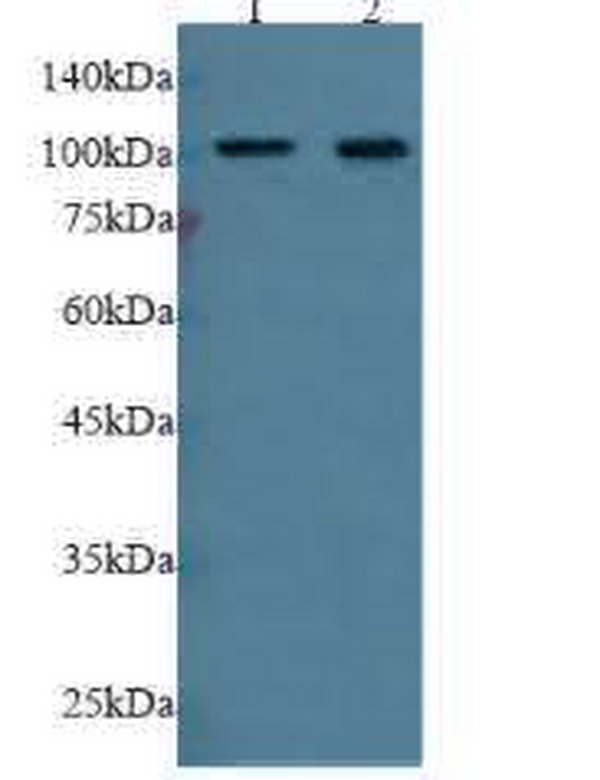
Anti ERN1 polyclonal antibody
Anti ERN1 polyclonal antibodyThe accumulation of unfolded proteins within the endoplasmic recticulum (ER) of yeast and mammalian cells activates the unfolded protein response (UPR) pathway and leads to the transcription of ER-specific genes involved in protein folding. The activation of the UPR requires the ER transmembrane kinase IRE1p (for inositol-requiring and ER-to-nucleus signaling protein). IRE1α and IRE1β are two mammalian homologs of the yeast IRE1p. These related proteins localize to the ER lumen and contain both a short transmembrane domain that spans the ER membrane and a cytosolic Ser/Thr kinase domain. IRE1 activation involves the oligomerization and trans-phosphorylation of the cytosolic portion of the proteins, which then potentiates its intrinsic kinase activity and, in turn, stimulates transcription of UPR-targeted genes. In response to stress, sensors for the ER mammalian cells activate IRE1α and IRE1β, which then results in the phosphorylation of JNK (Jun N-Terminal
最新动态
-
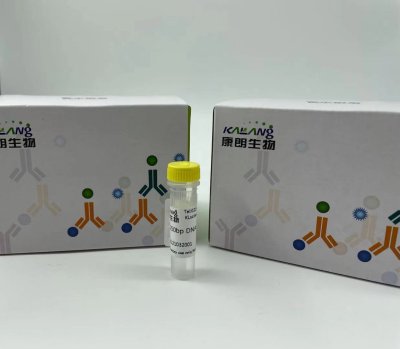
Anti-GNGT1 KL20092-001(50ul)
2021-10-11 -
Anti-GNGT1 antibody(50ul) KL20093-001
2021-10-11 -

骨组织快速脱钙液Ⅰ
2021-09-07 -
外泌体(exosomes)染色试剂盒
2021-09-07 -
外泌体(exosomes)吸附抑制剂
2021-09-07
热门标签
- Histone H3 rabbit Polyclonal Antibody Histone H3抗体
- EGFR rabbit Polyclonal Antibody EGFR抗体
- Cy3 Conjugated
- AbFluor™ 555 Conjugated
- AbFluor™ 680 Conjugated
- AbFluor™ 350 Conjugated
- AbFluor™ 647 Conjugated
- AbFluor™ 594 Conjugated
- AbFluor™ 405 Conjugated
- Cy5 Conjugated
- AbFluor™ 488 Conjugated
- Cyclophilin B抗体 Cyclophilin B Monoclonal Antibody(2B10)
- COX IV抗体 COX IV Monoclonal Antibody(6C8)
- PCNA抗体 PCNA Monoclonal Antibody(12D10)
- FAK rabbit Polyclonal Antibody FAK抗体
邮箱:3002763590@qq.com
电话:021-61998208

扫码关注微信公众号