QQ:3002763590


客服电话:021-61998208
我们是专业的科研试剂供应服务商
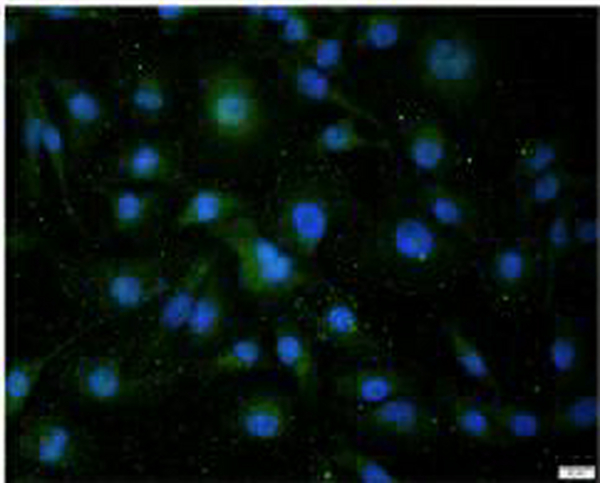
Anti REG1b polyclonal antibody
Anti REG1b polyclonal antibodyReg protein is stimulated during the regeneration of pancreatic islets. In human, there are four REG family genes,REG 1 alpha, REG 1 beta, REG-related sequence (RS) and HIP/PAP. These Reg-related proteins are classified into four subfamilies according to their amino-acid sequences, but they share a similar structure and physiological function.
Anti Ki67 polyclonal antibody
Anti Ki67 polyclonal antibodyThe Ki-67 protein (also known as MKI67) is a cellular marker for proliferation. Ki67 is present during all active phases of the cell cycle (G1, S, G2 and M), but is absent in resting cells (G0). Cellular content of Ki-67 protein markedly increases during cell progression through S phase of the cell cycle. Therefore, the nuclear expression of Ki67 can be evaluated to assess tumor proliferation by immunohistochemistry. It has been demonstrated to be of prognostic value in breast cancer. In head and neck cancer, several studies have reported an association between high proliferative activity and poorer prognosis.
Anti CD71 polyclonal antibody
Anti CD71 polyclonal antibodyCD71, also known as transferrin receptor protein 1 (TfR1), is a transmembrane glycoprotein composed of two disulfide-linked monomers, each of 90 kDa molecular weight. Each monomer binds one holo-transferrin molecule creating an iron-Tf-TfR complex which enters the cell by endocytosis. CD71 is present on actively proliferating cells and is essential for iron transport into proliferating cells.
icon Anti CX43 polyclonal antibody
Anti CX43 polyclonal antibodyConnexin-43 (Cx43, also known as gap junction alpha-1), a member of connexin family, plays essential roles in gap junction communication that facilitates direct communication among adjacent cells (PMID: 12270943). Usually, six connexin proteins oligomerize into a hemi-channel or connexon during intercellular channel formation (PMID: 12270943). Mutations of Cx43 may cause a series of diseases such as oculodentodigital dysplasia (ODDD), syndactyly 3 (SDTY3), hypoplastic left heart syndrome 1 (HLHS1) and so on (PMID: 18161618, 1472936, 1147490).
Anti FBP1 polyclonal antibody
Anti FBP1 polyclonal antibodyFBP1(Fructose-1,6-bisphosphatase 1) is also named as FBP and belongs to the FBPase class 1 family. It catalyzes the hydrolysis of fructose-1,6 bisphosphate to fructose-6-phosphate and inorganic phosphate. This reaction is an important regulatory site of gluconeogenesis. Defects in FBP1 are the cause of fructose-1,6-bisphosphatase deficiency (FBPD)(PMID:12126934).
Anti NRP1 polyclonal antibody
Anti NRP1 polyclonal antibodyNeuropilin-1 (NRP1) is a a 130–140 kDa transmembrane glycoprotein expressed by endothelial, dendritic, and regulatory T cells, as well as several other normal cell types and malignant tumor cells. NRP1 was first identified as a semaphorin (SEMA) receptor, involved in axonal guidance in embryonic development. NRP1 was also shown to act as a receptor for vascular endothelial growth factor (VEGF) and a promoter of angiogenesis through its interaction with VEGF-A165 (and other VEGFs) and the receptor tyrosine kinase (RTK) VEGF-R2. NRP1 plays versatile roles in angiogenesis, axon guidance, cell survival, migration, and invasion.
Anti MAPK13 polyclonal antibody
Anti MAPK13 polyclonal antibodyMAPK13(Mitogen-activated protein kinase 13) is also named as PRKM13, SAPK4 and belongs to the protein kinase superfamily. MAPK13 is one of the four p38 MAPKs which play an important role in the cascades of cellular responses evoked by extracellular stimuli such as proinflammatory cytokines or physical stress leading to direct activation of transcription factors such as ELK1 and ATF2.
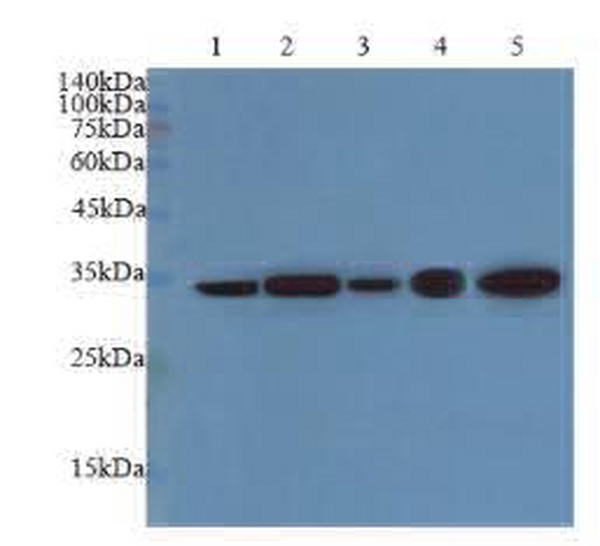
Anti ANXA2 polyclonal antibody
Anti ANXA2 polyclonal antibodyAnnexin A2 (ANXA2), also named Annexin-2 or Lipocortin II, is a Ca2+ binding protein that is up-regulated in virally transformed cell lines and human tumors. This calcium-regulated membrane-binding protein, whose affinity for calcium is greatly enhanced by anionic phospholipids, may cross-link plasma membrane phospholipids with actin and the cytoskeleton and be involved with exocytosis. Heat-stress response may also involve Annexin-2.
最新动态
-
Anti-GNGT1 KL20092-001(50ul)
2021-10-11 -
Anti-GNGT1 antibody(50ul) KL20093-001
2021-10-11 -

骨组织快速脱钙液Ⅰ
2021-09-07 -
外泌体(exosomes)染色试剂盒
2021-09-07 -
外泌体(exosomes)吸附抑制剂
2021-09-07
热门标签
- Histone H3 rabbit Polyclonal Antibody Histone H3抗体
- EGFR rabbit Polyclonal Antibody EGFR抗体
- Cy3 Conjugated
- AbFluor™ 555 Conjugated
- AbFluor™ 680 Conjugated
- AbFluor™ 350 Conjugated
- AbFluor™ 647 Conjugated
- AbFluor™ 594 Conjugated
- AbFluor™ 405 Conjugated
- Cy5 Conjugated
- AbFluor™ 488 Conjugated
- Cyclophilin B抗体 Cyclophilin B Monoclonal Antibody(2B10)
- COX IV抗体 COX IV Monoclonal Antibody(6C8)
- PCNA抗体 PCNA Monoclonal Antibody(12D10)
- FAK rabbit Polyclonal Antibody FAK抗体
邮箱:3002763590@qq.com
电话:021-61998208

扫码关注微信公众号