QQ:3002763590


客服电话:021-61998208
我们是专业的科研试剂供应服务商
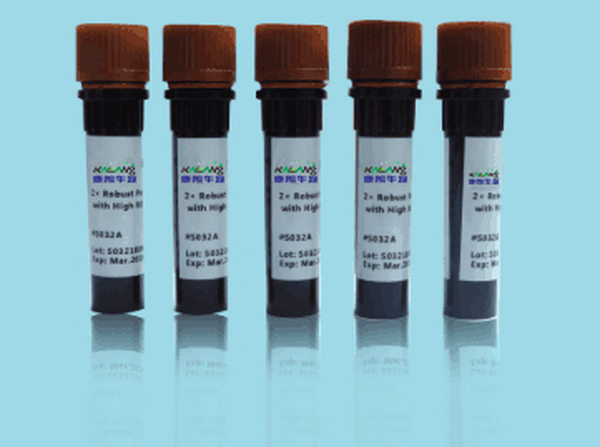
HS12B rabbit Polyclonal Antibody
HS12B抗体应用:WB 1:500-2000 ELISA 1:5000-20000heat shock protein family A (Hsp70) member 12B(HSPA12B) Homo sapiens The protein encoded by this gene contains an atypical heat shock protein 70 (Hsp70) ATPase domain and is therefore a distant member of the mammalian Hsp70 family. This gene may be involved in susceptibility to atherosclerosis. Alternative splicing results in multiple transcript variants encoding different isoforms. [provided by RefSeq, Dec 2015],
HS74L rabbit Polyclonal Antibody
HS74L抗体应用:WB 1:500-2000 ELISA 1:5000-20000heat shock protein family A (Hsp70) member 4 like(HSPA4L) Homo sapiens The protein encoded by this gene is heat shock inducible and may act as a chaperone. The encoded protein can protect the heat-shocked cell against the harmful effects of aggregated proteins. This gene is highly expressed in leukemia cells and may be a good target for therapeutic intervention. Several transcripts encoding different isoforms have been found for this gene. [provided by RefSeq, Dec 2015],
HS90A rabbit Polyclonal Antibody
HS90A抗体应用:WB 1:500-2000 ELISA 1:5000-20000heat shock protein 90 alpha family class A member 1(HSP90AA1) Homo sapiens The protein encoded by this gene is an inducible molecular chaperone that functions as a homodimer. The encoded protein aids in the proper folding of specific target proteins by use of an ATPase activity that is modulated by co-chaperones. Two transcript variants encoding different isoforms have been found for this gene. [provided by RefSeq, Jan 2012],
HSF4 rabbit Polyclonal Antibody
HSF4抗体应用:WB 1:500-2000 ELISA 1:5000-20000heat shock transcription factor 4(HSF4) Homo sapiens Heat-shock transcription factors (HSFs) activate heat-shock response genes under conditions of heat or other stresses. HSF4 lacks the carboxyl-terminal hydrophobic repeat which is shared among all vertebrate HSFs and has been suggested to be involved in the negative regulation of DNA binding activity. Two alternatively spliced transcripts encoding distinct isoforms and possessing different transcriptional activity have been described. [provided by RefSeq, Jul 2008],
HSH2D rabbit Polyclonal Antibody
HSH2D抗体应用:WB 1:500-2000T-cell activation requires 2 signals: recognition of antigen by the T-cell receptor (see TCR; MIM 186880) and a costimulatory signal provided primarily by CD28 (MIM 186760) in naive T cells. HSH2 is a target of both of these signaling pathways (Greene et al., 2003 [PubMed 12960172]).[supplied by OMIM, Mar 2008],
HESX1 rabbit Polyclonal Antibody
HESX1抗体应用:WB 1:500-2000 ELISA 1:5000-20000HESX homeobox 1(HESX1) Homo sapiens This gene encodes a conserved homeobox protein that is a transcriptional repressor in the developing forebrain and pituitary gland. Mutations in this gene are associated with septooptic dysplasia, HESX1-related growth hormone deficiency, and combined pituitary hormone deficiency. [provided by RefSeq, Jul 2008],
HEXI2 rabbit Polyclonal Antibody
HEXI2抗体应用:WB 1:500-2000 ELISA 1:5000-20000hexamethylene bisacetamide inducible 2(HEXIM2) Homo sapiens This gene encodes a member of the HEXIM family of proteins. This protein is a component of the 7SK small nuclear ribonucleoprotein. This protein has been found to negatively regulate the kinase activity of the cyclin-dependent kinase P-TEFb, which phosphorylates multiple target proteins to promote transcriptional elongation. This gene is located approximately 7 kb downstream from related family member HEXIM1 on chromosome 17. Alternative splicing results in multiple transcript variants. [provided by RefSeq, Jan 2015],
最新动态
-
Anti-GNGT1 KL20092-001(50ul)
2021-10-11 -
Anti-GNGT1 antibody(50ul) KL20093-001
2021-10-11 -

骨组织快速脱钙液Ⅰ
2021-09-07 -
外泌体(exosomes)染色试剂盒
2021-09-07 -
外泌体(exosomes)吸附抑制剂
2021-09-07
热门标签
- Histone H3 rabbit Polyclonal Antibody Histone H3抗体
- EGFR rabbit Polyclonal Antibody EGFR抗体
- Cy3 Conjugated
- AbFluor™ 555 Conjugated
- AbFluor™ 680 Conjugated
- AbFluor™ 350 Conjugated
- AbFluor™ 647 Conjugated
- AbFluor™ 594 Conjugated
- AbFluor™ 405 Conjugated
- Cy5 Conjugated
- AbFluor™ 488 Conjugated
- Cyclophilin B抗体 Cyclophilin B Monoclonal Antibody(2B10)
- COX IV抗体 COX IV Monoclonal Antibody(6C8)
- PCNA抗体 PCNA Monoclonal Antibody(12D10)
- FAK rabbit Polyclonal Antibody FAK抗体
邮箱:3002763590@qq.com
电话:021-61998208

扫码关注微信公众号