QQ:3002763590


客服电话:021-61998208
我们是专业的科研试剂供应服务商
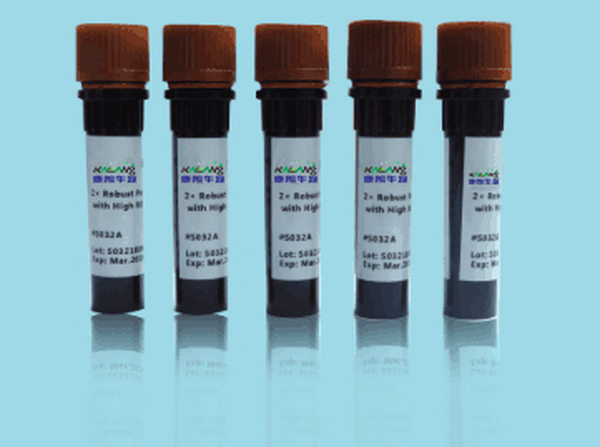
HIPK1 rabbit Polyclonal Antibody
HIPK1抗体应用:WB 1:500-2000 ELISA 1:5000-20000homeodomain interacting protein kinase 1(HIPK1) Homo sapiens The protein encoded by this gene belongs to the Ser/Thr family of protein kinases and HIPK subfamily. It phosphorylates homeodomain transcription factors and may also function as a co-repressor for homeodomain transcription factors. Alternative splicing results in four transcript variants encoding four distinct isoforms. [provided by RefSeq, Jul 2008],
HIPK1 rabbit Polyclonal Antibody
HIPK1抗体应用:WB 1:500-2000 ELISA 1:5000-20000homeodomain interacting protein kinase 1(HIPK1) Homo sapiens The protein encoded by this gene belongs to the Ser/Thr family of protein kinases and HIPK subfamily. It phosphorylates homeodomain transcription factors and may also function as a co-repressor for homeodomain transcription factors. Alternative splicing results in four transcript variants encoding four distinct isoforms. [provided by RefSeq, Jul 2008],
HIPK2 rabbit Polyclonal Antibody
HIPK2抗体应用:WB 1:500-2000 ELISA 1:5000-20000homeodomain interacting protein kinase 2(HIPK2) Homo sapiens This gene encodes a conserved serine/threonine kinase that is a member of the homeodomain-interacting protein kinase family. The encoded protein interacts with homeodomain transcription factors and many other transcription factors such as p53, and can function as both a corepressor and a coactivator depending on the transcription factor and its subcellular localization. Multiple transcript variants encoding different isoforms have been found for this gene. [provided by RefSeq, Nov 2011],
HIPK3 rabbit Polyclonal Antibody
HIPK3抗体应用:WB 1:500-2000 ELISA 1:5000-20000catalytic activity:ATP + a protein = ADP + a phosphoprotein.,function:Seems to negatively regulate apoptosis by promoting FADD phosphorylation. Enhances androgen receptor-mediated transcription. May act as a transcriptional corepressor for NK homeodomain transcription factors.,PTM:Autophosphorylated, but autophosphorylation is not required for catalytic activity.,PTM:May be sumoylated.,similarity:Belongs to the protein kinase superfamily. CMGC Ser/Thr protein kinase family. HIPK subfamily.,similarity:Contains 1 protein kinase domain.,subunit:Interacts with Nkx1-2. Interacts with FAS and DAXX. Probably part of a complex consisting of HIPK3, FAS and FADD. Interacts with and stabilizes ligand-bound androgen receptor (AR) (By similarity). Interacts with UBL1/SUMO-1.,tissue specificity:Overexpressed in multidrug resistant cells. Highly expressed in heart and skeletal muscle, and at lower levels in placenta, pancreas, brain, spleen, prostate, thymus,
HJURP rabbit Polyclonal Antibody
HJURP抗体应用:WB 1:500-2000 ELISA 1:5000-20000function:Centromeric protein that plays a central role in the incorporation and maintenance of histone H3-like variant CENPA at centromeres. Acts as a specific chaperone for CENPA and is required for the incorporation of newly synthesized CENPA molecules into nucleosomes at replicated centromeres. Directly binds Holliday junctions.,sequence caution:Translated as Arg.,subcellular location:Localizes in centromeres during late telophase and early G1, when CENPA nucleosomes are assembled. Localizes to nucleolus during S phase, nucleolus site being often related to storage.,subunit:Interacts with CENPA (via CATD domain); the interaction is direct and specific for CENPA since it does not interact with H3.1- or H3.3-containing nucleosomes. Interacts with 14-3-3 family members in a phosphorylation-dependent manner. Interacts with MSH5 and NBN.,tissue specificity:According to PubMed:17256767 highly expressed in the thymus with lower levels in the placen
HLAE rabbit Polyclonal Antibody
HLAE抗体应用:WB 1:500-2000 ELISA 1:5000-20000major histocompatibility complex, class I, E(HLA-E) Homo sapiens HLA-E belongs to the HLA class I heavy chain paralogues. This class I molecule is a heterodimer consisting of a heavy chain and a light chain (beta-2 microglobulin). The heavy chain is anchored in the membrane. HLA-E binds a restricted subset of peptides derived from the leader peptides of other class I molecules. The heavy chain is approximately 45 kDa and its gene contains 8 exons. Exon one encodes the leader peptide, exons 2 and 3 encode the alpha1 and alpha2 domains, which both bind the peptide, exon 4 encodes the alpha3 domain, exon 5 encodes the transmembrane region, and exons 6 and 7 encode the cytoplasmic tail. [provided by RefSeq, Jul 2008],
HLAG rabbit Polyclonal Antibody
HLAG抗体应用:WB 1:500-2000 ELISA 1:5000-20000major histocompatibility complex, class I, G(HLA-G) Homo sapiens HLA-G belongs to the HLA class I heavy chain paralogues. This class I molecule is a heterodimer consisting of a heavy chain and a light chain (beta-2 microglobulin). The heavy chain is anchored in the membrane. HLA-G is expressed on fetal derived placental cells. The heavy chain is approximately 45 kDa and its gene contains 8 exons. Exon one encodes the leader peptide, exons 2 and 3 encode the alpha1 and alpha2 domain, which both bind the peptide, exon 4 encodes the alpha3 domain, exon 5 encodes the transmembrane region, and exon 6 encodes the cytoplasmic tail. [provided by RefSeq, Jul 2008],
HMCS1 rabbit Polyclonal Antibody
HMCS1抗体应用:WB 1:500-2000 ELISA 1:5000-20000catalytic activity:Acetyl-CoA + H(2)O + acetoacetyl-CoA = (S)-3-hydroxy-3-methylglutaryl-CoA + CoA.,function:This enzyme condenses acetyl-CoA with acetoacetyl-CoA to form HMG-CoA, which is the substrate for HMG-CoA reductase.,pathway:Metabolic intermediate biosynthesis; mevalonic acid biosynthesis; (R)-mevalonic acid from acetyl-CoA: step 2/3.,similarity:Belongs to the HMG-CoA synthase family.,
HME2 rabbit Polyclonal Antibody
HME2抗体应用:WB 1:500-2000Homeobox-containing genes are thought to have a role in controlling development. In Drosophila, the 'engrailed' (en) gene plays an important role during development in segmentation, where it is required for the formation of posterior compartments. Different mutations in the mouse homologs, En1 and En2, produced different developmental defects that frequently are lethal. The human engrailed homologs 1 and 2 encode homeodomain-containing proteins and have been implicated in the control of pattern formation during development of the central nervous system. [provided by RefSeq, Jul 2008],
最新动态
-
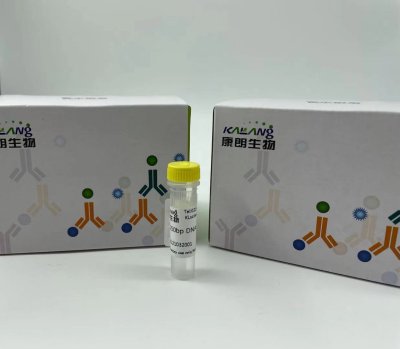
Anti-GNGT1 KL20092-001(50ul)
2021-10-11 -
Anti-GNGT1 antibody(50ul) KL20093-001
2021-10-11 -

骨组织快速脱钙液Ⅰ
2021-09-07 -
外泌体(exosomes)染色试剂盒
2021-09-07 -
外泌体(exosomes)吸附抑制剂
2021-09-07
热门标签
- Histone H3 rabbit Polyclonal Antibody Histone H3抗体
- EGFR rabbit Polyclonal Antibody EGFR抗体
- Cy3 Conjugated
- AbFluor™ 555 Conjugated
- AbFluor™ 680 Conjugated
- AbFluor™ 350 Conjugated
- AbFluor™ 647 Conjugated
- AbFluor™ 594 Conjugated
- AbFluor™ 405 Conjugated
- Cy5 Conjugated
- AbFluor™ 488 Conjugated
- Cyclophilin B抗体 Cyclophilin B Monoclonal Antibody(2B10)
- COX IV抗体 COX IV Monoclonal Antibody(6C8)
- PCNA抗体 PCNA Monoclonal Antibody(12D10)
- FAK rabbit Polyclonal Antibody FAK抗体
邮箱:3002763590@qq.com
电话:021-61998208

扫码关注微信公众号