QQ:3002763590


客服电话:021-61998208
我们是专业的科研试剂供应服务商
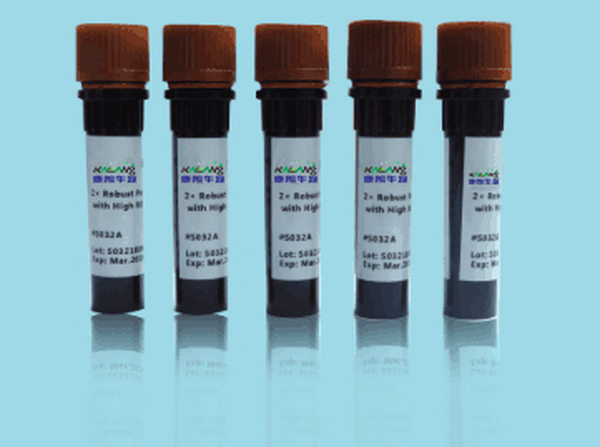
GRASP rabbit Polyclonal Antibody
GRASP抗体应用:WB 1:500-2000 ELISA 1:5000-20000general receptor for phosphoinositides 1 associated scaffold protein(GRASP) Homo sapiens This gene encodes a protein that functions as a molecular scaffold, linking receptors, including group 1 metabotropic glutamate receptors, to neuronal proteins. The encoded protein contains conserved domains, including a leucine zipper sequence, PDZ domain and a C-terminal PDZ-binding motif. Alternately spliced transcript variants have been observed for this gene.[provided by RefSeq, Dec 2012],
GRIK4 rabbit Polyclonal Antibody
GRIK4抗体应用:WB 1:500-2000This gene encodes a protein that belongs to the glutamate-gated ionic channel family. Glutamate functions as the major excitatory neurotransmitter in the central nervous system through activation of ligand-gated ion channels and G protein-coupled membrane receptors. The protein encoded by this gene forms functional heteromeric kainate-preferring ionic channels with the subunits encoded by related gene family members. Alternatively spliced transcript variants encoding different isoforms have been found for this gene. [provided by RefSeq, Sep 2013],
GRIK5 rabbit Polyclonal Antibody
GRIK5抗体应用:WB 1:500-2000 ELISA 1:5000-20000glutamate ionotropic receptor kainate type subunit 5(GRIK5) Homo sapiens This gene encodes a protein that belongs to the glutamate-gated ionic channel family. Glutamate functions as the major excitatory neurotransmitter in the central nervous system through activation of ligand-gated ion channels and G protein-coupled membrane receptors. The protein encoded by this gene forms functional heteromeric kainate-preferring ionic channels with the subunits encoded by related gene family members. Alternative splicing results in multiple transcript variants. [provided by RefSeq, Jul 2014],
GRIP2 rabbit Polyclonal Antibody
GRIP2抗体应用:WB 1:500-2000 ELISA 1:5000-20000domain:PDZ 5 mediates the C-terminal binding of GRIA2 and GRIA3. PDZ 6 mediates interaction with the PDZ recognition motif of EFNB1. PDZ 7 mediates interaction with CSPG4.,function:May play a role as a localized scaffold for the assembly of a multiprotein signaling complex and as mediator of the trafficking of its binding partners at specific subcellular location in neurons.,similarity:Belongs to the GRIP2 family.,similarity:Contains 7 PDZ (DHR) domains.,subunit:Interacts with EFNB1, EFNB3, GRIA2, GRIA3, CSPG4 and GRIPAP1. Can form homomultimers and heteromultimers with GRIP1 (By similarity). Interacts with the C-terminal tail of PRLHR.,
GRM3 rabbit Polyclonal Antibody
GRM3抗体应用:WB 1:500-2000 ELISA 1:5000-20000glutamate metabotropic receptor 3(GRM3) Homo sapiens L-glutamate is the major excitatory neurotransmitter in the central nervous system and activates both ionotropic and metabotropic glutamate receptors. Glutamatergic neurotransmission is involved in most aspects of normal brain function and can be perturbed in many neuropathologic conditions. The metabotropic glutamate receptors are a family of G protein-coupled receptors, that have been divided into 3 groups on the basis of sequence homology, putative signal transduction mechanisms, and pharmacologic properties. Group I includes GRM1 and GRM5 and these receptors have been shown to activate phospholipase C. Group II includes GRM2 and GRM3 while Group III includes GRM4, GRM6, GRM7 and GRM8. Group II and III receptors are linked to the inhibition of the cyclic AMP cascade but differ in their agonist selectivities. [provided by RefSeq, Jul 2008],
GRP3 rabbit Polyclonal Antibody
GRP3抗体应用:WB 1:500-2000 ELISA 1:5000-20000RAS guanyl releasing protein 3(RASGRP3) Homo sapiens Members of the RAS (see HRAS; MIM 190020) subfamily of GTPases function in signal transduction as GTP/GDP-regulated switches that cycle between inactive GDP- and active GTP-bound states. Guanine nucleotide exchange factors (GEFs), such as RASGRP3, serve as RAS activators by promoting acquisition of GTP to maintain the active GTP-bound state and are the key link between cell surface receptors and RAS activation (Rebhun et al., 2000 [PubMed 10934204]).[supplied by OMIM, Mar 2008],
GRPR rabbit Polyclonal Antibody
GRPR抗体应用:WB 1:500-2000 ELISA 1:5000-20000gastrin releasing peptide receptor(GRPR) Homo sapiens Gastrin-releasing peptide (GRP) regulates numerous functions of the gastrointestinal and central nervous systems, including release of gastrointestinal hormones, smooth muscle cell contraction, and epithelial cell proliferation and is a potent mitogen for neoplastic tissues. The effects of GRP are mediated through the gastrin-releasing peptide receptor. This receptor is a glycosylated, 7-transmembrane G-protein coupled receptor that activates the phospholipase C signaling pathway. The receptor is aberrantly expressed in numerous cancers such as those of the lung, colon, and prostate. An individual with autism and multiple exostoses was found to have a balanced translocation between chromosome 8 and a chromosome X breakpoint located within the gastrin-releasing peptide receptor gene. [provided by RefSeq, Jul 2008],
最新动态
-
Anti-GNGT1 KL20092-001(50ul)
2021-10-11 -
Anti-GNGT1 antibody(50ul) KL20093-001
2021-10-11 -

骨组织快速脱钙液Ⅰ
2021-09-07 -
外泌体(exosomes)染色试剂盒
2021-09-07 -
外泌体(exosomes)吸附抑制剂
2021-09-07
热门标签
- Histone H3 rabbit Polyclonal Antibody Histone H3抗体
- EGFR rabbit Polyclonal Antibody EGFR抗体
- Cy3 Conjugated
- AbFluor™ 555 Conjugated
- AbFluor™ 680 Conjugated
- AbFluor™ 350 Conjugated
- AbFluor™ 647 Conjugated
- AbFluor™ 594 Conjugated
- AbFluor™ 405 Conjugated
- Cy5 Conjugated
- AbFluor™ 488 Conjugated
- Cyclophilin B抗体 Cyclophilin B Monoclonal Antibody(2B10)
- COX IV抗体 COX IV Monoclonal Antibody(6C8)
- PCNA抗体 PCNA Monoclonal Antibody(12D10)
- FAK rabbit Polyclonal Antibody FAK抗体
邮箱:3002763590@qq.com
电话:021-61998208

扫码关注微信公众号