QQ:3002763590


客服电话:021-61998208
我们是专业的科研试剂供应服务商
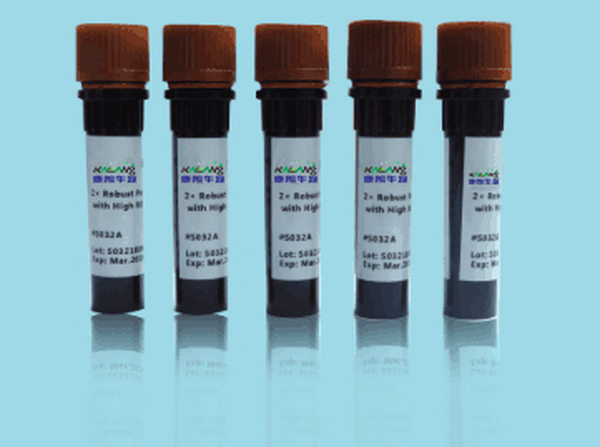
PIGU rabbit Polyclonal Antibody
PIGU抗体应用:WB 1:500-2000The protein encoded by this gene shares similarity with Saccharomyces cerevisiae Cdc91, a predicted integral membrane protein that may function in cell division control. The protein encoded by this gene is the fifth subunit of GPI transamidase that attaches GPI-anchors to proteins. [provided by RefSeq, Jul 2008],
PIGW rabbit Polyclonal Antibody
PIGW抗体应用:WB 1:500-2000 ELISA 1:5000-20000phosphatidylinositol glycan anchor biosynthesis class W(PIGW) Homo sapiens Glycosylphosphatidylinositol (GPI) is a complex glycolipid that anchors many proteins to the cell surface. PIGW acts in the third step of GPI biosynthesis and acylates the inositol ring of phosphatidylinositol (Murakami et al., 2003 [PubMed 14517336]).[supplied by OMIM, Mar 2008],
PILRB rabbit Polyclonal Antibody
PILRB抗体应用:WB 1:500-2000 ELISA 1:5000-20000paired immunoglobin-like type 2 receptor beta(PILRB) Homo sapiens The paired immunoglobin-like type 2 receptors consist of highly related activating and inhibitory receptors that are involved in the regulation of many aspects of the immune system. The paired immunoglobulin-like receptor genes are located in a tandem head-to-tail orientation on chromosome 7. This gene encodes the activating member of the receptor pair and contains a truncated cytoplasmic tail relative to its inhibitory counterpart (PILRA), that has a long cytoplasmic tail with immunoreceptor tyrosine-based inhibitory (ITIM) motifs. This gene is thought to have arisen from a duplication of the inhibitory PILRA gene and evolved to acquire its activating function. [provided by RefSeq, Jun 2013],
PINK1 rabbit Polyclonal Antibody
PINK1抗体应用:WB 1:500-2000 ELISA 1:5000-20000PTEN induced putative kinase 1(PINK1) Homo sapiens This gene encodes a serine/threonine protein kinase that localizes to mitochondria. It is thought to protect cells from stress-induced mitochondrial dysfunction. Mutations in this gene cause one form of autosomal recessive early-onset Parkinson disease. [provided by RefSeq, Jul 2008],
PIP rabbit Polyclonal Antibody
PIP抗体应用:WB 1:500-2000 ELISA 1:5000-20000induction:By prolactin and androgen; inhibited by estrogen.,similarity:Belongs to the PIP family.,subunit:Monomer. Interacts with AZGP1.,tissue specificity:Expressed in pathological conditions of the mammary gland and in several exocrine tissues, such as the lacrimal, salivary, and sweat glands.,
PITX3 rabbit Polyclonal Antibody
PITX3抗体应用:WB 1:500-2000 ELISA 1:5000-20000paired like homeodomain 3(PITX3) Homo sapiens This gene encodes a member of the RIEG/PITX homeobox family, which is in the bicoid class of homeodomain proteins. Members of this family act as transcription factors. This protein is involved in lens formation during eye development. Mutations of this gene have been associated with anterior segment mesenchymal dysgenesis and congenital cataracts. [provided by RefSeq, Jul 2008],
PJA1 rabbit Polyclonal Antibody
PJA1抗体应用:WB 1:500-2000 ELISA 1:5000-20000praja ring finger ubiquitin ligase 1(PJA1) Homo sapiens This gene encodes an enzyme that has E2-dependent E3 ubiquitin-protein ligase activity. This enzyme belongs to a class of ubiquitin ligases that include a RING finger motif, and it can interact with the E2 ubiquitin-conjugating enzyme UbcH5B. This gene is located in an area of chromosome X where several X-linked mental retardation disorders have been associated, and it has also been found as part of a contiguous gene deletion associated with craniofrontonasal syndrome, though a direct link to any disorder has yet to be demonstrated. Alternative splicing results in multiple transcript variants. [provided by RefSeq, May 2010],
PJVK rabbit Polyclonal Antibody
PJVK抗体应用:WB 1:500-2000The protein encoded by this gene is a member of the gasdermin family, a family which is found only in vertebrates. The encoded protein is required for the proper function of auditory pathway neurons. Defects in this gene are a cause of non-syndromic sensorineural deafness autosomal recessive type 59 (DFNB59). [provided by RefSeq, Dec 2008],
PK1IP rabbit Polyclonal Antibody
PK1IP抗体应用:WB 1:500-2000 ELISA 1:5000-20000function:Negatively regulates the PAK1 kinase. PAK1 is a member of the PAK kinase family, which have been shown to play a positive role in the regulation of signaling pathways involving MAPK8 and RELA. PAK1 exists as an inactive homodimer, which is activated by binding of small GTPases such as CDC42 to an N-terminal regulatory domain. PAK1IP1 also binds to the N-terminus of PAK1, and inhibits the specific activation of PAK1 by CDC42.,similarity:Contains 5 WD repeats.,subunit:Interacts with PAK1.,tissue specificity:Expressed in brain, colon, heart, kidney, liver, lung, muscle, peripheral blood leukocytes, placenta, small intestine, spleen and thymus.,
最新动态
-
Anti-GNGT1 KL20092-001(50ul)
2021-10-11 -
Anti-GNGT1 antibody(50ul) KL20093-001
2021-10-11 -

骨组织快速脱钙液Ⅰ
2021-09-07 -
外泌体(exosomes)染色试剂盒
2021-09-07 -
外泌体(exosomes)吸附抑制剂
2021-09-07
热门标签
- Histone H3 rabbit Polyclonal Antibody Histone H3抗体
- EGFR rabbit Polyclonal Antibody EGFR抗体
- Cy3 Conjugated
- AbFluor™ 555 Conjugated
- AbFluor™ 680 Conjugated
- AbFluor™ 350 Conjugated
- AbFluor™ 647 Conjugated
- AbFluor™ 594 Conjugated
- AbFluor™ 405 Conjugated
- Cy5 Conjugated
- AbFluor™ 488 Conjugated
- Cyclophilin B抗体 Cyclophilin B Monoclonal Antibody(2B10)
- COX IV抗体 COX IV Monoclonal Antibody(6C8)
- PCNA抗体 PCNA Monoclonal Antibody(12D10)
- FAK rabbit Polyclonal Antibody FAK抗体
邮箱:3002763590@qq.com
电话:021-61998208

扫码关注微信公众号