QQ:3002763590


客服电话:021-61998208
我们是专业的科研试剂供应服务商
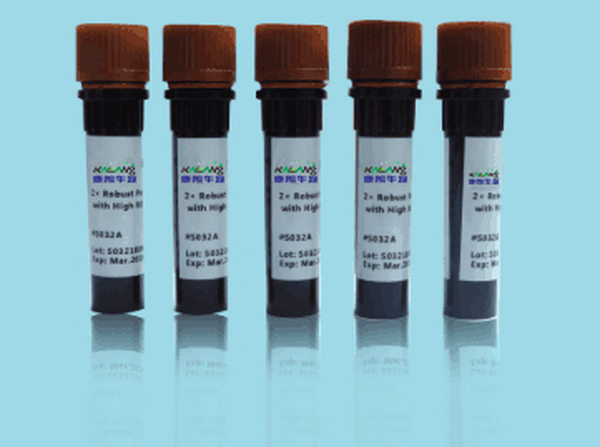
UNC5A rabbit Polyclonal Antibody
UNC5A抗体应用:WB 1:500-2000 ELISA 1:5000-20000unc-5 netrin receptor A(UNC5A) Homo sapiens UNC5A belongs to a family of netrin-1 (MIM 601614) receptors thought to mediate the chemorepulsive effect of netrin-1 on specific axons. For more information on UNC5 proteins, see UNC5C (MIM 603610).[supplied by OMIM, Apr 2004],
UNC5B rabbit Polyclonal Antibody
UNC5B抗体应用:WB 1:500-2000 ELISA 1:5000-20000unc-5 netrin receptor B(UNC5B) Homo sapiens This gene encodes a member of the netrin family of receptors. This particular protein mediates the repulsive effect of netrin-1 and is a vascular netrin receptor. This encoded protein is also in a group of proteins called dependence receptors (DpRs) which are involved in pro- and anti-apoptotic processes. Many DpRs are involved in embryogenesis and in cancer progression. Two alternatively spliced transcript variants have been described for this gene. [provided by RefSeq, Oct 2011],
UNC5C rabbit Polyclonal Antibody
UNC5C抗体应用:WB 1:500-2000 ELISA 1:5000-20000unc-5 netrin receptor C(UNC5C) Homo sapiens This gene product belongs to the UNC-5 family of netrin receptors. Netrins are secreted proteins that direct axon extension and cell migration during neural development. They are bifunctional proteins that act as attractants for some cell types and as repellents for others, and these opposite actions are thought to be mediated by two classes of receptors. The UNC-5 family of receptors mediate the repellent response to netrin; they are transmembrane proteins containing 2 immunoglobulin (Ig)-like domains and 2 type I thrombospondin motifs in the extracellular region. [provided by RefSeq, Jul 2008],
UNC5D rabbit Polyclonal Antibody
UNC5D抗体应用:WB 1:500-2000 ELISA 1:5000-20000function:Receptor for netrin. May be involved in axon guidance by mediating axon repulsion of neuronal growth cones in the developing nervous system upon ligand binding. Axon repulsion in growth cones may be caused by its association with DCC that may trigger signaling for repulsion. It also acts as a dependence receptor required for apoptosis induction when not associated with netrin ligand.,PTM:Phosphorylated on cytoplasmic tyrosine residues.,PTM:Proteolytically cleaved by caspases during apoptosis. The cleavage does not take place when the receptor is associated with netrin ligand. Its cleavage by caspases is required to induce apoptosis.,similarity:Belongs to the unc-5 family.,similarity:Contains 1 death domain.,similarity:Contains 1 Ig-like (immunoglobulin-like) domain.,similarity:Contains 1 Ig-like C2-type (immunoglobulin-like) domain.,similarity:Contains 1 ZU5 domain.,similarity:Contains 2 TSP type-1 domains.,subunit:Interacts with the c
UPK3A rabbit Polyclonal Antibody
UPK3A抗体应用:WB 1:500-2000 ELISA 1:5000-20000uroplakin 3A(UPK3A) Homo sapiens This gene encodes a member of the uroplakin family, a group of transmembrane proteins that form complexes on the apical surface of the bladder epithelium. Mutations in this gene may be associated with renal adysplasia. Alternatively spliced transcript variants have been described.[provided by RefSeq, Nov 2009],
UR2R rabbit Polyclonal Antibody
UR2R抗体应用:WB 1:500-2000 ELISA 1:5000-20000function:High affinity receptor for urotensin-2 and urotensin-2B. The activity of this receptor is mediated by a G-protein that activate a phosphatidylinositol-calcium second messenger system.,similarity:Belongs to the G-protein coupled receptor 1 family.,tissue specificity:Most abundant expression in the heart and pancreas.,
URGCP rabbit Polyclonal Antibody
URGCP抗体应用:WB 1:500-2000 URG4 is upregulated in the presence of hepatitis B virus (HBV)-encoded X antigen (HBxAg) and may contribute to the development of hepatocellular carcinoma by promoting hepatocellular growth and survival (Tufan et al., 2002 [PubMed 12082552]).[supplied by OMIM, Mar 2008],
URP2 rabbit Polyclonal Antibody
URP2抗体应用:WB 1:500-2000 ELISA 1:5000-20000fermitin family member 3(FERMT3) Homo sapiens Kindlins are a small family of proteins that mediate protein-protein interactions involved in integrin activation and thereby have a role in cell adhesion, migration, differentiation, and proliferation. The protein encoded by this gene has a key role in the regulation of hemostasis and thrombosis. This protein may also help maintain the membrane skeleton of erythrocytes. Mutations in this gene cause the autosomal recessive leukocyte adhesion deficiency syndrome-III (LAD-III). Alternative splicing results in multiple transcript variants encoding distinct isoforms. [provided by RefSeq, Jan 2010],
最新动态
-
Anti-GNGT1 KL20092-001(50ul)
2021-10-11 -
Anti-GNGT1 antibody(50ul) KL20093-001
2021-10-11 -
骨组织快速脱钙液Ⅰ
2021-09-07 -
外泌体(exosomes)染色试剂盒
2021-09-07 -
外泌体(exosomes)吸附抑制剂
2021-09-07
热门标签
- Histone H3 rabbit Polyclonal Antibody Histone H3抗体
- EGFR rabbit Polyclonal Antibody EGFR抗体
- Cy3 Conjugated
- AbFluor™ 555 Conjugated
- AbFluor™ 680 Conjugated
- AbFluor™ 350 Conjugated
- AbFluor™ 647 Conjugated
- AbFluor™ 594 Conjugated
- AbFluor™ 405 Conjugated
- Cy5 Conjugated
- AbFluor™ 488 Conjugated
- Cyclophilin B抗体 Cyclophilin B Monoclonal Antibody(2B10)
- COX IV抗体 COX IV Monoclonal Antibody(6C8)
- PCNA抗体 PCNA Monoclonal Antibody(12D10)
- FAK rabbit Polyclonal Antibody FAK抗体
邮箱:3002763590@qq.com
电话:021-61998208

扫码关注微信公众号