QQ:3002763590


客服电话:021-61998208
我们是专业的科研试剂供应服务商
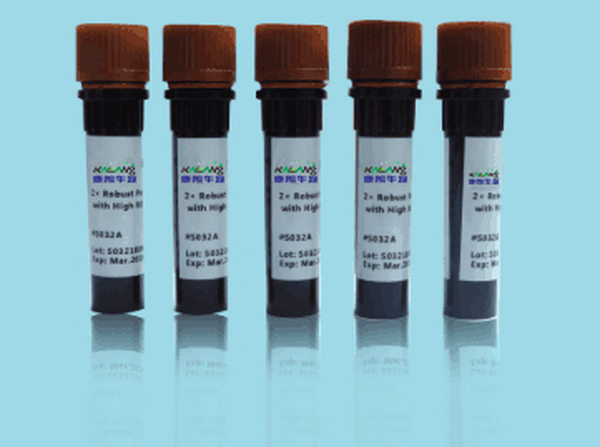
VATE2 rabbit Polyclonal Antibody
VATE2抗体应用:WB 1:500-2000 ELISA 1:5000-20000function:Subunit of the peripheral V1 complex of vacuolar ATPase essential for assembly or catalytic function. V-ATPase is responsible for acidifying a variety of intracellular compartments in eukaryotic cells. This isoform is essential for energy coupling involved in acidification of acrosome.,similarity:Belongs to the V-ATPase e subunit family.,subunit:V-ATPase is an heteromultimeric enzyme composed of a peripheral catalytic V1 complex (components A to H) attached to an integral membrane V0 proton pore complex (components: a, c, c', c'' and d).,tissue specificity:Testis specific.,
VATF rabbit Polyclonal Antibody
VATF抗体应用:WB 1:500-2000 ELISA 1:5000-20000ATPase H+ transporting V1 subunit F(ATP6V1F) Homo sapiens This gene encodes a component of vacuolar ATPase (V-ATPase), a multisubunit enzyme that mediates acidification of eukaryotic intracellular organelles. V-ATPase dependent organelle acidification is necessary for such intracellular processes as protein sorting, zymogen activation, receptor-mediated endocytosis, and synaptic vesicle proton gradient generation. V-ATPase is composed of a cytosolic V1 domain and a transmembrane V0 domain. The V1 domain consists of three A and three B subunits, two G subunits plus the C, D, E, F, and H subunits. The V1 domain contains the ATP catalytic site. The V0 domain consists of five different subunits: a, c, c', c", and d. Additional isoforms of many of the V1 and V0 subunit proteins are encoded by multiple genes or alternatively spliced transcript variants. This encoded protein is the V1 domain F subunit protein. [provided by RefSeq, Jul 20
VATG2 rabbit Polyclonal Antibody
VATG2抗体应用:WB 1:500-2000 ELISA 1:5000-20000ATPase H+ transporting V1 subunit G2(ATP6V1G2) Homo sapiens This gene encodes a component of vacuolar ATPase (V-ATPase), a multisubunit enzyme that mediates acidification of intracellular compartments of eukaryotic cells. V-ATPase dependent acidification is necessary for such intracellular processes as protein sorting, zymogen activation, receptor-mediated endocytosis, and synaptic vesicle proton gradient generation. V-ATPase is composed of a cytosolic V1 domain and a transmembrane V0 domain. The V1 domain consists of three A and three B subunits, two G subunits plus the C, D, E, F, and H subunits. The V1 domain contains the ATP catalytic site. The V0 domain consists of five different subunits: a, c, c', c'', and d. Additional isoforms of many of the V1 and V0 subunit proteins are encoded by multiple genes or alternatively spliced transcript variants. This encoded protein is one of three V1 domain G subunit proteins. This gene
VATG3 rabbit Polyclonal Antibody
VATG3抗体应用:WB 1:500-2000 ELISA 1:5000-20000ATPase H+ transporting V1 subunit G3(ATP6V1G3) Homo sapiens This gene encodes a component of vacuolar ATPase (V-ATPase), a multisubunit enzyme that mediates acidification of eukaryotic intracellular organelles. V-ATPase dependent organelle acidification is necessary for such intracellular processes as protein sorting, zymogen activation, receptor-mediated endocytosis, and synaptic vesicle proton gradient generation. V-ATPase is composed of a cytosolic V1 domain and a transmembrane V0 domain. The V1 domain consists of three A and three B subunits, two G subunits plus the C, D, E, F, and H subunits. The V1 domain contains the ATP catalytic site. The V0 domain consists of five different subunits: a, c, c', c'' and d. Additional isoforms of many of the V1 and V0 subunit proteins are encoded by multiple genes or alternatively spliced transcript variants. This gene encodes one of three G subunit proteins. Transcript variants encoding
VATO rabbit Polyclonal Antibody
VATO抗体应用:WB 1:500-2000 This gene encodes a portion of the V0 domain of vacuolar ATPase (V-ATPase), a multisubunit enzyme that mediates acidification of eukaryotic intracellular organelles. Activity of this enzyme is necessary for such varied processes as protein sorting, zymogen activation, receptor-mediated endocytosis, and synaptic vesicle proton gradient generation. Alternative splicing results in multiple transcript variants. [provided by RefSeq, Jun 2014],
VAX1 rabbit Polyclonal Antibody
VAX1抗体应用:WB 1:500-2000 ELISA 1:5000-20000ventral anterior homeobox 1(VAX1) Homo sapiens This gene encodes a homeo-domain containing protein from a class of homeobox transcription factors which are conserved in vertebrates. Genes of this family are involved in the regulation of body development and morphogenesis. The most conserved genes, called HOX genes are found in special gene clusters. This gene belongs to the VAX subfamily and lies in the vicinity of the EMX homeobox gene family. Another member of VAX family is located on chromosome 2. The encoded protein may play an important role in the development of anterior ventral forebrain and visual system. Multiple transcript variants encoding different isoforms have been found for this gene. [provided by RefSeq, Jul 2008],
VAX2 rabbit Polyclonal Antibody
VAX2抗体应用:WB 1:500-2000 ELISA 1:5000-20000ventral anterior homeobox 2(VAX2) Homo sapiens This gene encodes a homeobox protein and is almost exclusively expressed in the ventral portion of the retina during development. In mouse studies, this gene was found to be required for the correct formation of the optic fissure and other aspects of retinal development. [provided by RefSeq, Sep 2008],
VCC1 rabbit Polyclonal Antibody
VCC1抗体应用:WB 1:500-2000 ELISA 1:5000-20000C-X-C motif chemokine ligand 17(CXCL17) Homo sapiens The protein encoded by this gene is a mucosal chemokine that attracts immature dendritic cells and blood monocytes to the lungs. The encoded protein also promotes tumorigenesis through an angiogenic activity. Finally, this protein exhibits strong antimicrobial activity against E. coli, S. aureus, Salmonella, P. aeruginosa, and C. albicans. Two transcript variants, one protein-coding and the other non-protein coding, have been found for this gene. [provided by RefSeq, Dec 2015],
VCY1 rabbit Polyclonal Antibody
VCY1抗体应用:WB 1:500-2000The protein encoded by this gene is a member of a family of human VCX/Y genes. This gene family has multiple members on both X and Y chromosomes, and all are expressed exclusively in male germ cells. Members of the VCX/Y family share a high degree of sequence identity, with the exception that a 30-bp unit is tandemly repeated in X-linked members but occurs only once in Y-linked members. VCX/Y genes encode small and highly charged proteins of unknown function. This gene encodes a small, positively charged protein. The presence of a putative bipartite nuclear localization signal suggests that this gene encodes a nuclear protein. The genome has two identical copies of this gene within a palindromic region; this record represents the more centromeric copy. [provided by RefSeq, Jul 2008],
VDAC3 rabbit Polyclonal Antibody
VDAC3抗体应用:WB 1:500-2000 ELISA 1:5000-20000voltage dependent anion channel 3(VDAC3) Homo sapiens This gene encodes a voltage-dependent anion channel (VDAC), and belongs to the mitochondrial porin family. VDACs are small, integral membrane proteins that traverse the outer mitochondrial membrane and conduct ATP and other small metabolites. They are known to bind several kinases of intermediary metabolism, thought to be involved in translocation of adenine nucleotides, and are hypothesized to form part of the mitochondrial permeability transition pore, which results in the release of cytochrome c at the onset of apoptotic cell death. Alternatively transcript variants encoding different isoforms have been described for this gene. [provided by RefSeq, Oct 2011],
最新动态
-
Anti-GNGT1 KL20092-001(50ul)
2021-10-11 -
Anti-GNGT1 antibody(50ul) KL20093-001
2021-10-11 -

骨组织快速脱钙液Ⅰ
2021-09-07 -
外泌体(exosomes)染色试剂盒
2021-09-07 -
外泌体(exosomes)吸附抑制剂
2021-09-07
热门标签
- Histone H3 rabbit Polyclonal Antibody Histone H3抗体
- EGFR rabbit Polyclonal Antibody EGFR抗体
- Cy3 Conjugated
- AbFluor™ 555 Conjugated
- AbFluor™ 680 Conjugated
- AbFluor™ 350 Conjugated
- AbFluor™ 647 Conjugated
- AbFluor™ 594 Conjugated
- AbFluor™ 405 Conjugated
- Cy5 Conjugated
- AbFluor™ 488 Conjugated
- Cyclophilin B抗体 Cyclophilin B Monoclonal Antibody(2B10)
- COX IV抗体 COX IV Monoclonal Antibody(6C8)
- PCNA抗体 PCNA Monoclonal Antibody(12D10)
- FAK rabbit Polyclonal Antibody FAK抗体
邮箱:3002763590@qq.com
电话:021-61998208

扫码关注微信公众号