QQ:3002763590


客服电话:021-61998208
我们是专业的科研试剂供应服务商
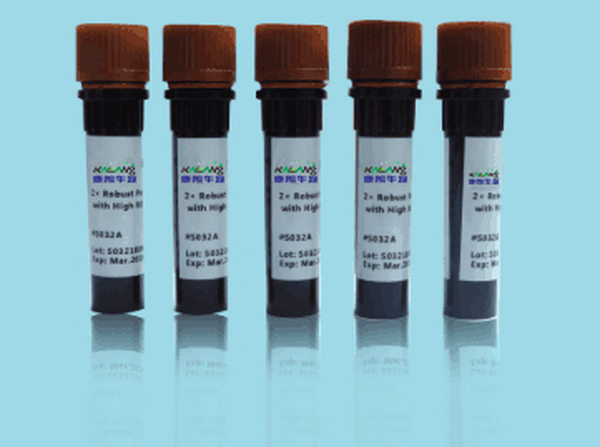
UBXN4 rabbit Polyclonal Antibody
UBXN4抗体应用:WB 1:500-2000 ELISA 1:5000-20000UBX domain protein 4(UBXN4) Homo sapiens UBXD2 is an integral membrane protein of the endoplasmic reticulum (ER) that binds valosin-containing protein (VCP; MIM 601023) and promotes ER-associated protein degradation (ERAD) (Liang et al., 2006 [PubMed 16968747]).[supplied by OMIM, Mar 2008],
UCKL1 rabbit Polyclonal Antibody
UCKL1抗体应用:WB 1:500-2000The protein encoded by this gene is a uridine kinase. Uridine kinases catalyze the phosphorylation of uridine to uridine monophosphate. This protein has been shown to bind to Epstein-Barr nuclear antigen 3 as well as natural killer lytic-associated molecule. Ubiquitination of this protein is enhanced by the presence of natural killer lytic-associated molecule. In addition, protein levels decrease in the presence of natural killer lytic-associated molecule, suggesting that association with natural killer lytic-associated molecule results in ubiquitination and subsequent degradation of this protein. Alternative splicing results in multiple transcript variants. [provided by RefSeq, Nov 2014],
UCP1 rabbit Polyclonal Antibody
UCP1抗体应用:WB 1:500-2000 ELISA 1:5000-20000uncoupling protein 1(UCP1) Homo sapiens Mitochondrial uncoupling proteins (UCP) are members of the family of mitochondrial anion carrier proteins (MACP). UCPs separate oxidative phosphorylation from ATP synthesis with energy dissipated as heat, also referred to as the mitochondrial proton leak. UCPs facilitate the transfer of anions from the inner to the outer mitochondrial membrane and the return transfer of protons from the outer to the inner mitochondrial membrane. They also reduce the mitochondrial membrane potential in mammalian cells. Tissue specificity occurs for the different UCPs and the exact methods of how UCPs transfer H+/OH- are not known. UCPs contain the three homologous protein domains of MACPs. This gene is expressed only in brown adipose tissue, a specialized tissue which functions to produce heat. [provided by RefSeq, Jul 2008],
UCP4 rabbit Polyclonal Antibody
UCP4抗体应用:WB 1:500-2000 ELISA 1:5000-20000solute carrier family 25 member 27(SLC25A27) Homo sapiens Mitochondrial uncoupling proteins (UCP) are members of the larger family of mitochondrial anion carrier proteins (MACP). UCPs separate oxidative phosphorylation from ATP synthesis with energy dissipated as heat, also referred to as the mitochondrial proton leak. UCPs facilitate the transfer of anions from the inner to the outer mitochondrial membrane and the return transfer of protons from the outer to the inner mitochondrial membrane. They also reduce the mitochondrial membrane potential in mammalian cells. Tissue specificity occurs for the different UCPs and the exact methods of how UCPs transfer H+/OH- are not known. UCPs contain the three homologous protein domains of MACPs. Transcripts of this gene are only detected in brain tissue and are specifically modulated by various environmental conditions. Alternative splicing results in multiple transcript variants.[provided by RefSeq,
UCP5 rabbit Polyclonal Antibody
UCP5抗体应用:WB 1:500-2000 ELISA 1:5000-20000solute carrier family 25 member 14(SLC25A14) Homo sapiens Mitochondrial uncoupling proteins (UCP) are members of the larger family of mitochondrial anion carrier proteins (MACP). Uncoupling proteins separate oxidative phosphorylation from ATP synthesis with energy dissipated as heat, also referred to as the mitochondrial proton leak. Uncoupling proteins facilitate the transfer of anions from the inner to the outer mitochondrial membrane and the return transfer of protons from the outer to the inner mitochondrial membrane. They also reduce the mitochondrial membrane potential in mammalian cells. This gene is widely expressed in many tissues with the greatest abundance in brain and testis. Alternative splicing results in multiple transcript variants. A pseudogene of this gene has been defined on chromosome 4. [provided by RefSeq, Aug 2013],
UD11 rabbit Polyclonal Antibody
UD11抗体应用:WB 1:500-2000 This gene encodes a UDP-glucuronosyltransferase, an enzyme of the glucuronidation pathway that transforms small lipophilic molecules, such as steroids, bilirubin, hormones, and drugs, into water-soluble, excretable metabolites. This gene is part of a complex locus that encodes several UDP-glucuronosyltransferases. The locus includes thirteen unique alternate first exons followed by four common exons. Four of the alternate first exons are considered pseudogenes. Each of the remaining nine 5' exons may be spliced to the four common exons, resulting in nine proteins with different N-termini and identical C-termini. Each first exon encodes the substrate binding site, and is regulated by its own promoter. The preferred substrate of this enzyme is bilirubin, although it also has moderate activity with simple phenols, flavones, and C18 steroids. Mutations in this gene result in Crigler-Najjar syndromes types I and II and in Gilbert syndrome. [provided by RefSeq, Jul 200
UD15 rabbit Polyclonal Antibody
UD15抗体应用:WB 1:500-2000 This gene encodes a UDP-glucuronosyltransferase, an enzyme of the glucuronidation pathway that transforms small lipophilic molecules, such as steroids, bilirubin, hormones, and drugs, into water-soluble, excretable metabolites. This gene is part of a complex locus that encodes several UDP-glucuronosyltransferases. The locus includes thirteen unique alternate first exons followed by four common exons. Four of the alternate first exons are considered pseudogenes. Each of the remaining nine 5' exons may be spliced to the four common exons, resulting in nine proteins with different N-termini and identical C-termini. Each first exon encodes the substrate binding site, and is regulated by its own promoter. [provided by RefSeq, Jul 2008],
最新动态
-
Anti-GNGT1 KL20092-001(50ul)
2021-10-11 -
Anti-GNGT1 antibody(50ul) KL20093-001
2021-10-11 -

骨组织快速脱钙液Ⅰ
2021-09-07 -
外泌体(exosomes)染色试剂盒
2021-09-07 -
外泌体(exosomes)吸附抑制剂
2021-09-07
热门标签
- Histone H3 rabbit Polyclonal Antibody Histone H3抗体
- EGFR rabbit Polyclonal Antibody EGFR抗体
- Cy3 Conjugated
- AbFluor™ 555 Conjugated
- AbFluor™ 680 Conjugated
- AbFluor™ 350 Conjugated
- AbFluor™ 647 Conjugated
- AbFluor™ 594 Conjugated
- AbFluor™ 405 Conjugated
- Cy5 Conjugated
- AbFluor™ 488 Conjugated
- Cyclophilin B抗体 Cyclophilin B Monoclonal Antibody(2B10)
- COX IV抗体 COX IV Monoclonal Antibody(6C8)
- PCNA抗体 PCNA Monoclonal Antibody(12D10)
- FAK rabbit Polyclonal Antibody FAK抗体
邮箱:3002763590@qq.com
电话:021-61998208

扫码关注微信公众号