QQ:3002763590


客服电话:021-61998208
我们是专业的科研试剂供应服务商
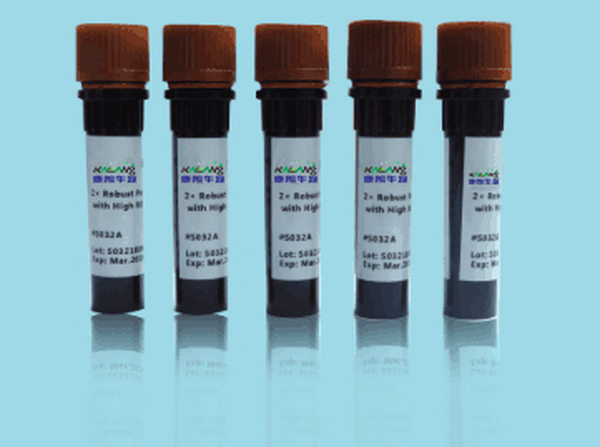
DPPA5 rabbit Polyclonal Antibody
DPPA5抗体应用:WB 1:500-2000 ELISA 1:5000-20000developmental pluripotency associated 5(DPPA5) Homo sapiens This gene encodes a protein that may function in the control of cell pluripotency and early embryogenesis. Expression of this gene is a specific marker for pluripotent stem cells. Pseudogenes of this gene are located on the short arm of chromosome 10 and the long arm of chromosomes 14 and 19. [provided by RefSeq, Dec 2010],
DPYL1 rabbit Polyclonal Antibody
DPYL1抗体应用:WB 1:500-2000 ELISA 1:5000-20000collapsin response mediator protein 1(CRMP1) Homo sapiens This gene encodes a member of a family of cytosolic phosphoproteins expressed exclusively in the nervous system. The encoded protein is thought to be a part of the semaphorin signal transduction pathway implicated in semaphorin-induced growth cone collapse during neural development. Alternative splicing results in multiple transcript variants. [provided by RefSeq, Jul 2008],
DPYL5 rabbit Polyclonal Antibody
DPYL5抗体应用:WB 1:500-2000 This gene encodes a member of the CRMP (collapsing response mediator protein) family thought to be involved in neural development. Antibodies to the encoded protein were found in some patients with neurologic symptoms who had paraneoplastic syndrome. A pseudogene of this gene is found on chromosome 11. Multiple alternatively spliced variants, encoding the same protein, have been identified. [provided by RefSeq, Dec 2011],
DQB2 rabbit Polyclonal Antibody
DQB2抗体应用:WB 1:500-2000 major histocompatibility complex, class II, DQ beta 2(HLA-DQB2) Homo sapiens HLA-DQB2 belongs to the family of HLA class II beta chain paralogs. Class II molecules are heterodimers consisting of an alpha (DQA) and a beta chain (DQB), both anchored in the membrane. They play a central role in the immune system by presenting peptides derived from extracellular proteins. Class II molecules are expressed in antigen presenting cells (APC: B lymphocytes, dendritic cells, macrophages). Polymorphisms in the alpha and beta chains specify the peptide binding specificity, and typing for these polymorphisms is routinely done for bone marrow transplantation. However this gene, HLA-DQB2, is not routinely typed, as it is not thought to have an effect on transplantation. There is conflicting evidence in the literature and public sequence databases for the protein-coding capacity of HLA-DQB2. Because there is evidence of transcription and an intact ORF, HLA-DQ
DRA rabbit Polyclonal Antibody
DRA抗体应用:WB 1:500-2000 ELISA 1:5000-20000major histocompatibility complex, class II, DR alpha(HLA-DRA) Homo sapiens HLA-DRA is one of the HLA class II alpha chain paralogues. This class II molecule is a heterodimer consisting of an alpha and a beta chain, both anchored in the membrane. It plays a central role in the immune system by presenting peptides derived from extracellular proteins. Class II molecules are expressed in antigen presenting cells (APC: B lymphocytes, dendritic cells, macrophages). The alpha chain is approximately 33-35 kDa and its gene contains 5 exons. Exon 1 encodes the leader peptide, exons 2 and 3 encode the two extracellular domains, and exon 4 encodes the transmembrane domain and the cytoplasmic tail. DRA does not have polymorphisms in the peptide binding part and acts as the sole alpha chain for DRB1, DRB3, DRB4 and DRB5. [provided by RefSeq, Jul 2008],
DRAM1 rabbit Polyclonal Antibody
DRAM1抗体应用:WB 1:500-2000 ELISA 1:5000-20000DNA damage regulated autophagy modulator 1(DRAM1) Homo sapiens This gene is regulated as part of the p53 tumor suppressor pathway. The gene encodes a lysosomal membrane protein that is required for the induction of autophagy by the pathway. Decreased transcriptional expression of this gene is associated with various tumors. This gene has a pseudogene on chromosome 4. [provided by RefSeq, Jul 2008],
DRD2 rabbit Polyclonal Antibody
DRD2抗体应用:WB 1:500-2000 ELISA 1:5000-20000dopamine receptor D2(DRD2) Homo sapiens This gene encodes the D2 subtype of the dopamine receptor. This G-protein coupled receptor inhibits adenylyl cyclase activity. A missense mutation in this gene causes myoclonus dystonia; other mutations have been associated with schizophrenia. Alternative splicing of this gene results in two transcript variants encoding different isoforms. A third variant has been described, but it has not been determined whether this form is normal or due to aberrant splicing. [provided by RefSeq, Jul 2008],
DRD5 rabbit Polyclonal Antibody
DRD5抗体应用:WB 1:500-2000 ELISA 1:5000-20000dopamine receptor D5(DRD5) Homo sapiens This gene encodes the D5 subtype of the dopamine receptor. The D5 subtype is a G-protein coupled receptor which stimulates adenylyl cyclase. This receptor is expressed in neurons in the limbic regions of the brain. It has a 10-fold higher affinity for dopamine than the D1 subtype. Pseudogenes related to this gene reside on chromosomes 1 and 2. [provided by RefSeq, Jul 2008],
最新动态
-
Anti-GNGT1 KL20092-001(50ul)
2021-10-11 -
Anti-GNGT1 antibody(50ul) KL20093-001
2021-10-11 -
α-tubulin mouse Monoclonal Antibody
2021-01-08 -
α-tubulin mouse Monoclonal Antibody(8F11)
2021-01-08
热门标签
- Histone H3 rabbit Polyclonal Antibody Histone H3抗体
- EGFR rabbit Polyclonal Antibody EGFR抗体
- Cy3 Conjugated
- AbFluor™ 555 Conjugated
- AbFluor™ 680 Conjugated
- AbFluor™ 350 Conjugated
- AbFluor™ 647 Conjugated
- AbFluor™ 594 Conjugated
- AbFluor™ 405 Conjugated
- Cy5 Conjugated
- AbFluor™ 488 Conjugated
- Cyclophilin B抗体 Cyclophilin B Monoclonal Antibody(2B10)
- COX IV抗体 COX IV Monoclonal Antibody(6C8)
- PCNA抗体 PCNA Monoclonal Antibody(12D10)
- FAK rabbit Polyclonal Antibody FAK抗体
邮箱:3002763590@qq.com
电话:021-61998208

扫码关注微信公众号