QQ:3002763590


客服电话:021-61998208
我们是专业的科研试剂供应服务商
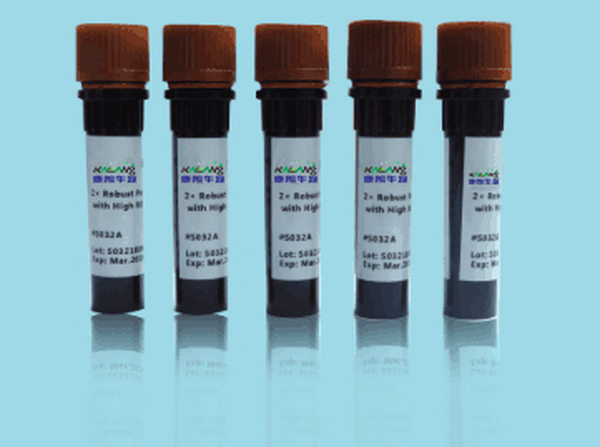
PECR rabbit Polyclonal Antibody
PECR抗体应用:WB 1:500-2000 ELISA 1:5000-20000catalytic activity:Acyl-CoA + NADP(+) = trans-2,3-dehydroacyl-CoA + NADPH.,function:Participates in chain elongation of fatty acids. Has no 2,4-dienoyl-CoA reductase activity.,induction:Not induced by IR.,pathway:Lipid metabolism; fatty acid biosynthesis.,similarity:Belongs to the short-chain dehydrogenases/reductases (SDR) family.,subunit:Interacts with PEX5, probably required to target it into peroxisomes.,
PER1 rabbit Polyclonal Antibody
PER1抗体应用:WB 1:500-2000 ELISA 1:5000-20000period circadian clock 1(PER1) Homo sapiens This gene is a member of the Period family of genes and is expressed in a circadian pattern in the suprachiasmatic nucleus, the primary circadian pacemaker in the mammalian brain. Genes in this family encode components of the circadian rhythms of locomotor activity, metabolism, and behavior. This gene is upregulated by CLOCK/ARNTL heterodimers but then represses this upregulation in a feedback loop using PER/CRY heterodimers to interact with CLOCK/ARNTL. Polymorphisms in this gene may increase the risk of getting certain cancers. Alternative splicing has been observed in this gene; however, these variants have not been fully described. [provided by RefSeq, Jan 2014],
PERQ2 rabbit Polyclonal Antibody
PERQ2抗体应用:WB 1:500-2000 ELISA 1:5000-20000GRB10 interacting GYF protein 2(GIGYF2) Homo sapiens This gene contains CAG trinucleotide repeats and encodes a protein containing several stretches of polyglutamine residues. The encoded protein may be involved in the regulation of tyrosine kinase receptor signaling. This gene is located in a chromosomal region that was genetically linked to Parkinson disease type 11, and mutations in this gene were thought to be causative for this disease. However, more recent studies in different populations have been unable to replicate this association. Alternative splicing results in multiple transcript variants. [provided by RefSeq, May 2013],
PEX12 rabbit Polyclonal Antibody
PEX12抗体应用:WB 1:500-2000 ELISA 1:5000-20000peroxisomal biogenesis factor 12(PEX12) Homo sapiens This gene belongs to the peroxin-12 family. Peroxins (PEXs) are proteins that are essential for the assembly of functional peroxisomes. The peroxisome biogenesis disorders (PBDs) are a group of genetically heterogeneous autosomal recessive, lethal diseases characterized by multiple defects in peroxisome function. The peroxisomal biogenesis disorders are a heterogeneous group with at least 14 complementation groups and with more than 1 phenotype being observed in cases falling into particular complementation groups. Although the clinical features of PBD patients vary, cells from all PBD patients exhibit a defect in the import of one or more classes of peroxisomal matrix proteins into the organelle. Defects in this gene are a cause of Zellweger syndrome (ZWS). [provided by RefSeq, Oct 2008],
PEX13 rabbit Polyclonal Antibody
PEX13抗体应用:WB 1:500-2000 ELISA 1:5000-20000peroxisomal biogenesis factor 13(PEX13) Homo sapiens This gene encodes a peroxisomal membrane protein that binds the type 1 peroxisomal targeting signal receptor via a SH3 domain located in the cytoplasm. Mutations and deficiencies in peroxisomal protein importing and peroxisome assembly lead to peroxisomal biogenesis disorders, an example of which is Zellweger syndrome. [provided by RefSeq, Oct 2008],
PEX16 rabbit Polyclonal Antibody
PEX16抗体应用:WB 1:500-2000 ELISA 1:5000-20000peroxisomal biogenesis factor 16(PEX16) Homo sapiens The protein encoded by this gene is an integral peroxisomal membrane protein. An inactivating nonsense mutation localized to this gene was observed in a patient with Zellweger syndrome of the complementation group CGD/CG9. Expression of this gene product morphologically and biochemically restores the formation of new peroxisomes, suggesting a role in peroxisome organization and biogenesis. Alternative splicing has been observed for this gene and two variants have been described. [provided by RefSeq, Jul 2008],
PEX6 rabbit Polyclonal Antibody
PEX6抗体应用:WB 1:500-2000 ELISA 1:5000-20000peroxisomal biogenesis factor 6(PEX6) Homo sapiens This gene encodes a member of the AAA (ATPases associated with diverse cellular activities) family of ATPases. This member is a predominantly cytoplasmic protein, which plays a direct role in peroxisomal protein import and is required for PTS1 (peroxisomal targeting signal 1, a C-terminal tripeptide of the sequence ser-lys-leu) receptor activity. Mutations in this gene cause peroxisome biogenesis disorders of complementation group 4 and complementation group 6. Several transcript variants encoding different isoforms have been found for this gene. [provided by RefSeq, Oct 2015],
PF2R rabbit Polyclonal Antibody
PF2R抗体应用:WB 1:500-2000 ELISA 1:5000-20000prostaglandin F receptor(PTGFR) Homo sapiens The protein encoded by this gene is member of the G-protein coupled receptor family. This protein is a receptor for prostaglandin F2-alpha (PGF2-alpha), which is known to be a potent luteolytic agent, and may also be involved in modulating intraocular pressure and smooth muscle contraction in uterus. Knockout studies in mice suggest that the interaction of PGF2-alpha with this receptor may initiate parturition in ovarian luteal cells and thus induce luteolysis. Two transcript variants encoding different isoforms have been found for this gene. [provided by RefSeq, Jul 2008],
PF4V rabbit Polyclonal Antibody
PF4V抗体应用:WB 1:500-2000 ELISA 1:5000-20000platelet factor 4 variant 1(PF4V1) Homo sapiens The protein encoded by this gene is a chemokine that is highly similar to platelet factor 4. The encoded protein displays a strong antiangiogenic function and is regulated by chemokine (C-X-C motif) receptor 3. This protein also impairs tumor growth and can protect against blood-retinal barrier breakdown in diabetes patients. [provided by RefSeq, Nov 2015],
PFD2 rabbit Polyclonal Antibody
PFD2抗体应用:WB 1:500-2000This gene encodes a member of the prefoldin beta subunit family. The encoded protein is one of six subunits of prefoldin, a molecular chaperone complex that binds and stabilizes newly synthesized polypeptides, thereby allowing them to fold correctly. The complex, consisting of two alpha and four beta subunits, forms a double beta barrel assembly with six protruding coiled-coils. [provided by RefSeq, Jul 2008],
最新动态
-
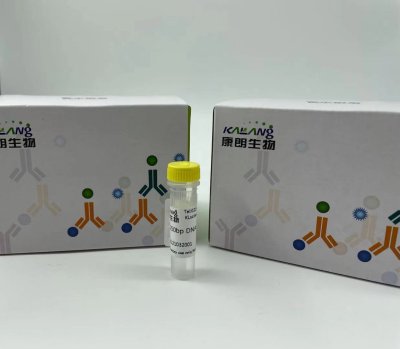
Anti-GNGT1 KL20092-001(50ul)
2021-10-11 -
Anti-GNGT1 antibody(50ul) KL20093-001
2021-10-11 -
α-tubulin mouse Monoclonal Antibody
2021-01-08 -
α-tubulin mouse Monoclonal Antibody(8F11)
2021-01-08
热门标签
- Histone H3 rabbit Polyclonal Antibody Histone H3抗体
- EGFR rabbit Polyclonal Antibody EGFR抗体
- Cy3 Conjugated
- AbFluor™ 555 Conjugated
- AbFluor™ 680 Conjugated
- AbFluor™ 350 Conjugated
- AbFluor™ 647 Conjugated
- AbFluor™ 594 Conjugated
- AbFluor™ 405 Conjugated
- Cy5 Conjugated
- AbFluor™ 488 Conjugated
- Cyclophilin B抗体 Cyclophilin B Monoclonal Antibody(2B10)
- COX IV抗体 COX IV Monoclonal Antibody(6C8)
- PCNA抗体 PCNA Monoclonal Antibody(12D10)
- FAK rabbit Polyclonal Antibody FAK抗体
邮箱:3002763590@qq.com
电话:021-61998208

扫码关注微信公众号