QQ:3002763590


客服电话:021-61998208
我们是专业的科研试剂供应服务商
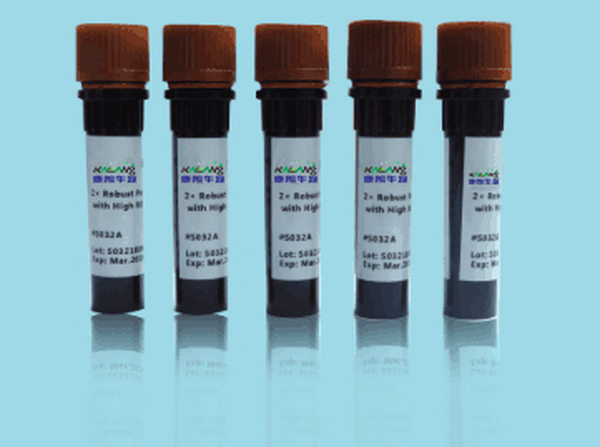
SEPT4 rabbit Polyclonal Antibody
SEPT4抗体应用:WB 1:500-2000 ELISA 1:5000-20000septin 4(SEPT4) Homo sapiens This gene is a member of the septin family of nucleotide binding proteins, originally described in yeast as cell division cycle regulatory proteins. Septins are highly conserved in yeast, Drosophila, and mouse, and appear to regulate cytoskeletal organization. Disruption of septin function disturbs cytokinesis and results in large multinucleate or polyploid cells. This gene is highly expressed in brain and heart. Alternatively spliced transcript variants encoding different isoforms have been described for this gene. One of the isoforms (known as ARTS) is distinct; it is localized to the mitochondria, and has a role in apoptosis and cancer. [provided by RefSeq, Nov 2010],
SEPT9 rabbit Polyclonal Antibody
SEPT9抗体应用:WB 1:500-2000 ELISA 1:5000-20000septin 9(SEPT9) Homo sapiens This gene is a member of the septin family involved in cytokinesis and cell cycle control. This gene is a candidate for the ovarian tumor suppressor gene. Mutations in this gene cause hereditary neuralgic amyotrophy, also known as neuritis with brachial predilection. A chromosomal translocation involving this gene on chromosome 17 and the MLL gene on chromosome 11 results in acute myelomonocytic leukemia. Multiple alternatively spliced transcript variants encoding different isoforms have been described.[provided by RefSeq, Mar 2009],
SERPH rabbit Polyclonal Antibody
SERPH抗体应用:WB 1:500-2000 ELISA 1:5000-20000serpin family H member 1(SERPINH1) Homo sapiens This gene encodes a member of the serpin superfamily of serine proteinase inhibitors. The encoded protein is localized to the endoplasmic reticulum and plays a role in collagen biosynthesis as a collagen-specific molecular chaperone. Autoantibodies to the encoded protein have been found in patients with rheumatoid arthritis. Expression of this gene may be a marker for cancer, and nucleotide polymorphisms in this gene may be associated with preterm birth caused by preterm premature rupture of membranes. Alternatively spliced transcript variants have been observed for this gene, and a pseudogene of this gene is located on the short arm of chromosome 9. [provided by RefSeq, May 2011],
SETB2 rabbit Polyclonal Antibody
SETB2抗体应用:WB 1:500-2000 ELISA 1:5000-20000SET domain bifurcated 2(SETDB2) Homo sapiens This gene encodes a member of a family of proteins that contain a methyl-CpG-binding domain (MBD) and a SET domain and function as histone methyltransferases. This protein is recruited to heterochromatin and plays a role in the regulation of chromosome segregation. This region is commonly deleted in chronic lymphocytic leukemia. Naturally-occuring readthrough transcription occurs from this gene to the downstream PHF11 (PHD finger protein 11) gene. Alternative splicing results in multiple transcript variants. [provided by RefSeq, Mar 2016],
SETBP rabbit Polyclonal Antibody
SETBP抗体应用:WB 1:500-2000This gene encodes a protein which contains a several motifs including a ski homology region and a SET-binding region in addition to three nuclear localization signals. The encoded protein has been shown to bind the SET nuclear oncogene which is involved in DNA replication. Mutations in this gene are associated with Schinzel-Giedion midface retraction syndrome. Multiple transcript variants encoding different isoforms have been found for this gene. [provided by RefSeq, Aug 2011],
SF3A1 rabbit Polyclonal Antibody
SF3A1抗体应用:WB 1:500-2000 ELISA 1:5000-20000splicing factor 3a subunit 1(SF3A1) Homo sapiens This gene encodes a subunit of the splicing factor 3a protein complex. The splicing factor 3a heterotrimer is a component of the mature U2 small nuclear ribonucleoprotein particle (snRNP). U2 small nuclear ribonucleoproteins play a critical role in spliceosome assembly and pre-mRNA splicing. [provided by RefSeq, Aug 2014],
SF3A3 rabbit Polyclonal Antibody
SF3A3抗体应用:WB 1:500-2000 ELISA 1:5000-20000splicing factor 3a subunit 3(SF3A3) Homo sapiens This gene encodes subunit 3 of the splicing factor 3a protein complex. The splicing factor 3a heterotrimer includes subunits 1, 2 and 3 and is necessary for the in vitro conversion of 15S U2 snRNP into an active 17S particle that performs pre-mRNA splicing. Subunit 3 interacts with subunit 1 through its amino-terminus while the zinc finger domain of subunit 3 plays a role in its binding to the 15S U2 snRNP. This gene has a pseudogene on chromosome 20. Alternative splicing results in multiple transcript variants. [provided by RefSeq, Mar 2016],
SFPQ rabbit Polyclonal Antibody
SFPQ抗体应用:WB 1:500-2000 ELISA 1:5000-20000alternative products:Additional isoforms seem to exist,caution:Was originally (PubMed:2480877) thought to be myoblast cell surface antigen 24.1D5 and a possible membrane-bound protein ectokinase.,disease:A chromosomal aberration involving SFPQ may be a cause of papillary renal cell carcinoma (PRCC). Translocation t(X;1)(p11.2;p34) with TFE3.,function:DNA- and RNA binding protein, involved in several nuclear processes. Essential pre-mRNA splicing factor required early in spliceosome formation and for splicing catalytic step II, probably as an heteromer with NONO. Binds to pre-mRNA in spliceosome C complex, and specifically binds to intronic polypyrimidine tracts. Interacts with U5 snRNA, probably by binding to a purine-rich sequence located on the 3' side of U5 snRNA stem 1b. May be involved in a pre-mRNA coupled splicing and polyadenylation process as component of a snRNP-free complex with SNRPA/U1A. The SFPQ-NONO heteromer associated with MATR3
最新动态
-
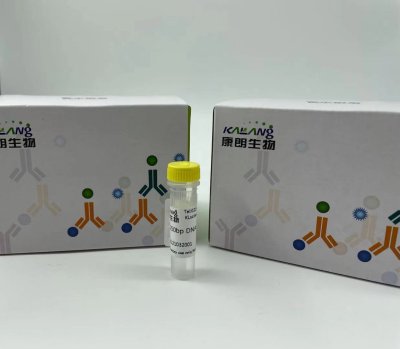
Anti-GNGT1 KL20092-001(50ul)
2021-10-11 -
Anti-GNGT1 antibody(50ul) KL20093-001
2021-10-11 -
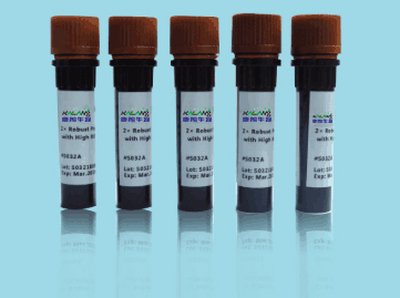
α-tubulin mouse Monoclonal Antibody
2021-01-08 -
α-tubulin mouse Monoclonal Antibody(8F11)
2021-01-08
热门标签
- Histone H3 rabbit Polyclonal Antibody Histone H3抗体
- EGFR rabbit Polyclonal Antibody EGFR抗体
- Cy3 Conjugated
- AbFluor™ 555 Conjugated
- AbFluor™ 680 Conjugated
- AbFluor™ 350 Conjugated
- AbFluor™ 647 Conjugated
- AbFluor™ 594 Conjugated
- AbFluor™ 405 Conjugated
- Cy5 Conjugated
- AbFluor™ 488 Conjugated
- Cyclophilin B抗体 Cyclophilin B Monoclonal Antibody(2B10)
- COX IV抗体 COX IV Monoclonal Antibody(6C8)
- PCNA抗体 PCNA Monoclonal Antibody(12D10)
- FAK rabbit Polyclonal Antibody FAK抗体
邮箱:3002763590@qq.com
电话:021-61998208

扫码关注微信公众号