QQ:3002763590


客服电话:021-61998208
我们是专业的科研试剂供应服务商
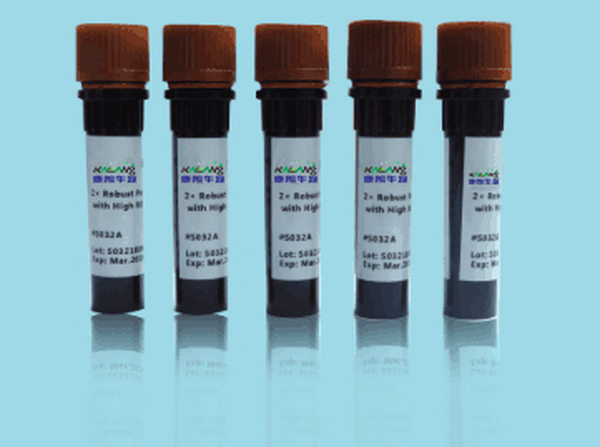
SEM4B rabbit Polyclonal Antibody
SEM4B抗体应用:WB 1:500-2000 ELISA 1:5000-20000function:Inhibits axonal extension by providing local signals to specify territories inaccessible for growing axons.,similarity:Belongs to the semaphorin family.,similarity:Contains 1 Ig-like C2-type (immunoglobulin-like) domain.,similarity:Contains 1 PSI domain.,similarity:Contains 1 Sema domain.,
SEM4C rabbit Polyclonal Antibody
SEM4C抗体应用:WB 1:500-2000 ELISA 1:5000-20000similarity:Belongs to the semaphorin family.,similarity:Contains 1 Ig-like C2-type (immunoglobulin-like) domain.,similarity:Contains 1 PSI domain.,similarity:Contains 1 Sema domain.,subunit:Interacts with GIPC PDZ domain. Interacts with NCDN.,
SEM4F rabbit Polyclonal Antibody
SEM4F抗体应用:WB 1:500-2000 This gene encodes a transmembrane class IV semaphorin family protein, which plays a role in neural development. This gene may be involved in neurogenesis in prostate cancer, the development of neurofibromas, and breast cancer tumorigenesis. Alternative splicing results in multiple transcript variants. [provided by RefSeq, Nov 2012],
SEM4G rabbit Polyclonal Antibody
SEM4G抗体应用:WB 1:500-2000Semaphorins are a large family of conserved secreted and membrane associated proteins which possess a semaphorin (Sema) domain and a PSI domain (found in plexins, semaphorins and integrins) in the N-terminal extracellular portion. Based on sequence and structural similarities, semaphorins are put into eight classes: invertebrates contain classes 1 and 2, viruses have class V, and vertebrates contain classes 3-7. Semaphorins serve as axon guidance ligands via multimeric receptor complexes, some (if not all) containing plexin proteins. Multiple transcript variants encoding different isoforms have been found for this gene. [provided by RefSeq, Feb 2011],
SEM6A rabbit Polyclonal Antibody
SEM6A抗体应用:WB 1:500-2000 ELISA 1:5000-20000semaphorin 6A(SEMA6A) Homo sapiens The transmembrane semaphorin SEMA6A is expressed in developing neural tissue and is required for proper development of the thalamocortical projection (Leighton et al., 2001 [PubMed 11242070]).[supplied by OMIM, Feb 2011],
SEM6B rabbit Polyclonal Antibody
SEM6B抗体应用:WB 1:500-2000 ELISA 1:5000-20000semaphorin 6B(SEMA6B) Homo sapiens This gene encodes a member of the semaphorin family, a group of proteins characterized by the presence of a conserved semaphorin (sema) domain. Whereas some semaphorins are transmembrane proteins, others are secreted. Semaphorins play a major role in axon guidance. The protein encoded by this gene may be involved in both peripheral and central nervous system development. [provided by RefSeq, Jul 2008],
SEM6D rabbit Polyclonal Antibody
SEM6D抗体应用:WB 1:500-2000 ELISA 1:5000-20000semaphorin 6D(SEMA6D) Homo sapiens Semaphorins are a large family, including both secreted and membrane associated proteins, many of which have been implicated as inhibitors or chemorepellents in axon pathfinding, fasciculation and branching, and target selection. All semaphorins possess a semaphorin (Sema) domain and a PSI domain (found in plexins, semaphorins and integrins) in the N-terminal extracellular portion. Additional sequence motifs C-terminal to the semaphorin domain allow classification into distinct subfamilies. Results demonstrate that transmembrane semaphorins, like the secreted ones, can act as repulsive axon guidance cues. This gene encodes a class 6 vertebrate transmembrane semaphorin that demonstrates alternative splicing. Several transcript variants have been identified and expression of the distinct encoded isoforms is thought to be regulated in a tissue- and development-dependent manner. [provided by RefSeq, Nov 2010],
SEN2 rabbit Polyclonal Antibody
SEN2抗体应用:WB 1:500-2000 ELISA 1:5000-20000tRNA splicing endonuclease subunit 2(TSEN2) Homo sapiens This gene encodes one of the subunits of the tRNA splicing endonuclease. This endonuclease catalyzes the first step in RNA splicing which is the removal of introns. Mutations in this gene have been associated with pontocerebellar hypoplasia type 2. A pseudogene has been identified on chromosome 4. Multiple transcript variants encoding different isoforms have been found for this gene.[provided by RefSeq, Feb 2009],
SEP10 rabbit Polyclonal Antibody
SEP10抗体应用:WB 1:500-2000 ELISA 1:5000-20000septin 10(SEPT10) Homo sapiens This gene encodes a member of the septin family of cytoskeletal proteins with GTPase activity. This protein localizes to the cytoplasm and nucleus and displays GTP-binding and GTPase activity. A pseudogene for this gene is located on chromosome 8. Alternative splicing results in multiple transcript variants. [provided by RefSeq, Apr 2012],
SEP11 rabbit Polyclonal Antibody
SEP11抗体应用:WB 1:500-2000 ELISA 1:5000-20000septin 11(SEPT11) Homo sapiens SEPT11 belongs to the conserved septin family of filament-forming cytoskeletal GTPases that are involved in a variety of cellular functions including cytokinesis and vesicle trafficking (Hanai et al., 2004 [PubMed 15196925]; Nagata et al., 2004 [PubMed 15485874]).[supplied by OMIM, Jul 2009],
最新动态
-
Anti-GNGT1 KL20092-001(50ul)
2021-10-11 -
Anti-GNGT1 antibody(50ul) KL20093-001
2021-10-11 -
α-tubulin mouse Monoclonal Antibody
2021-01-08 -
α-tubulin mouse Monoclonal Antibody(8F11)
2021-01-08
热门标签
- Histone H3 rabbit Polyclonal Antibody Histone H3抗体
- EGFR rabbit Polyclonal Antibody EGFR抗体
- Cy3 Conjugated
- AbFluor™ 555 Conjugated
- AbFluor™ 680 Conjugated
- AbFluor™ 350 Conjugated
- AbFluor™ 647 Conjugated
- AbFluor™ 594 Conjugated
- AbFluor™ 405 Conjugated
- Cy5 Conjugated
- AbFluor™ 488 Conjugated
- Cyclophilin B抗体 Cyclophilin B Monoclonal Antibody(2B10)
- COX IV抗体 COX IV Monoclonal Antibody(6C8)
- PCNA抗体 PCNA Monoclonal Antibody(12D10)
- FAK rabbit Polyclonal Antibody FAK抗体
邮箱:3002763590@qq.com
电话:021-61998208

扫码关注微信公众号