QQ:3002763590


客服电话:021-61998208
我们是专业的科研试剂供应服务商
INT7 rabbit Polyclonal Antibody
INT7抗体应用:WB 1:500-2000 This gene encodes a subunit of the integrator complex. The integrator complex associates with the C-terminal domain of RNA polymerase II and mediates 3'-end processing of the small nuclear RNAs U1 and U2. Alternatively spliced transcript variants encoding multiple isoforms have been observed for this gene. [provided by RefSeq, Dec 2010],
INVS rabbit Polyclonal Antibody
INVS抗体应用:WB 1:500-2000 ELISA 1:5000-20000inversin(INVS) Homo sapiens This gene encodes a protein containing multiple ankyrin domains and two IQ calmodulin-binding domains. The encoded protein may function in renal tubular development and function, and in left-right axis determination. This protein interacts with nephrocystin and infers a connection between primary cilia function and left-right axis determination. A similar protein in mice interacts with calmodulin. Mutations in this gene have been associated with nephronophthisis type 2. Multiple transcript variants encoding distinct isoforms have been identified for this gene. [provided by RefSeq, May 2012],
IOD2 rabbit Polyclonal Antibody
IOD2抗体应用:WB 1:500-2000 ELISA 1:5000-20000deiodinase, iodothyronine type II(DIO2) Homo sapiens The protein encoded by this gene belongs to the iodothyronine deiodinase family. It catalyzes the conversion of prohormone thyroxine (3,5,3',5'-tetraiodothyronine, T4) to the bioactive thyroid hormone (3,5,3'-triiodothyronine, T3) by outer ring 5'-deiodination. This gene is widely expressed, including in thyroid, placenta, pituitary and brain. It is thought to be responsible for the 'local' production of T3, and thus important in influencing thyroid hormone action in these tissues. It has also been reported to be highly expressed in thyroids of patients with Graves disease, and in follicular adenomas. The intrathyroidal T4 to T3 conversion by this enzyme may contribute significantly to the relative increase in thyroidal T3 production in these patients. This protein is a selenoprotein containing the rare selenocysteine (Sec) amino acid at its active site, and may
IP6K1 rabbit Polyclonal Antibody
IP6K1抗体应用:WB 1:500-2000 ELISA 1:5000-20000inositol hexakisphosphate kinase 1(IP6K1) Homo sapiens This gene encodes a member of the inositol phosphokinase family. The encoded protein may be responsible for the conversion of inositol hexakisphosphate (InsP6) to diphosphoinositol pentakisphosphate (InsP7/PP-InsP5). It may also convert 1,3,4,5,6-pentakisphosphate (InsP5) to PP-InsP4. Alternatively spliced transcript variants have been described. [provided by RefSeq, Jun 2011],
IPO13 rabbit Polyclonal Antibody
IPO13抗体应用:WB 1:500-2000This gene encodes a member of the importin-beta family of nuclear transport proteins. The encoded protein mediates the import of specific cargo proteins from the cytoplasm to the nucleus and is dependent on the Ras-related nuclear protein-GTPase system. The encoded protein is also involved in nuclear export of the eukaryotic translation initiation factor 1A.[provided by RefSeq, Mar 2009],
IPO5 rabbit Polyclonal Antibody
IPO5抗体应用:WB 1:500-2000 ELISA 1:5000-20000importin 5(IPO5) Homo sapiens Nucleocytoplasmic transport, a signal- and energy-dependent process, takes place through nuclear pore complexes embedded in the nuclear envelope. The import of proteins containing a nuclear localization signal (NLS) requires the NLS import receptor, a heterodimer of importin alpha and beta subunits also known as karyopherins. Importin alpha binds the NLS-containing cargo in the cytoplasm and importin beta docks the complex at the cytoplasmic side of the nuclear pore complex. In the presence of nucleoside triphosphates and the small GTP binding protein Ran, the complex moves into the nuclear pore complex and the importin subunits dissociate. Importin alpha enters the nucleoplasm with its passenger protein and importin beta remains at the pore. Interactions between importin beta and the FG repeats of nucleoporins are essential in translocation through the pore complex. The protein encoded by this gene is a me
I12R2 rabbit Polyclonal Antibody
I12R2抗体应用:WB 1:500-2000 ELISA 1:5000-20000interleukin 12 receptor subunit beta 2(IL12RB2) Homo sapiens The protein encoded by this gene is a type I transmembrane protein identified as a subunit of the interleukin 12 receptor complex. The coexpression of this and IL12RB1 proteins was shown to lead to the formation of high-affinity IL12 binding sites and reconstitution of IL12 dependent signaling. The expression of this gene is up-regulated by interferon gamma in Th1 cells, and plays a role in Th1 cell differentiation. The up-regulation of this gene is found to be associated with a number of infectious diseases, such as Crohn's disease and leprosy, which is thought to contribute to the inflammatory response and host defense. Several transcript variants encoding different isoforms and non-protein coding transcripts have been found for this gene. [provided by RefSeq, Apr 2012],
I17RD rabbit Polyclonal Antibody
I17RD抗体应用:WB 1:500-2000 ELISA 1:5000-20000interleukin 17 receptor D(IL17RD) Homo sapiens This gene encodes a membrane protein belonging to the interleukin-17 receptor (IL-17R) protein family. The encoded protein is a component of the interleukin-17 receptor signaling complex, and the interaction between this protein and IL-17R does not require the interleukin. The gene product also affects fibroblast growth factor signaling, inhibiting or stimulating growth through MAPK/ERK signaling. Alternate splicing generates multiple transcript variants encoding distinct isoforms. [provided by RefSeq, Jan 2016],
I20L2 rabbit Polyclonal Antibody
I20L2抗体应用:WB 1:500-2000 ELISA 1:5000-20000interferon stimulated exonuclease gene 20 like 2(ISG20L2) Homo sapiens This gene encodes a 3'-5' exoribonuclease that may be involved in the processing of the 12S pre-rRNA. Pseudogenes have been identified on chromosomes 6 and 11. [provided by RefSeq, Dec 2014],
I22R1 rabbit Polyclonal Antibody
I22R1抗体应用:WB 1:500-2000 ELISA 1:5000-20000interleukin 22 receptor subunit alpha 1(IL22RA1) Homo sapiens The protein encoded by this gene belongs to the class II cytokine receptor family, and has been shown to be a receptor for interleukin 22 (IL22). IL22 receptor is a protein complex that consists of this protein and interleukin 10 receptor, beta (IL10BR/CRFB4), a subunit also shared by the receptor complex for interleukin 10 (IL10). This gene and interleukin 28 receptor, alpha (IL28RA) form a cytokine receptor gene cluster in the chromosomal region 1p36. [provided by RefSeq, Jul 2008],
最新动态
-
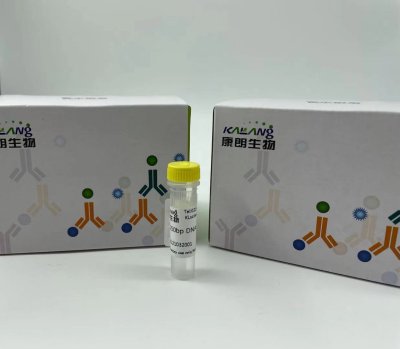
Anti-GNGT1 KL20092-001(50ul)
2021-10-11 -
Anti-GNGT1 antibody(50ul) KL20093-001
2021-10-11 -

骨组织快速脱钙液Ⅰ
2021-09-07 -
外泌体(exosomes)染色试剂盒
2021-09-07 -
外泌体(exosomes)吸附抑制剂
2021-09-07
热门标签
- Histone H3 rabbit Polyclonal Antibody Histone H3抗体
- EGFR rabbit Polyclonal Antibody EGFR抗体
- Cy3 Conjugated
- AbFluor™ 555 Conjugated
- AbFluor™ 680 Conjugated
- AbFluor™ 350 Conjugated
- AbFluor™ 647 Conjugated
- AbFluor™ 594 Conjugated
- AbFluor™ 405 Conjugated
- Cy5 Conjugated
- AbFluor™ 488 Conjugated
- Cyclophilin B抗体 Cyclophilin B Monoclonal Antibody(2B10)
- COX IV抗体 COX IV Monoclonal Antibody(6C8)
- PCNA抗体 PCNA Monoclonal Antibody(12D10)
- FAK rabbit Polyclonal Antibody FAK抗体
邮箱:3002763590@qq.com
电话:021-61998208

扫码关注微信公众号