QQ:3002763590


客服电话:021-61998208
我们是专业的科研试剂供应服务商
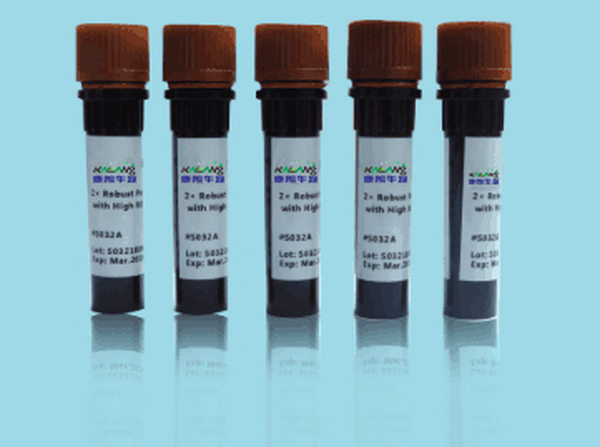
KC1G3 rabbit Polyclonal Antibody
KC1G3抗体应用:WB 1:500-2000 ELISA 1:5000-20000casein kinase 1 gamma 3(CSNK1G3) Homo sapiens This gene encodes a member of a family of serine/threonine protein kinases that phosphorylate caseins and other acidic proteins. A related protein in the African clawed frog participates in the transmission of Wnt/beta-catenin signaling. Alternatively spliced transcript variants encoding multiple isoforms have been observed for this gene. [provided by RefSeq, Jul 2012],
KCC2B rabbit Polyclonal Antibody
KCC2B抗体应用:WB 1:500-2000 ELISA 1:5000-20000calcium/calmodulin dependent protein kinase II beta(CAMK2B) Homo sapiens The product of this gene belongs to the serine/threonine protein kinase family and to the Ca(2+)/calmodulin-dependent protein kinase subfamily. Calcium signaling is crucial for several aspects of plasticity at glutamatergic synapses. In mammalian cells, the enzyme is composed of four different chains: alpha, beta, gamma, and delta. The product of this gene is a beta chain. It is possible that distinct isoforms of this chain have different cellular localizations and interact differently with calmodulin. Alternative splicing results in multiple transcript variants. [provided by RefSeq, May 2014],
KCC2G rabbit Polyclonal Antibody
KCC2G抗体应用:WB 1:500-2000 calcium/calmodulin dependent protein kinase II gamma(CAMK2G) Homo sapiens The product of this gene is one of the four subunits of an enzyme which belongs to the serine/threonine protein kinase family, and to the Ca(2+)/calmodulin-dependent protein kinase subfamily. Calcium signaling is crucial for several aspects of plasticity at glutamatergic synapses. In mammalian cells the enzyme is composed of four different chains: alpha, beta, gamma, and delta. The product of this gene is a gamma chain. Many alternatively spliced transcripts encoding different isoforms have been described but the full-length nature of all the variants has not been determined.[provided by RefSeq, Mar 2011],
KCE1L rabbit Polyclonal Antibody
KCE1L抗体应用:WB 1:500-2000 ELISA 1:5000-20000potassium voltage-gated channel subfamily E regulatory subunit 5(KCNE5) Homo sapiens Voltage-gated potassium (Kv) channels represent the most complex class of voltage-gated ion channels from both functional and structural standpoints. Their diverse functions include regulating neurotransmitter release, heart rate, insulin secretion, neuronal excitability, epithelial electrolyte transport, smooth muscle contraction, and cell volume. This gene encodes a membrane protein which has sequence similarity to the KCNE1 gene product, a member of the potassium channel, voltage-gated, isk-related subfamily. This intronless gene is deleted in AMME contiguous gene syndrome and may be involved in the cardiac and neurologic abnormalities found in the AMME contiguous gene syndrome. [provided by RefSeq, Jul 2008],
KCMB1 rabbit Polyclonal Antibody
KCMB1抗体应用:WB 1:500-2000 ELISA 1:5000-20000potassium calcium-activated channel subfamily M regulatory beta subunit 1(KCNMB1) Homo sapiens MaxiK channels are large conductance, voltage and calcium-sensitive potassium channels which are fundamental to the control of smooth muscle tone and neuronal excitability. MaxiK channels can be formed by 2 subunits: the pore-forming alpha subunit and the product of this gene, the modulatory beta subunit. Intracellular calcium regulates the physical association between the alpha and beta subunits. [provided by RefSeq, Jul 2008],
KCMB3 rabbit Polyclonal Antibody
KCMB3抗体应用:WB 1:500-2000 ELISA 1:5000-20000potassium calcium-activated channel subfamily M regulatory beta subunit 3(KCNMB3) Homo sapiens MaxiK channels are large conductance, voltage and calcium-sensitive potassium channels which are fundamental to the control of smooth muscle tone and neuronal excitability. MaxiK channels can be formed by 2 subunits: the pore-forming alpha subunit and the modulatory beta subunit. The protein encoded by this gene is an auxiliary beta subunit which may partially inactivate or slightly decrease the activation time of MaxiK alpha subunit currents. Alternative splicing results in multiple transcript variants. A related pseudogene has been identified on chromosome 22. [provided by RefSeq, Jul 2009],
KCNA6 rabbit Polyclonal Antibody
KCNA6抗体应用:WB 1:500-2000 ELISA 1:5000-20000potassium voltage-gated channel subfamily A member 6(KCNA6) Homo sapiens Potassium channels represent the most complex class of voltage-gated ion channels from both functional and structural standpoints. Their diverse functions include regulating neurotransmitter release, heart rate, insulin secretion, neuronal excitability, epithelial electrolyte transport, smooth muscle contraction, and cell volume. Four sequence-related potassium channel genes - shaker, shaw, shab, and shal - have been identified in Drosophila, and each has been shown to have human homolog(s). This gene encodes a member of the potassium channel, voltage-gated, shaker-related subfamily. This member contains six membrane-spanning domains with a shaker-type repeat in the fourth segment. It belongs to the delayed rectifier class. The coding region of this gene is intronless, and the gene is clustered with genes KCNA1 and KCNA5 on chromosome 12. [provided by RefSeq, Jul 2008
KCNB2 rabbit Polyclonal Antibody
KCNB2抗体应用:WB 1:500-2000 ELISA 1:5000-20000potassium voltage-gated channel subfamily B member 2(KCNB2) Homo sapiens Voltage-gated potassium (Kv) channels represent the most complex class of voltage-gated ion channels from both functional and structural standpoints. Their diverse functions include regulating neurotransmitter release, heart rate, insulin secretion, neuronal excitability, epithelial electrolyte transport, smooth muscle contraction, and cell volume. Four sequence-related potassium channel genes - shaker, shaw, shab, and shal - have been identified in Drosophila, and each has been shown to have human homolog(s). This gene encodes a member of the potassium channel, voltage-gated, shab-related subfamily. This member is a delayed rectifier potassium channel. The gene is expressed in gastrointestinal smooth muscle cells. [provided by RefSeq, Jul 2008],
KCNC3 rabbit Polyclonal Antibody
KCNC3抗体应用:WB 1:500-2000 The Shaker gene family of Drosophila encodes components of voltage-gated potassium channels and is comprised of four subfamilies. Based on sequence similarity, this gene is similar to one of these subfamilies, namely the Shaw subfamily. The protein encoded by this gene belongs to the delayed rectifier class of channel proteins and is an integral membrane protein that mediates the voltage-dependent potassium ion permeability of excitable membranes. Alternate splicing results in several transcript variants. [provided by RefSeq, Mar 2014],
KCNE1 rabbit Polyclonal Antibody
KCNE1抗体应用:WB 1:500-2000 ELISA 1:5000-20000potassium voltage-gated channel subfamily E regulatory subunit 1(KCNE1) Homo sapiens The product of this gene belongs to the potassium channel KCNE family. Potassium ion channels are essential to many cellular functions and show a high degree of diversity, varying in their electrophysiologic and pharmacologic properties. This gene encodes a transmembrane protein known to associate with the product of the KVLQT1 gene to form the delayed rectifier potassium channel. Mutation in this gene are associated with both Jervell and Lange-Nielsen and Romano-Ward forms of long-QT syndrome. Alternatively spliced transcript variants encoding the same protein have been identified. [provided by RefSeq, Jul 2008],
最新动态
-
Anti-GNGT1 KL20092-001(50ul)
2021-10-11 -
Anti-GNGT1 antibody(50ul) KL20093-001
2021-10-11 -

骨组织快速脱钙液Ⅰ
2021-09-07 -
外泌体(exosomes)染色试剂盒
2021-09-07 -
外泌体(exosomes)吸附抑制剂
2021-09-07
热门标签
- Histone H3 rabbit Polyclonal Antibody Histone H3抗体
- EGFR rabbit Polyclonal Antibody EGFR抗体
- Cy3 Conjugated
- AbFluor™ 555 Conjugated
- AbFluor™ 680 Conjugated
- AbFluor™ 350 Conjugated
- AbFluor™ 647 Conjugated
- AbFluor™ 594 Conjugated
- AbFluor™ 405 Conjugated
- Cy5 Conjugated
- AbFluor™ 488 Conjugated
- Cyclophilin B抗体 Cyclophilin B Monoclonal Antibody(2B10)
- COX IV抗体 COX IV Monoclonal Antibody(6C8)
- PCNA抗体 PCNA Monoclonal Antibody(12D10)
- FAK rabbit Polyclonal Antibody FAK抗体
邮箱:3002763590@qq.com
电话:021-61998208

扫码关注微信公众号