QQ:3002763590


客服电话:021-61998208
我们是专业的科研试剂供应服务商
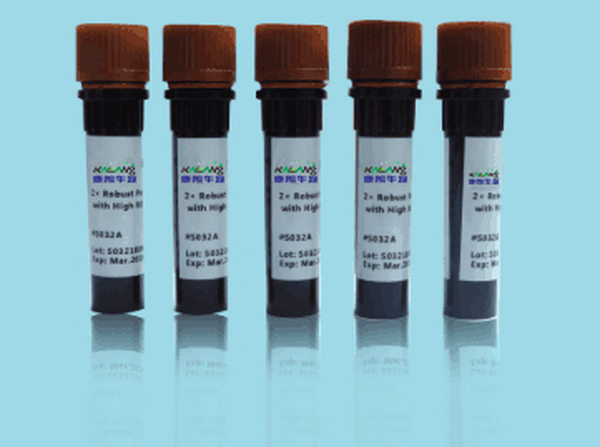
PACR rabbit Polyclonal Antibody
PACR抗体应用:WB 1:500-2000 ELISA 1:5000-20000ADCYAP receptor type I(ADCYAP1R1) Homo sapiens This gene encodes type I adenylate cyclase activating polypeptide receptor, which is a membrane-associated protein and shares significant homology with members of the glucagon/secretin receptor family. This receptor mediates diverse biological actions of adenylate cyclase activating polypeptide 1 and is positively coupled to adenylate cyclase. Multiple alternatively spliced transcript variants encoding distinct isoforms have been identified. [provided by RefSeq, Dec 2010],
PACRG rabbit Polyclonal Antibody
PACRG抗体应用:WB 1:500-2000 This gene encodes a protein that is conserved across metazoans. In vertebrates, this gene is linked in a head-to-head arrangement with the adjacent parkin gene, which is associated with autosomal recessive juvenile Parkinson's disease. These genes are co-regulated in various tissues and they share a bi-directional promoter. Both genes are associated with susceptibility to leprosy. The parkin co-regulated gene protein forms a large molecular complex with chaperones, including heat shock proteins 70 and 90, and chaperonin components. This protein is also a component of Lewy bodies in Parkinson's disease patients, and it suppresses unfolded Pael receptor-induced neuronal cell death. Multiple transcript variants encoding different isoforms have been found for this gene. [provided by RefSeq, Jul 2008],
PACS1 rabbit Polyclonal Antibody
PACS1抗体应用:WB 1:500-2000 ELISA 1:5000-20000phosphofurin acidic cluster sorting protein 1(PACS1) Homo sapiens This gene encodes a protein with a putative role in the localization of trans-Golgi network (TGN) membrane proteins. Mouse and rat homologs have been identified and studies of the homologous rat protein indicate a role in directing TGN localization of furin by binding to the protease's phosphorylated cytosolic domain. In addition, the human protein plays a role in HIV-1 Nef-mediated downregulation of cell surface MHC-I molecules to the TGN, thereby enabling HIV-1 to escape immune surveillance. [provided by RefSeq, Jul 2008],
PAEP rabbit Polyclonal Antibody
PAEP抗体应用:WB 1:500-2000 ELISA 1:5000-20000progestagen associated endometrial protein(PAEP) Homo sapiens This gene is a member of the kernel lipocalin superfamily whose members share relatively low sequence similarity but have highly conserved exon/intron structure and three-dimensional protein folding. Most lipocalins are clustered on the long arm of chromosome 9. The encoded glycoprotein has been previously referred to as pregnancy-associated endometrial alpha-2-globulin, placental protein 14, and glycodelin, but has been officially named progestagen-associated endometrial protein. Three distinct forms, with identical protein backbones but different glycosylation profiles, are found in amniotic fluid, follicular fluid and seminal plasma of the reproductive system. These glycoproteins have distinct and essential roles in regulating a uterine environment suitable for pregnancy and in the timing and occurrence of the appropriate sequence of events in the fertilization process. Al
PAHO rabbit Polyclonal Antibody
PAHO抗体应用:WB 1:500-2000 ELISA 1:5000-20000pancreatic polypeptide(PPY) Homo sapiens This gene encodes a member of the neuropeptide Y (NPY) family of peptides. The encoded 95 aa preproprotein is synthesized in the pancreatic islets of Langerhans and proteolytically processed to generate two peptide products. These products include the active pancreatic hormone of 36 aa and an icosapeptide of unknown function. This hormone acts as a regulator of pancreatic and gastrointestinal functions and may be important in the regulation of food intake. Plasma level of this hormone has been shown to be reduced in conditions associated with increased food intake and elevated in anorexia nervosa. In addition, infusion of this hormone in obese rodents has shown to decrease weight gain. Alternative splicing results in multiple transcript variants, at least one of which encodes an isoform that is proteolytically processed. [provided by RefSeq, Jan 2016],
PAIP1 rabbit Polyclonal Antibody
PAIP1抗体应用:WB 1:500-2000 ELISA 1:5000-20000poly(A) binding protein interacting protein 1(PAIP1) Homo sapiens The protein encoded by this gene interacts with poly(A)-binding protein and with the cap-binding complex eIF4A. It is involved in translational initiation and protein biosynthesis. Overexpression of this gene in COS7 cells stimulates translation. Alternative splicing occurs at this locus and three transcript variants encoding three distinct isoforms have been identified. [provided by RefSeq, Jul 2008],
PAIRB rabbit Polyclonal Antibody
PAIRB抗体应用:WB 1:500-2000 ELISA 1:5000-20000function:May play a role in the regulation of mRNA stability. Binds to the 3'-most 134 nt of the SERPINE1/PAI1 mRNA, a region which confers cyclic nucleotide regulation of message decay.,subcellular location:Also found in perinuclear regions.,subunit:Interacts with CHD3 and TDRD3.,tissue specificity:Expressed at high level in the heart, skeletal muscle and kidney, and at low levels in placenta, liver and brain.,
PAK6 rabbit Polyclonal Antibody
PAK6抗体应用:WB 1:500-2000 ELISA 1:5000-20000p21 (RAC1) activated kinase 6(PAK6) Homo sapiens This gene encodes a member of a family of p21-stimulated serine/threonine protein kinases, which contain an amino-terminal Cdc42/Rac interactive binding (CRIB) domain and a carboxyl-terminal kinase domain. These kinases function in a number of cellular processes, including cytoskeleton rearrangement, apoptosis, and the mitogen-activated protein (MAP) kinase signaling pathway. The protein encoded by this gene interacts with androgen receptor (AR) and translocates to the nucleus, where it is involved in transcriptional regulation. Changes in expression of this gene have been linked to prostate cancer. Alternative splicing results in multiple transcript variants. [provided by RefSeq, Dec 2015],
PANK2 rabbit Polyclonal Antibody
PANK2抗体应用:WB 1:500-2000 ELISA 1:5000-20000pantothenate kinase 2(PANK2) Homo sapiens This gene encodes a protein belonging to the pantothenate kinase family and is the only member of that family to be expressed in mitochondria. Pantothenate kinase is a key regulatory enzyme in the biosynthesis of coenzyme A (CoA) in bacteria and mammalian cells. It catalyzes the first committed step in the universal biosynthetic pathway leading to CoA and is itself subject to regulation through feedback inhibition by acyl CoA species. Mutations in this gene are associated with HARP syndrome and pantothenate kinase-associated neurodegeneration (PKAN), formerly Hallervorden-Spatz syndrome. Alternative splicing, involving the use of alternate first exons, results in multiple transcripts encoding different isoforms. [provided by RefSeq, Jul 2008],
PANK4 rabbit Polyclonal Antibody
PANK4抗体应用:WB 1:500-2000This gene encodes a protein belonging to the pantothenate kinase family. Pantothenate kinase is a key regulatory enzyme in the biosynthesis of coenzyme A (CoA) in bacteria and mammalian cells. It catalyzes the first committed step in the universal biosynthetic pathway leading to CoA and is itself subject to regulation through feedback inhibition by CoA. This family member is most abundant in muscle but is expressed in all tissues. [provided by RefSeq, Jul 2008],
最新动态
-
Anti-GNGT1 KL20092-001(50ul)
2021-10-11 -
Anti-GNGT1 antibody(50ul) KL20093-001
2021-10-11 -

骨组织快速脱钙液Ⅰ
2021-09-07 -
外泌体(exosomes)染色试剂盒
2021-09-07 -
外泌体(exosomes)吸附抑制剂
2021-09-07
热门标签
- Histone H3 rabbit Polyclonal Antibody Histone H3抗体
- EGFR rabbit Polyclonal Antibody EGFR抗体
- Cy3 Conjugated
- AbFluor™ 555 Conjugated
- AbFluor™ 680 Conjugated
- AbFluor™ 350 Conjugated
- AbFluor™ 647 Conjugated
- AbFluor™ 594 Conjugated
- AbFluor™ 405 Conjugated
- Cy5 Conjugated
- AbFluor™ 488 Conjugated
- Cyclophilin B抗体 Cyclophilin B Monoclonal Antibody(2B10)
- COX IV抗体 COX IV Monoclonal Antibody(6C8)
- PCNA抗体 PCNA Monoclonal Antibody(12D10)
- FAK rabbit Polyclonal Antibody FAK抗体
邮箱:3002763590@qq.com
电话:021-61998208

扫码关注微信公众号