QQ:3002763590


客服电话:021-61998208
我们是专业的科研试剂供应服务商
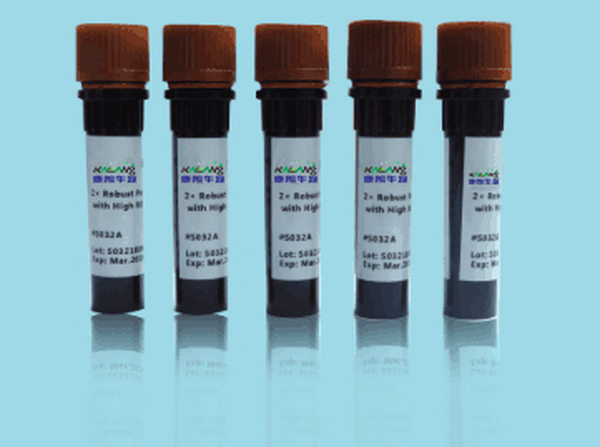
RAP1B rabbit Polyclonal Antibody
RAP1B抗体应用:WB 1:500-2000 ELISA 1:5000-20000RAP1B, member of RAS oncogene family(RAP1B) Homo sapiens This gene encodes a member of the RAS-like small GTP-binding protein superfamily. Members of this family regulate multiple cellular processes including cell adhesion and growth and differentiation. This protein localizes to cellular membranes and has been shown to regulate integrin-mediated cell signaling. This protein also plays a role in regulating outside-in signaling in platelets. Alternate splicing results in multiple transcript variants. Pseudogenes of this gene are found on chromosomes 3, 5, 6 and 9. [provided by RefSeq, Oct 2011],
RAPH1 rabbit Polyclonal Antibody
RAPH1抗体应用:WB 1:500-2000 ELISA 1:5000-20000Ras association (RalGDS/AF-6) and pleckstrin homology domains 1(RAPH1) Homo sapiens This gene encodes a protein that belongs to the Mig10/Rap1-interacting adaptor molecule/Lamellipodin family of adapter proteins, which function in cell migration. Members of this family contain pleckstrin-homology domains, Ras-association domains, and proline-rich C-termini. The protein encoded by this gene regulates actin dynamics through interaction with Ena/Vasodilator proteins as well as direct binding to filamentous actin to regulate actin network assembly. Alternative splicing results in multiple transcript variants. [provided by RefSeq, Jul 2016],
RARA rabbit Polyclonal Antibody
RARA抗体应用:WB 1:500-2000 ELISA 1:5000-20000retinoic acid receptor alpha(RARA) Homo sapiens This gene represents a nuclear retinoic acid receptor. The encoded protein, retinoic acid receptor alpha, regulates transcription in a ligand-dependent manner. This gene has been implicated in regulation of development, differentiation, apoptosis, granulopoeisis, and transcription of clock genes. Translocations between this locus and several other loci have been associated with acute promyelocytic leukemia. Alternatively spliced transcript variants have been found for this locus.[provided by RefSeq, Sep 2010],
RARG rabbit Polyclonal Antibody
RARG抗体应用:WB 1:500-2000 ELISA 1:5000-20000retinoic acid receptor gamma(RARG) Homo sapiens This gene encodes a retinoic acid receptor that belongs to the nuclear hormone receptor family. Retinoic acid receptors (RARs) act as ligand-dependent transcriptional regulators. When bound to ligands, RARs activate transcription by binding as heterodimers to the retinoic acid response elements (RARE) found in the promoter regions of the target genes. In their unbound form, RARs repress transcription of their target genes. RARs are involved in various biological processes, including limb bud development, skeletal growth, and matrix homeostasis. Alternatively spliced transcript variants encoding different isoforms have been found for this gene. [provided by RefSeq, Aug 2011],
RARR2 rabbit Polyclonal Antibody
RARR2抗体应用:WB 1:500-2000 ELISA 1:5000-20000retinoic acid receptor responder 2(RARRES2) Homo sapiens This gene encodes a secreted chemotactic protein that initiates chemotaxis via the ChemR23 G protein-coupled seven-transmembrane domain ligand. Expression of this gene is upregulated by the synthetic retinoid tazarotene and occurs in a wide variety of tissues. The active protein has several roles, including that as an adipokine and as an antimicrobial protein with activity against bacteria and fungi. [provided by RefSeq, Nov 2014],
RASA1 rabbit Polyclonal Antibody
RASA1抗体应用:WB 1:500-2000 ELISA 1:5000-20000RAS p21 protein activator 1(RASA1) Homo sapiens The protein encoded by this gene is located in the cytoplasm and is part of the GAP1 family of GTPase-activating proteins. The gene product stimulates the GTPase activity of normal RAS p21 but not its oncogenic counterpart. Acting as a suppressor of RAS function, the protein enhances the weak intrinsic GTPase activity of RAS proteins resulting in the inactive GDP-bound form of RAS, thereby allowing control of cellular proliferation and differentiation. Mutations leading to changes in the binding sites of either protein are associated with basal cell carcinomas. Mutations also have been associated with hereditary capillary malformations (CM) with or without arteriovenous malformations (AVM) and Parkes Weber syndrome. Alternative splicing results in two isoforms where the shorter isoform, lacking the N-terminal hydrophobic region but retaining the same activity, appears to be abundantly expres
RASA2 rabbit Polyclonal Antibody
RASA2抗体应用:WB 1:500-2000 ELISA 1:5000-20000RAS p21 protein activator 2(RASA2) Homo sapiens The protein encoded by this gene is member of the GAP1 family of GTPase-activating proteins. The gene product stimulates the GTPase activity of normal RAS p21 but not its oncogenic counterpart. Acting as a suppressor of RAS function, the protein enhances the weak intrinsic GTPase activity of RAS proteins resulting in the inactive GDP-bound form of RAS, thereby allowing control of cellular proliferation and differentiation. Alternative splicing results in multiple transcript variants. [provided by RefSeq, Dec 2014],
RASEF rabbit Polyclonal Antibody
RASEF抗体应用:WB 1:500-2000 ELISA 1:5000-20000RAS and EF-hand domain containing(RASEF) Homo sapiens This gene is a member of the Rab family of GTPases that are involved in regulation of membrane traffic. The encoded protein contains an N-terminal EF-hand domain, a coiled-coil motif and a C-terminal Rab domain. A potential role as tumor suppressor has been indicated for this gene. [provided by RefSeq, Nov 2012],
RASF3 rabbit Polyclonal Antibody
RASF3抗体应用:WB 1:500-2000 ELISA 1:5000-20000Ras association domain family member 3(RASSF3) Homo sapiens The RAS oncogene (MIM 190020) is mutated in nearly one-third of all human cancers. Members of the RAS superfamily are plasma membrane GTP-binding proteins that modulate intracellular signal transduction pathways. A subfamily of RAS effectors, including RASSF3, share a RAS association (RA) domain.[supplied by OMIM, Jul 2003],
RASF9 rabbit Polyclonal Antibody
RASF9抗体应用:WB 1:500-2000The protein encoded by this gene localizes to perinuclear endosomes. This protein associates with peptidylglycine alpha-amidating monooxygenase, and may be involved with the trafficking of this enzyme through secretory or endosomal pathways. [provided by RefSeq, Jul 2008],
最新动态
-
Anti-GNGT1 KL20092-001(50ul)
2021-10-11 -
Anti-GNGT1 antibody(50ul) KL20093-001
2021-10-11 -

骨组织快速脱钙液Ⅰ
2021-09-07 -
外泌体(exosomes)染色试剂盒
2021-09-07 -
外泌体(exosomes)吸附抑制剂
2021-09-07
热门标签
- Histone H3 rabbit Polyclonal Antibody Histone H3抗体
- EGFR rabbit Polyclonal Antibody EGFR抗体
- Cy3 Conjugated
- AbFluor™ 555 Conjugated
- AbFluor™ 680 Conjugated
- AbFluor™ 350 Conjugated
- AbFluor™ 647 Conjugated
- AbFluor™ 594 Conjugated
- AbFluor™ 405 Conjugated
- Cy5 Conjugated
- AbFluor™ 488 Conjugated
- Cyclophilin B抗体 Cyclophilin B Monoclonal Antibody(2B10)
- COX IV抗体 COX IV Monoclonal Antibody(6C8)
- PCNA抗体 PCNA Monoclonal Antibody(12D10)
- FAK rabbit Polyclonal Antibody FAK抗体
邮箱:3002763590@qq.com
电话:021-61998208

扫码关注微信公众号