QQ:3002763590


客服电话:021-61998208
我们是专业的科研试剂供应服务商
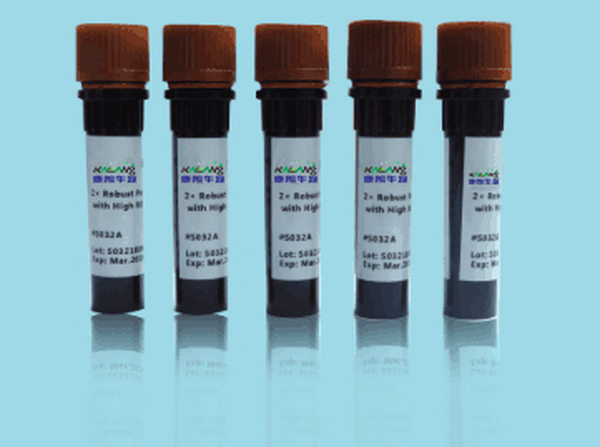
R51A1 rabbit Polyclonal Antibody
R51A1抗体应用:WB 1:500-2000 ELISA 1:5000-20000alternative products:Additional isoforms seem to exist,function:May participate in a common DNA damage response pathway associated with the activation of homologous recombination and double-strand break repair. Binds to single and double stranded DNA, and is capable of aggregating DNA. Also binds RNA.,PTM:Phosphorylated upon DNA damage, probably by ATM or ATR.,subcellular location:Colocalizes with RAD51 to multiple nuclear foci.,subunit:Isoform 2 interacts with RAD51.,tissue specificity:Highly expressed in testis and thymus. Lower levels in colon and small intestine. Little or no expression in spleen, prostate, ovary and peripheral blood leukocytes.,
RAB13 rabbit Polyclonal Antibody
RAB13抗体应用:WB 1:500-2000 ELISA 1:5000-20000RAB13, member RAS oncogene family(RAB13) Homo sapiens This gene is a member of the Rab family of small G proteins and plays a role in regulating membrane trafficking between trans-Golgi network (TGN) and recycling endosomes (RE). The encoded protein is involved in the assembly of tight junctions, which are components of the apical junctional complex (AJC) of epithelial cells. The AJC plays a role in forming a barrier between luminal contents and the underlying tissue. Additional functions associated with the protein include endocytic recycling of occludin, regulation of epithelial cell scattering, neuronal regeneration and regulation of neurite outgrowth. Alternately spliced transcript variants have been observed for this gene. A pseudogene associated with this gene is located on chromosome 12. [provided by RefSeq, Jan 2013],
RAB14 rabbit Polyclonal Antibody
RAB14抗体应用:WB 1:500-2000 ELISA 1:5000-20000RAB14, member RAS oncogene family(RAB14) Homo sapiens RAB14 belongs to the large RAB family of low molecular mass GTPases that are involved in intracellular membrane trafficking. These proteins act as molecular switches that flip between an inactive GDP-bound state and an active GTP-bound state in which they recruit downstream effector proteins onto membranes (Junutula et al., 2004 [PubMed 15004230]).[supplied by OMIM, Mar 2009],
RAB15 rabbit Polyclonal Antibody
RAB15抗体应用:WB 1:500-2000 ELISA 1:5000-20000function:May act in concert with RAB3A in regulating aspects of synaptic vesicle membrane flow within the nerve terminal.,similarity:Belongs to the small GTPase superfamily. Rab family.,subunit:The GTP bound form of RAB15 interacts with REP15.,
RAB17 rabbit Polyclonal Antibody
RAB17抗体应用:WB 1:500-2000 ELISA 1:5000-20000RAB17, member RAS oncogene family(RAB17) Homo sapiens The Rab subfamily of small GTPases plays an important role in the regulation of membrane trafficking. RAB17 is an epithelial cell-specific GTPase (Lutcke et al., 1993 [PubMed 8486736]).[supplied by OMIM, Oct 2009],
RAB1A rabbit Polyclonal Antibody
RAB1A抗体应用:WB 1:500-2000 ELISA 1:5000-20000RAB1A, member RAS oncogene family(RAB1A) Homo sapiens This gene encodes a member of the Ras superfamily of GTPases. Members of the gene family cycle between inactive GDP-bound and active GTP-bound forms. This small GTPase controls vesicle traffic from the endoplasmic reticulum to the Golgi apparatus. Multiple alternatively spliced transcript variants have been identified for this gene which encode different protein isoforms. [provided by RefSeq, Oct 2008],
RAB21 rabbit Polyclonal Antibody
RAB21抗体应用:WB 1:500-2000 ELISA 1:5000-20000RAB21, member RAS oncogene family(RAB21) Homo sapiens This gene belongs to the Rab family of monomeric GTPases, which are involved in the control of cellular membrane traffic. The encoded protein plays a role in the targeted trafficking of integrins via its association with integrin alpha tails. As a consequence, the encoded protein is involved in the regulation of cell adhesion and migration. Expression of this gene is associated with a poor prognosis for glioma patients. This gene is downregulated by the tumor suppressor miR-200b, and miRNA-200b is itself downregulated in glioma tissues. [provided by RefSeq, Nov 2015],
最新动态
-
Anti-GNGT1 KL20092-001(50ul)
2021-10-11 -
Anti-GNGT1 antibody(50ul) KL20093-001
2021-10-11 -

骨组织快速脱钙液Ⅰ
2021-09-07 -
外泌体(exosomes)染色试剂盒
2021-09-07 -
外泌体(exosomes)吸附抑制剂
2021-09-07
热门标签
- Histone H3 rabbit Polyclonal Antibody Histone H3抗体
- EGFR rabbit Polyclonal Antibody EGFR抗体
- Cy3 Conjugated
- AbFluor™ 555 Conjugated
- AbFluor™ 680 Conjugated
- AbFluor™ 350 Conjugated
- AbFluor™ 647 Conjugated
- AbFluor™ 594 Conjugated
- AbFluor™ 405 Conjugated
- Cy5 Conjugated
- AbFluor™ 488 Conjugated
- Cyclophilin B抗体 Cyclophilin B Monoclonal Antibody(2B10)
- COX IV抗体 COX IV Monoclonal Antibody(6C8)
- PCNA抗体 PCNA Monoclonal Antibody(12D10)
- FAK rabbit Polyclonal Antibody FAK抗体
邮箱:3002763590@qq.com
电话:021-61998208

扫码关注微信公众号