QQ:3002763590


客服电话:021-61998208
我们是专业的科研试剂供应服务商
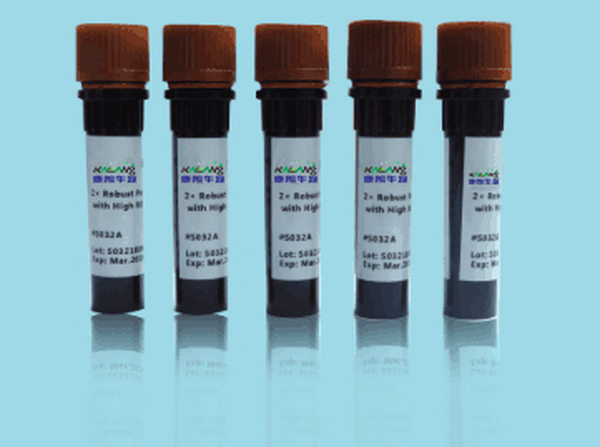
SP5 rabbit Polyclonal Antibody
SP5抗体应用:WB 1:500-2000 ELISA 1:5000-20000function:Binds to GC boxes promoters elements. Probable transcriptional activator that has a role in the coordination of changes in transcription required to generate pattern in the developing embryo.,similarity:Belongs to the Sp1 C2H2-type zinc-finger protein family.,similarity:Contains 3 C2H2-type zinc fingers.,
SP6 rabbit Polyclonal Antibody
SP6抗体应用:WB 1:500-2000 ELISA 1:5000-20000Sp6 transcription factor(SP6) Homo sapiens SP6 belongs to a family of transcription factors that contain 3 classical zinc finger DNA-binding domains consisting of a zinc atom tetrahedrally coordinated by 2 cysteines and 2 histidines (C2H2 motif). These transcription factors bind to GC-rich sequences and related GT and CACCC boxes (Scohy et al., 2000 [PubMed 11087666]).[supplied by OMIM, Mar 2008],
SP7 rabbit Polyclonal Antibody
SP7抗体应用:WB 1:500-2000 ELISA 1:5000-20000Sp7 transcription factor(SP7) Homo sapiens This gene encodes a member of the Sp subfamily of Sp/XKLF transcription factors. Sp family proteins are sequence-specific DNA-binding proteins characterized by an amino-terminal trans-activation domain and three carboxy-terminal zinc finger motifs. This protein is a bone specific transcription factor and is required for osteoblast differentiation and bone formation.[provided by RefSeq, Jul 2010],
SPA12 rabbit Polyclonal Antibody
SPA12抗体应用:WB 1:500-2000 ELISA 1:5000-20000function:May modulates insulin action conceivably only in the presence of its yet undefined target proteases in white adipose tissues.,similarity:Belongs to the serpin family.,tissue specificity:Expressed in visceral adipose tissues.,
SPAG5 rabbit Polyclonal Antibody
SPAG5抗体应用:WB 1:500-2000 ELISA 1:5000-20000sperm associated antigen 5(SPAG5) Homo sapiens This gene encodes a protein associated with the mitotic spindle apparatus. The encoded protein may be involved in the functional and dynamic regulation of mitotic spindles. [provided by RefSeq, Jul 2008],
SPAG8 rabbit Polyclonal Antibody
SPAG8抗体应用:WB 1:500-2000 ELISA 1:5000-20000sperm associated antigen 8(SPAG8) Homo sapiens The correlation of anti-sperm antibodies with cases of unexplained infertility implicates a role for these antibodies in blocking fertilization. Improved diagnosis and treatment of immunologic infertility, as well as identification of proteins for targeted contraception, are dependent on the identification and characterization of relevant sperm antigens. The protein encoded by this gene is recognized by sperm agglutinating antibodies from an infertile woman. This protein is localized in germ cells of the testis at all stages of spermatogenesis and is localized to the acrosomal region of mature spermatozoa. This protein interacts with ACT (activator of CREM in testis) and may play a role in CREM (cAMP response element modulator)-ACT-mediated gene transcription during spermatogenesis. This protein may also play a role in spermatogenesis by regulating microtubule formation and cell division. Al
SPAST rabbit Polyclonal Antibody
SPAST抗体应用:WB 1:500-2000 This gene encodes a member of the AAA (ATPases associated with a variety of cellular activities) protein family. Members of this protein family share an ATPase domain and have roles in diverse cellular processes including membrane trafficking, intracellular motility, organelle biogenesis, protein folding, and proteolysis. The encoded ATPase may be involved in the assembly or function of nuclear protein complexes. Two transcript variants encoding distinct isoforms have been identified for this gene. Other alternative splice variants have been described but their full length sequences have not been determined. Mutations associated with this gene cause the most frequent form of autosomal dominant spastic paraplegia 4. [provided by RefSeq, Jul 2008],
最新动态
-
Anti-GNGT1 KL20092-001(50ul)
2021-10-11 -
Anti-GNGT1 antibody(50ul) KL20093-001
2021-10-11 -

骨组织快速脱钙液Ⅰ
2021-09-07 -
外泌体(exosomes)染色试剂盒
2021-09-07 -
外泌体(exosomes)吸附抑制剂
2021-09-07
热门标签
- Histone H3 rabbit Polyclonal Antibody Histone H3抗体
- EGFR rabbit Polyclonal Antibody EGFR抗体
- Cy3 Conjugated
- AbFluor™ 555 Conjugated
- AbFluor™ 680 Conjugated
- AbFluor™ 350 Conjugated
- AbFluor™ 647 Conjugated
- AbFluor™ 594 Conjugated
- AbFluor™ 405 Conjugated
- Cy5 Conjugated
- AbFluor™ 488 Conjugated
- Cyclophilin B抗体 Cyclophilin B Monoclonal Antibody(2B10)
- COX IV抗体 COX IV Monoclonal Antibody(6C8)
- PCNA抗体 PCNA Monoclonal Antibody(12D10)
- FAK rabbit Polyclonal Antibody FAK抗体
邮箱:3002763590@qq.com
电话:021-61998208

扫码关注微信公众号