QQ:3002763590


客服电话:021-61998208
我们是专业的科研试剂供应服务商
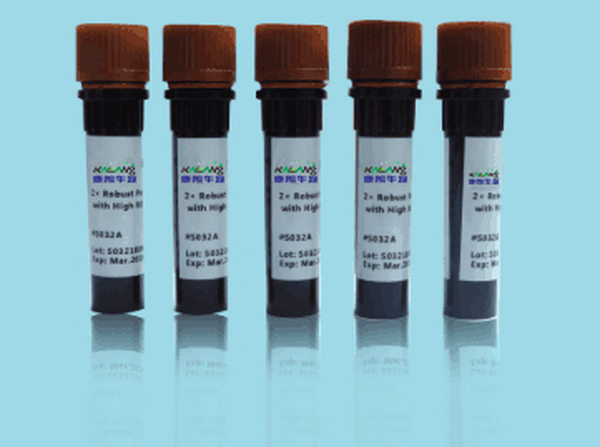
TRPC1 rabbit Polyclonal Antibody
TRPC1抗体应用:WB 1:500-2000 ELISA 1:5000-20000transient receptor potential cation channel subfamily C member 1(TRPC1) Homo sapiens The protein encoded by this gene is a membrane protein that can form a non-selective channel permeable to calcium and other cations. The encoded protein appears to be induced to form channels by a receptor tyrosine kinase-activated phosphatidylinositol second messenger system and also by depletion of intracellular calcium stores. Two transcript variants encoding different isoforms have been found for this gene. [provided by RefSeq, Oct 2011],
TRPC5 rabbit Polyclonal Antibody
TRPC5抗体应用:WB 1:500-2000 This gene belongs to the transient receptor family. It encodes one of the seven mammalian TRPC (transient receptor potential channel) proteins. The encoded protein is a multi-pass membrane protein and is thought to form a receptor-activated non-selective calcium permeant cation channel. The protein is active alone or as a heteromultimeric assembly with TRPC1, TRPC3, and TRPC4. It also interacts with multiple proteins including calmodulin, CABP1, enkurin, Na(+)-H+ exchange regulatory factor (NHERF ), interferon-induced GTP-binding protein (MX1), ring finger protein 24 (RNF24), and SEC14 domain and spectrin repeat-containing protein 1 (SESTD1). [provided by RefSeq, May 2010],
TRPC6 rabbit Polyclonal Antibody
TRPC6抗体应用:WB 1:500-2000 The protein encoded by this gene forms a receptor-activated calcium channel in the cell membrane. The channel is activated by diacylglycerol and is thought to be under the control of a phosphatidylinositol second messenger system. Activation of this channel occurs independently of protein kinase C and is not triggered by low levels of intracellular calcium. Defects in this gene are a cause of focal segmental glomerulosclerosis 2 (FSGS2). [provided by RefSeq, Mar 2009],
TRPC7 rabbit Polyclonal Antibody
TRPC7抗体应用:WB 1:500-2000 ELISA 1:5000-20000function:Thought to form a receptor-activated non-selective calcium permeant cation channel. Probably is operated by a phosphatidylinositol second messenger system activated by receptor tyrosine kinases or G-protein coupled receptors. Activated by diacylglycerol (DAG) (By similarity). May also be activated by intracellular calcium store depletion.,similarity:Belongs to the transient receptor family. STrpC subfamily.,similarity:Contains 4 ANK repeats.,subunit:Interacts with MX1 and RNF24.,
TRPM2 rabbit Polyclonal Antibody
TRPM2抗体应用:WB 1:500-2000The protein encoded by this gene forms a tetrameric cation channel that is permeable to calcium, sodium, and potassium and is regulated by free intracellular ADP-ribose. The encoded protein is activated by oxidative stress and confers susceptibility to cell death. Alternative splicing results in multiple transcript variants encoding distinct protein isoforms. Additional transcript variants of this gene have been described, but their full-length nature is not known. [provided by RefSeq, Feb 2016],
TRPM4 rabbit Polyclonal Antibody
TRPM4抗体应用:WB 1:500-2000 The protein encoded by this gene is a calcium-activated nonselective ion channel that mediates transport of monovalent cations across membranes, thereby depolarizing the membrane. The activity of the encoded protein increases with increasing intracellular calcium concentration, but this channel does not transport calcium. [provided by RefSeq, Mar 2016],
TRPM7 rabbit Polyclonal Antibody
TRPM7抗体应用:WB 1:500-2000 ELISA 1:5000-20000transient receptor potential cation channel subfamily M member 7(TRPM7) Homo sapiens The protein encoded by this gene is both an ion channel and a serine/threonine protein kinase. The kinase activity is essential for the ion channel function, which serves to increase intracellular calcium levels and to help regulate magnesium ion homeostasis. Defects in this gene are a cause of amyotrophic lateral sclerosis-parkinsonism/dementia complex of Guam. Alternative splicing of this gene results in multiple transcript variants. [provided by RefSeq, Jul 2014],
TRPM8 rabbit Polyclonal Antibody
TRPM8抗体应用:WB 1:500-2000 ELISA 1:5000-20000function:Receptor-activated non-selective cation channel involved in detection of sensations such as coolness, by being activated by cold temperature below 25 degrees Celsius. Activated by icilin, eucalyptol, menthol, cold and modulation of intracellular pH. Involved in menthol sensation. Permeable for monovalent cations sodium, potassium, and cesium and divalent cation calcium. Temperature sensing is tightly linked to voltage-dependent gating. Activated upon depolarization, changes in temperature resulting in graded shifts of its voltage-dependent activation curves. The chemical agonists menthol functions as a gating modifier, shifting activation curves towards physiological membrane potentials. Temperature sensitivity arises from a tenfold difference in the activation energies associated with voltage-dependent opening and closing.,miscellaneous:Its expression in most prostate tumors as well as the presence of an immunogenic epitope suggest th
TRPV1 rabbit Polyclonal Antibody
TRPV1抗体应用:WB 1:500-2000 ELISA 1:5000-20000transient receptor potential cation channel subfamily V member 1(TRPV1) Homo sapiens Capsaicin, the main pungent ingredient in hot chili peppers, elicits a sensation of burning pain by selectively activating sensory neurons that convey information about noxious stimuli to the central nervous system. The protein encoded by this gene is a receptor for capsaicin and is a non-selective cation channel that is structurally related to members of the TRP family of ion channels. This receptor is also activated by increases in temperature in the noxious range, suggesting that it functions as a transducer of painful thermal stimuli in vivo. Four transcript variants encoding the same protein, but with different 5' UTR sequence, have been described for this gene. [provided by RefSeq, Jul 2008],
TRPV2 rabbit Polyclonal Antibody
TRPV2抗体应用:WB 1:500-2000 This gene encodes an ion channel that is activated by high temperatures above 52 degrees Celsius. The protein may be involved in transduction of high-temperature heat responses in sensory ganglia. It is thought that in other tissues the channel may be activated by stimuli other than heat. [provided by RefSeq, Jul 2008],
最新动态
-
Anti-GNGT1 KL20092-001(50ul)
2021-10-11 -
Anti-GNGT1 antibody(50ul) KL20093-001
2021-10-11 -

骨组织快速脱钙液Ⅰ
2021-09-07 -
外泌体(exosomes)染色试剂盒
2021-09-07 -
外泌体(exosomes)吸附抑制剂
2021-09-07
热门标签
- Histone H3 rabbit Polyclonal Antibody Histone H3抗体
- EGFR rabbit Polyclonal Antibody EGFR抗体
- Cy3 Conjugated
- AbFluor™ 555 Conjugated
- AbFluor™ 680 Conjugated
- AbFluor™ 350 Conjugated
- AbFluor™ 647 Conjugated
- AbFluor™ 594 Conjugated
- AbFluor™ 405 Conjugated
- Cy5 Conjugated
- AbFluor™ 488 Conjugated
- Cyclophilin B抗体 Cyclophilin B Monoclonal Antibody(2B10)
- COX IV抗体 COX IV Monoclonal Antibody(6C8)
- PCNA抗体 PCNA Monoclonal Antibody(12D10)
- FAK rabbit Polyclonal Antibody FAK抗体
邮箱:3002763590@qq.com
电话:021-61998208

扫码关注微信公众号