QQ:3002763590


客服电话:021-61998208
我们是专业的科研试剂供应服务商
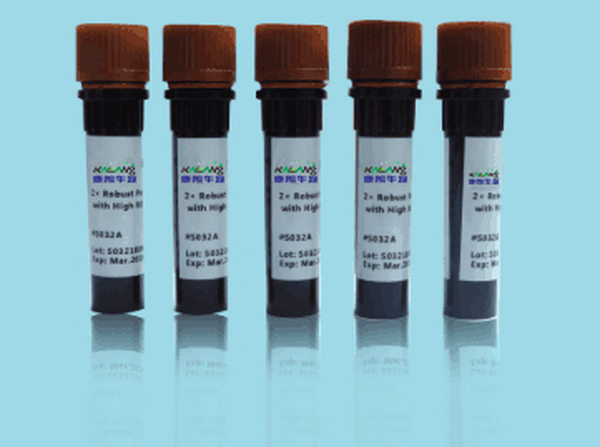
CdcA7 rabbit Polyclonal Antibody
CdcA7抗体应用:Western Blot: 1/500 - 1/2000. ELISA: 1/20000. cell division cycle associated 7(CDCA7) Homo sapiens This gene was identified as a c-Myc responsive gene, and behaves as a direct c-Myc target gene. Overexpression of this gene is found to enhance the transformation of lymphoblastoid cells, and it complements a transformation-defective Myc Box II mutant, suggesting its involvement in c-Myc-mediated cell transformation. Two alternatively spliced transcript variants encoding distinct isoforms have been reported. [provided by RefSeq, Jul 2008],
CDCP1 rabbit Polyclonal Antibody
CDCP1抗体应用:Western Blot: 1/500 - 1/2000. IHC-p: 1:100-300 ELISA: 1/20000. CUB domain containing protein 1(CDCP1) Homo sapiens This gene encodes a transmembrane protein which contains three extracellular CUB domains and acts as a substrate for Src family kinases. The protein plays a role in the tyrosine phosphorylation-dependent regulation of cellular events that are involved in tumor invasion and metastasis. Alternative splicing results in multiple transcript variants of this gene. [provided by RefSeq, May 2013],
CDCP1 rabbit Polyclonal Antibody
CDCP1抗体应用:Western Blot: 1/500 - 1/2000. ELISA: 1/10000. CUB domain containing protein 1(CDCP1) Homo sapiens This gene encodes a transmembrane protein which contains three extracellular CUB domains and acts as a substrate for Src family kinases. The protein plays a role in the tyrosine phosphorylation-dependent regulation of cellular events that are involved in tumor invasion and metastasis. Alternative splicing results in multiple transcript variants of this gene. [provided by RefSeq, May 2013],
CDCP1 rabbit Polyclonal Antibody
CDCP1抗体应用:Western Blot: 1/500 - 1/2000. Immunofluorescence: 1/200 - 1/1000. ELISA: 1/20000. CUB domain containing protein 1(CDCP1) Homo sapiens This gene encodes a transmembrane protein which contains three extracellular CUB domains and acts as a substrate for Src family kinases. The protein plays a role in the tyrosine phosphorylation-dependent regulation of cellular events that are involved in tumor invasion and metastasis. Alternative splicing results in multiple transcript variants of this gene. [provided by RefSeq, May 2013],
CdGAP rabbit Polyclonal Antibody
CdGAP抗体应用:Immunohistochemistry: 1/100 - 1/300. ELISA: 1/5000. Rho GTPase activating protein 31(ARHGAP31) Homo sapiens This gene encodes a GTPase-activating protein (GAP). A variety of cellular processes are regulated by Rho GTPases which cycle between an inactive form bound to GDP and an active form bound to GTP. This cycling between inactive and active forms is regulated by guanine nucleotide exchange factors and GAPs. The encoded protein is a GAP shown to regulate two GTPases involved in protein trafficking and cell growth. [provided by RefSeq, Jul 2008],
CDH17 rabbit Polyclonal Antibody
CDH17抗体应用:WB 1:500-2000, ELISA 1:10000-20000 cadherin 17(CDH17) Homo sapiens This gene is a member of the cadherin superfamily, genes encoding calcium-dependent, membrane-associated glycoproteins. The encoded protein is cadherin-like, consisting of an extracellular region, containing 7 cadherin domains, and a transmembrane region but lacking the conserved cytoplasmic domain. The protein is a component of the gastrointestinal tract and pancreatic ducts, acting as an intestinal proton-dependent peptide transporter in the first step in oral absorption of many medically important peptide-based drugs. The protein may also play a role in the morphological organization of liver and intestine. Alternative splicing results in multiple transcript variants. [provided by RefSeq, Jan 2009],
CDH3 rabbit Polyclonal Antibody
CDH3抗体应用:WB 1:500-2000, ELISA 1:10000-20000 cadherin 3(CDH3) Homo sapiens This gene encodes a classical cadherin of the cadherin superfamily. Alternative splicing results in multiple transcript variants, at least one of which encodes a preproprotein that is proteolytically processed to generate the mature glycoprotein. This calcium-dependent cell-cell adhesion protein is comprised of five extracellular cadherin repeats, a transmembrane region and a highly conserved cytoplasmic tail. This gene is located in a gene cluster in a region on the long arm of chromosome 16 that is involved in loss of heterozygosity events in breast and prostate cancer. In addition, aberrant expression of this protein is observed in cervical adenocarcinomas. Mutations in this gene are associated with hypotrichosis with juvenile macular dystrophy and ectodermal dysplasia, ectrodactyly, and macular dystrophy syndrome (EEMS). [provided by RefSeq, Nov 2015],
CDHF10 rabbit Polyclonal Antibody
CDHF10抗体应用:Immunohistochemistry: 1/100 - 1/300. Immunofluorescence: 1/200 - 1/1000. ELISA: 1/5000 cadherin EGF LAG seven-pass G-type receptor 2(CELSR2) Homo sapiens The protein encoded by this gene is a member of the flamingo subfamily, part of the cadherin superfamily. The flamingo subfamily consists of nonclassic-type cadherins; a subpopulation that does not interact with catenins. The flamingo cadherins are located at the plasma membrane and have nine cadherin domains, seven epidermal growth factor-like repeats and two laminin A G-type repeats in their ectodomain. They also have seven transmembrane domains, a characteristic unique to this subfamily. It is postulated that these proteins are receptors involved in contact-mediated communication, with cadherin domains acting as homophilic binding regions and the EGF-like domains involved in cell adhesion and receptor-ligand interactions. The specific function of this particular member has not been determined. [provided by RefSeq, Jul 20
CDHF11 rabbit Polyclonal Antibody
CDHF11抗体应用:Immunohistochemistry: 1/100 - 1/300. Immunofluorescence: 1/200 - 1/1000. ELISA: 1/20000. cadherin EGF LAG seven-pass G-type receptor 3(CELSR3) Homo sapiens This gene belongs to the flamingo subfamily, which is included in the cadherin superfamily. The flamingo cadherins consist of nonclassic-type cadherins that do not interact with catenins. They are plasma membrane proteins containing seven epidermal growth factor-like repeats, nine cadherin domains and two laminin A G-type repeats in their ectodomain. They also have seven transmembrane domains, a characteristic feature of their subfamily. The encoded protein may be involved in the regulation of contact-dependent neurite growth and may play a role in tumor formation. [provided by RefSeq, Jun 2013],
CDHF9 rabbit Polyclonal Antibody
CDHF9抗体应用:Immunofluorescence: 1/200 - 1/1000. ELISA: 1/10000. cadherin EGF LAG seven-pass G-type receptor 1(CELSR1) Homo sapiens The protein encoded by this gene is a member of the flamingo subfamily, part of the cadherin superfamily. The flamingo subfamily consists of nonclassic-type cadherins; a subpopulation that does not interact with catenins. The flamingo cadherins are located at the plasma membrane and have nine cadherin domains, seven epidermal growth factor-like repeats and two laminin A G-type repeats in their ectodomain. They also have seven transmembrane domains, a characteristic unique to this subfamily. It is postulated that these proteins are receptors involved in contact-mediated communication, with cadherin domains acting as homophilic binding regions and the EGF-like domains involved in cell adhesion and receptor-ligand interactions. This particular member is a developmentally regulated, neural-specific gene which plays an unspecified role in early embryogenesis. [pro
最新动态
-
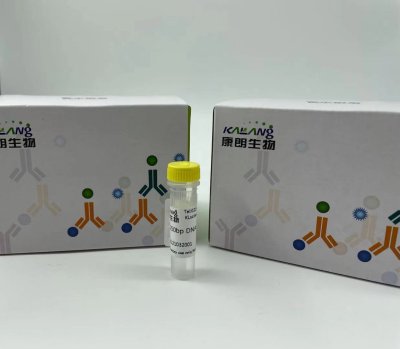
Anti-GNGT1 KL20092-001(50ul)
2021-10-11 -
Anti-GNGT1 antibody(50ul) KL20093-001
2021-10-11 -

骨组织快速脱钙液Ⅰ
2021-09-07 -
外泌体(exosomes)染色试剂盒
2021-09-07 -
外泌体(exosomes)吸附抑制剂
2021-09-07
热门标签
- Histone H3 rabbit Polyclonal Antibody Histone H3抗体
- EGFR rabbit Polyclonal Antibody EGFR抗体
- Cy3 Conjugated
- AbFluor™ 555 Conjugated
- AbFluor™ 680 Conjugated
- AbFluor™ 350 Conjugated
- AbFluor™ 647 Conjugated
- AbFluor™ 594 Conjugated
- AbFluor™ 405 Conjugated
- Cy5 Conjugated
- AbFluor™ 488 Conjugated
- Cyclophilin B抗体 Cyclophilin B Monoclonal Antibody(2B10)
- COX IV抗体 COX IV Monoclonal Antibody(6C8)
- PCNA抗体 PCNA Monoclonal Antibody(12D10)
- FAK rabbit Polyclonal Antibody FAK抗体
邮箱:3002763590@qq.com
电话:021-61998208

扫码关注微信公众号