QQ:3002763590


客服电话:021-61998208
我们是专业的科研试剂供应服务商
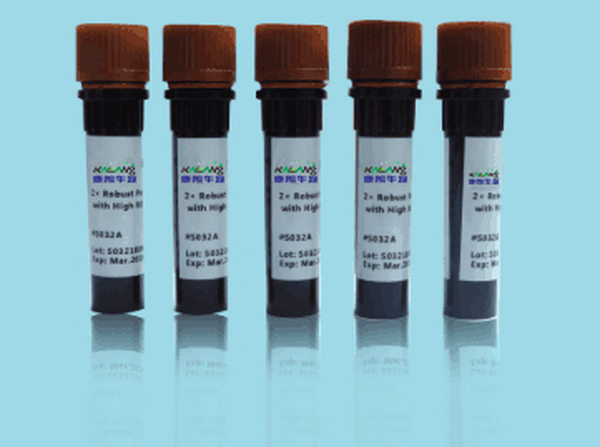
CLC-KA rabbit Polyclonal Antibody
CLC-KA抗体应用:Western Blot: 1/500 - 1/2000. ELISA: 1/40000. chloride voltage-gated channel Ka(CLCNKA) Homo sapiens This gene is a member of the CLC family of voltage-gated chloride channels. The encoded protein is predicted to have 12 transmembrane domains, and requires a beta subunit called barttin to form a functional channel. It is thought to function in salt reabsorption in the kidney and potassium recycling in the inner ear. The gene is highly similar to CLCNKB, which is located 10 kb downstream from this gene. Multiple transcript variants encoding different isoforms have been found for this gene. [provided by RefSeq, Jul 2008],
CLCN3 rabbit Polyclonal Antibody
CLCN3抗体应用:WB 1:500-2000 This gene encodes a member of the voltage-gated chloride channel (ClC) family. The encoded protein is present in all cell types and localized in plasma membranes and in intracellular vesicles. It is a multi-pass membrane protein which contains a ClC domain and two additional C-terminal CBS (cystathionine beta-synthase) domains. The ClC domain catalyzes the selective flow of Cl- ions across cell membranes, and the CBS domain may have a regulatory function. This protein plays a role in both acidification and transmitter loading of GABAergic synaptic vesicles, and in smooth muscle cell activation and neointima formation. This protein is required for lysophosphatidic acid (LPA)-activated Cl- current activity and fibroblast-to-myofibroblast differentiation. The protein activity is regulated by Ca(2+)/calmodulin-dependent protein kinase II (CaMKII) in glioma cells. Multiple alternatively spliced transcript variants encoding different isoforms have been identified. [pr
CLD24 rabbit Polyclonal Antibody
CLD24抗体应用:WB 1:500-2000 This gene encodes a member of the claudin family. Claudins are integral membrane proteins and components of tight junction strands. Tight junction strands serve as a physical barrier to prevent solutes and water from passing freely through the paracellular space between epithelial or endothelial cell sheets, and also play critical roles in maintaining cell polarity and signal transductions. The protein encoded by this gene is 75% identical to the mouse homolog. This gene is upstream of the CLDN22 gene, which overlaps the WWC2 gene on the opposite strand in the genome.[provided by RefSeq, Aug 2010],
Cleaved-Caspase-8 p18 (S217) rabbit Polyclonal Antibody
Cleaved-Caspase-8 p18 (S217)抗体应用:Western Blot: 1/500 - 1/2000. ELISA: 1/10000 caspase 8(CASP8) Homo sapiens This gene encodes a member of the cysteine-aspartic acid protease (caspase) family. Sequential activation of caspases plays a central role in the execution-phase of cell apoptosis. Caspases exist as inactive proenzymes composed of a prodomain, a large protease subunit, and a small protease subunit. Activation of caspases requires proteolytic processing at conserved internal aspartic residues to generate a heterodimeric enzyme consisting of the large and small subunits. This protein is involved in the programmed cell death induced by Fas and various apoptotic stimuli. The N-terminal FADD-like death effector domain of this protein suggests that it may interact with Fas-interacting protein FADD. This protein was detected in the insoluble fraction of the affected brain region from Huntington disease patients but not in those from normal controls, which implicated the role in neurodeg
CLECSF6 rabbit Polyclonal Antibody
CLECSF6抗体应用:WB 1:500-2000, ELISA 1:10000-20000 C-type lectin domain family 4 member A(CLEC4A) Homo sapiens This gene encodes a member of the C-type lectin/C-type lectin-like domain (CTL/CTLD) superfamily. Members of this family share a common protein fold and have diverse functions, such as cell adhesion, cell-cell signalling, glycoprotein turnover, and roles in inflammation and immune response. The encoded type 2 transmembrane protein may play a role in inflammatory and immune response. Multiple transcript variants encoding distinct isoforms have been identified for this gene. This gene is closely linked to other CTL/CTLD superfamily members on chromosome 12p13 in the natural killer gene complex region. [provided by RefSeq, Jul 2008],
CLH2 rabbit Polyclonal Antibody
CLH2抗体应用:WB 1:500-2000 This gene is a member of the clathrin heavy chain family and encodes a major protein of the polyhedral coat of coated pits and vesicles. Chromosomal aberrations involving this gene are associated with meningioma, DiGeorge syndrome, and velo-cardio-facial syndrome. Multiple transcript variants encoding different isoforms have been found for this gene. [provided by RefSeq, Jun 2009],
CLIC3 rabbit Polyclonal Antibody
CLIC3抗体应用:Western Blot: 1/500 - 1/2000. ELISA: 1/40000. chloride intracellular channel 3(CLIC3) Homo sapiens Chloride channels are a diverse group of proteins that regulate fundamental cellular processes including stabilization of cell membrane potential, transepithelial transport, maintenance of intracellular pH, and regulation of cell volume. Chloride intracellular channel 3 is a member of the p64 family and is predominantly localized in the nucleus and stimulates chloride ion channel activity. In addition, this protein may participate in cellular growth control, based on its association with ERK7, a member of the MAP kinase family. [provided by RefSeq, Jul 2008],
CLIC4 rabbit Polyclonal Antibody
CLIC4抗体应用:Western Blot: 1/500 - 1/2000. Immunohistochemistry: 1/100 - 1/300. ELISA: 1/40000. chloride intracellular channel 4(CLIC4) Homo sapiens Chloride channels are a diverse group of proteins that regulate fundamental cellular processes including stabilization of cell membrane potential, transepithelial transport, maintenance of intracellular pH, and regulation of cell volume. Chloride intracellular channel 4 (CLIC4) protein, encoded by the CLIC4 gene, is a member of the p64 family; the gene is expressed in many tissues and exhibits a intracellular vesicular pattern in Panc-1 cells (pancreatic cancer cells). [provided by RefSeq, Jul 2008],
CLIC5 rabbit Polyclonal Antibody
CLIC5抗体应用:WB 1:500-2000 This gene encodes a member of the chloride intracellular channel (CLIC) family of chloride ion channels. The encoded protein associates with actin-based cytoskeletal structures and may play a role in multiple processes including hair cell stereocilia formation, myoblast proliferation and glomerular podocyte and endothelial cell maintenance. Alternatively spliced transcript variants encoding multiple isoforms have been observed for this gene. [provided by RefSeq, Dec 2011],
最新动态
-
Anti-GNGT1 KL20092-001(50ul)
2021-10-11 -
Anti-GNGT1 antibody(50ul) KL20093-001
2021-10-11 -

骨组织快速脱钙液Ⅰ
2021-09-07 -
外泌体(exosomes)染色试剂盒
2021-09-07 -
外泌体(exosomes)吸附抑制剂
2021-09-07
热门标签
- Histone H3 rabbit Polyclonal Antibody Histone H3抗体
- EGFR rabbit Polyclonal Antibody EGFR抗体
- Cy3 Conjugated
- AbFluor™ 555 Conjugated
- AbFluor™ 680 Conjugated
- AbFluor™ 350 Conjugated
- AbFluor™ 647 Conjugated
- AbFluor™ 594 Conjugated
- AbFluor™ 405 Conjugated
- Cy5 Conjugated
- AbFluor™ 488 Conjugated
- Cyclophilin B抗体 Cyclophilin B Monoclonal Antibody(2B10)
- COX IV抗体 COX IV Monoclonal Antibody(6C8)
- PCNA抗体 PCNA Monoclonal Antibody(12D10)
- FAK rabbit Polyclonal Antibody FAK抗体
邮箱:3002763590@qq.com
电话:021-61998208

扫码关注微信公众号