QQ:3002763590


客服电话:021-61998208
我们是专业的科研试剂供应服务商
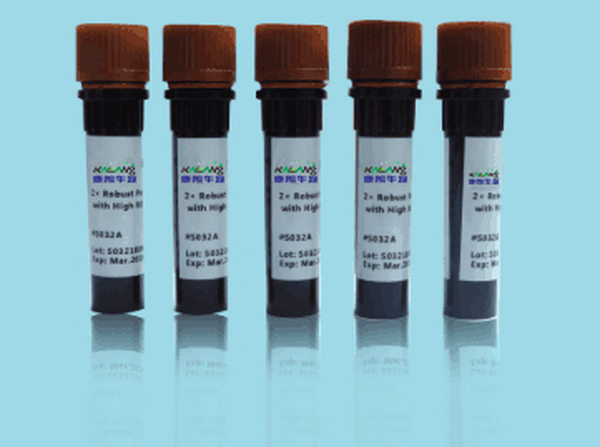
GTR10 rabbit Polyclonal Antibody
GTR10抗体应用:WB 1:500-2000 This gene encodes a member of the class III facilitative glucose transporter family. The encoded protein plays a role in regulation of glucose homeostasis. Mutations in this gene have been associated with arterial tortuosity syndrome.[provided by RefSeq, Dec 2009],
GTR2 rabbit Polyclonal Antibody
GTR2抗体应用:WB 1:500-2000 ELISA 1:5000-20000solute carrier family 2 member 2(SLC2A2) Homo sapiens This gene encodes an integral plasma membrane glycoprotein of the liver, islet beta cells, intestine, and kidney epithelium. The encoded protein mediates facilitated bidirectional glucose transport. Because of its low affinity for glucose, it has been suggested as a glucose sensor. Mutations in this gene are associated with susceptibility to diseases, including Fanconi-Bickel syndrome and noninsulin-dependent diabetes mellitus (NIDDM). Alternative splicing results in multiple transcript variants of this gene. [provided by RefSeq, Jul 2013],
GTR8 rabbit Polyclonal Antibody
GTR8抗体应用:WB 1:500-2000 ELISA 1:5000-20000solute carrier family 2 member 8(SLC2A8) Homo sapiens This gene belongs to the solute carrier 2A family, which includes intracellular glucose transporters. Based on sequence comparison, the glucose transporters are grouped into three classes and this gene is a member of class II. The encoded protein, like other members of the family, contains several conserved residues and motifs and 12 transmembrane domains with both amino and carboxyl ends being on the cytosolic side of the membrane. Alternatively spliced transcript variants have been described for this gene. [provided by RefSeq, Nov 2012],
GTSE1 rabbit Polyclonal Antibody
GTSE1抗体应用:WB 1:500-2000 ELISA 1:5000-20000G2 and S-phase expressed 1(GTSE1) Homo sapiens The protein encoded by this gene is only expressed in the S and G2 phases of the cell cycle, where it colocalizes with cytoplasmic tubulin and microtubules. In response to DNA damage, the encoded protein accumulates in the nucleus and binds the tumor suppressor protein p53, shuttling it out of the nucleus and repressing its ability to induce apoptosis. [provided by RefSeq, Jul 2008],
GUC1A rabbit Polyclonal Antibody
GUC1A抗体应用:WB 1:500-2000This gene encodes an enzyme that plays a role in the recovery of retinal photoreceptors from photobleaching. This enzyme promotes the activity of retinal guanylyl cyclase-1 (GC1) at low calcium concentrations and inhibits GC1 at high calcium concentrations. Mutations in this gene can cause cone dystrophy 3 and code-rod dystrophy 14. Alternative splicing results in multiple transcript variants. [provided by RefSeq, Jan 2016],
GUC2B rabbit Polyclonal Antibody
GUC2B抗体应用:WB 1:500-2000 ELISA 1:5000-20000guanylate cyclase activator 2B(GUCA2B) Homo sapiens This gene encodes a preproprotein that is proteolytically processed to generate multiple protein products, including uroguanylin, a member of the guanylin family of peptides and an endogenous ligand of the guanylate cyclase-C receptor. Binding of this peptide to its cognate receptor stimulates an increase in cyclic GMP and may regulate salt and water homeostasis in the intestine and kidneys. [provided by RefSeq, Nov 2015],
H1X rabbit Polyclonal Antibody
H1X抗体应用:WB 1:500-2000 ELISA 1:5000-20000H1 histone family member X(H1FX) Homo sapiens Histones are basic nuclear proteins that are responsible for the nucleosome structure of the chromosomal fiber in eukaryotes. Nucleosomes consist of approximately 146 bp of DNA wrapped around a histone octamer composed of pairs of each of the four core histones (H2A, H2B, H3, and H4). The chromatin fiber is further compacted through the interaction of a linker histone, H1, with the DNA between the nucleosomes to form higher order chromatin structures. This gene encodes a replication-independent histone that is a member of the histone H1 family. [provided by RefSeq, Oct 2015],
H2AW rabbit Polyclonal Antibody
H2AW抗体应用:WB 1:500-2000 Histones are basic nuclear proteins that are responsible for the nucleosome structure of the chromosomal fiber in eukaryotes. Nucleosomes consist of approximately 146 bp of DNA wrapped around a histone octamer composed of pairs of each of the four core histones (H2A, H2B, H3, and H4). The chromatin fiber is further compacted through the interaction of a linker histone, H1, with the DNA between the nucleosomes to form higher order chromatin structures. This gene encodes a replication-independent histone that is a member of the histone H2A family. It replaces conventional H2A histones in a subset of nucleosomes where it represses transcription and may participate in stable X chromosome inactivation. [provided by RefSeq, Oct 2015],
H2AZ rabbit Polyclonal Antibody
H2AZ抗体应用:WB 1:500-2000 ELISA 1:5000-20000H2A histone family member Z(H2AFZ) Homo sapiens Histones are basic nuclear proteins that are responsible for the nucleosome structure of the chromosomal fiber in eukaryotes. Nucleosomes consist of approximately 146 bp of DNA wrapped around a histone octamer composed of pairs of each of the four core histones (H2A, H2B, H3, and H4). The chromatin fiber is further compacted through the interaction of a linker histone, H1, with the DNA between the nucleosomes to form higher order chromatin structures. This gene encodes a replication-independent member of the histone H2A family that is distinct from other members of the family. Studies in mice have shown that this particular histone is required for embryonic development and indicate that lack of functional histone H2A leads to embryonic lethality. [provided by RefSeq, Jul 2008],
H2B1B rabbit Polyclonal Antibody
H2B1B抗体应用:WB 1:500-2000 ELISA 1:5000-20000histone cluster 1 H2B family member b(HIST1H2BB) Homo sapiens Histones are basic nuclear proteins that are responsible for the nucleosome structure of the chromosomal fiber in eukaryotes. Nucleosomes consist of approximately 146 bp of DNA wrapped around a histone octamer composed of pairs of each of the four core histones (H2A, H2B, H3, and H4). The chromatin fiber is further compacted through the interaction of a linker histone, H1, with the DNA between the nucleosomes to form higher order chromatin structures. This gene is intronless and encodes a replication-dependent histone that is a member of the histone H2B family. Transcripts from this gene lack polyA tails; instead, they contain a palindromic termination element. This gene is found in the large histone gene cluster on chromosome 6p22-p21.3. [provided by RefSeq, Aug 2015],
最新动态
-
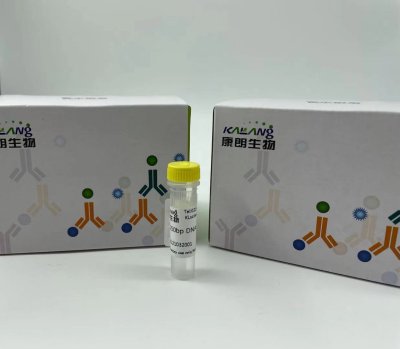
Anti-GNGT1 KL20092-001(50ul)
2021-10-11 -
Anti-GNGT1 antibody(50ul) KL20093-001
2021-10-11 -
α-tubulin mouse Monoclonal Antibody
2021-01-08 -
α-tubulin mouse Monoclonal Antibody(8F11)
2021-01-08
热门标签
- Histone H3 rabbit Polyclonal Antibody Histone H3抗体
- EGFR rabbit Polyclonal Antibody EGFR抗体
- Cy3 Conjugated
- AbFluor™ 555 Conjugated
- AbFluor™ 680 Conjugated
- AbFluor™ 350 Conjugated
- AbFluor™ 647 Conjugated
- AbFluor™ 594 Conjugated
- AbFluor™ 405 Conjugated
- Cy5 Conjugated
- AbFluor™ 488 Conjugated
- Cyclophilin B抗体 Cyclophilin B Monoclonal Antibody(2B10)
- COX IV抗体 COX IV Monoclonal Antibody(6C8)
- PCNA抗体 PCNA Monoclonal Antibody(12D10)
- FAK rabbit Polyclonal Antibody FAK抗体
邮箱:3002763590@qq.com
电话:021-61998208

扫码关注微信公众号