QQ:3002763590


客服电话:021-61998208
我们是专业的科研试剂供应服务商
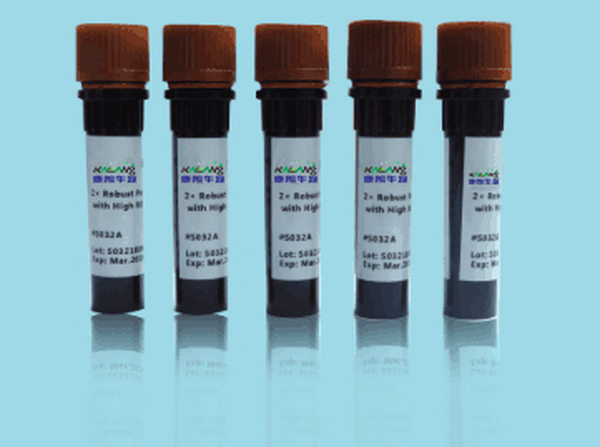
SRP54 rabbit Polyclonal Antibody
SRP54抗体应用:WB 1:500-2000 ELISA 1:5000-20000domain:Has a two domain structure: the G-domain binds GTP; the M-domain binds the 7S RNA in presence of SRP19 and also binds the signal sequence.,function:Binds to the signal sequence of presecretory protein when they emerge from the ribosomes and transfers them to TRAM (translocating chain-associating membrane protein).,online information:Signal recognition particle entry,similarity:Belongs to the GTP-binding SRP family.,subunit:Signal recognition particle consists of a 7S RNA molecule of 300 nucleotides and six protein subunits: SRP72, SRP68, SRP54, SRP19, SRP14 and SRP9. Interacts with RNPS1.,
SRPK2 rabbit Polyclonal Antibody
SRPK2抗体应用:WB 1:500-2000 ELISA 1:5000-20000catalytic activity:ATP + a protein = ADP + a phosphoprotein.,cofactor:Magnesium.,enzyme regulation:Activated by phosphorylation on Ser-52 and Ser-588.,function:Phosphorylates RS domain-containing proteins, such as SFRS1 and SFRS2 on serine residues. Role in spliceosome assembly and in mediating the trafficking of splicing factors. Appears to mediate HBV core protein phosphorylation which is a prerequisite for pregenomic RNA encapsidation into viral capsids.,sequence caution:The cDNA appears to contain a duplicated region.,similarity:Belongs to the protein kinase superfamily.,similarity:Belongs to the protein kinase superfamily. CMGC Ser/Thr protein kinase family.,similarity:Contains 1 protein kinase domain.,tissue specificity:Highly expressed in brain, moderately expressed in heart and skeletal muscle and at low levels in lung, liver, and kidney.,
SRRM1 rabbit Polyclonal Antibody
SRRM1抗体应用:WB 1:500-2000 ELISA 1:5000-20000function:Part of pre- and post-splicing multiprotein mRNP complexes. Involved in numerous pre-mRNA processing events. Promotes constitutive and exonic splicing enhancer (ESE)-dependent splicing activation by bridging together sequence-specific (SR family proteins, SFRS4, SFRS5 and TRA2B/SFRS10) and basal snRNP (SNRP70 and SNRPA1) factors of the spliceosome. Stimulates mRNA 3'-end cleavage independently of the formation of an exon junction complex. Binds both pre-mRNA and spliced mRNA 20-25 nt upstream of exon-exon junctions. Binds RNA and DNA with low sequence specificity and has similar preference for either double- or single-stranded nucleic acid substrates.,similarity:Belongs to the splicing factor SR family.,similarity:Contains 1 PWI domain.,subunit:Identified in the spliceosome C complex, at least composed of AQR, ASCC3L1, C19orf29, CDC40, CDC5L, CRNKL1, DDX23, DDX41, DDX48, DDX5, DGCR14, DHX35, DHX38, DHX8, EFTUD2, FRG1, GPATC1, HNRPA1, H
SRRM2 rabbit Polyclonal Antibody
SRRM2抗体应用:IHC-p 1:50-300function:Part of pre- and post-splicing multiprotein mRNP complexes. May be involved in pre-mRNA processing events. Binds to RNA.,PTM:Phosphorylated upon DNA damage, probably by ATM or ATR.,sequence caution:Contaminating sequence. Potential poly-A sequence.,similarity:Belongs to the CWC21 family.,subunit:Component of the active spliceosome. Found in a pre-mRNA splicing complex with SFRS4, SFRS5, SNRP70, SNRPA1, SRRM1 and SRRM2. Identified in the spliceosome C complex, at least composed of AQR, ASCC3L1, C19orf29, CDC40, CDC5L, CRNKL1, DDX23, DDX41, DDX48, DDX5, DGCR14, DHX35, DHX38, DHX8, EFTUD2, FRG1, GPATC1, HNRPA1, HNRPA2B1, HNRPA3, HNRPC, HNRPF, HNRPH1, HNRPK, HNRPM, HNRPR, HNRPU, KIAA1160, KIAA1604, LSM2, LSM3, MAGOH, MORG1, PABPC1, PLRG1, PNN, PPIE, PPIL1, PPIL3, PPWD1, PRPF19, PRPF4B, PRPF6, PRPF8, RALY, RBM22, RBM8A, RBMX, SART1, SF3A1, SF3A2, SF3A3, SF3B1, SF3B2, SF3B3, SFRS1, SKIV2L2, SNRPA1, SNRPB, SNRPB2, SNRPD1, SNRPD2, SNRPD3, SNRPE, SNRPF, SNRPG, S
SRSF9 rabbit Polyclonal Antibody
SRSF9抗体应用:WB 1:500-2000 ELISA 1:5000-20000serine and arginine rich splicing factor 9(SRSF9) Homo sapiens The protein encoded by this gene is a member of the serine/arginine (SR)-rich family of pre-mRNA splicing factors, which constitute part of the spliceosome. Each of these factors contains an RNA recognition motif (RRM) for binding RNA and an RS domain for binding other proteins. The RS domain is rich in serine and arginine residues and facilitates interaction between different SR splicing factors. In addition to being critical for mRNA splicing, the SR proteins have also been shown to be involved in mRNA export from the nucleus and in translation. Two pseudogenes, one on chromosome 15 and the other on chromosome 21, have been found for this gene. [provided by RefSeq, Sep 2010],
SRTD1 rabbit Polyclonal Antibody
SRTD1抗体应用:WB 1:500-2000 ELISA 1:5000-20000function:Acts at E2F-responsive promoters to integrate signals provided by PHD- and/or bromodomain-containing transcription factors. Stimulates E2F-1/DP-1 transcriptional activity. Renders the activity of cyclin D1/CDK4 resistant to the inhibitory effects of p16(INK4a).,similarity:Contains 1 SERTA domain.,subunit:Interacts with the PHD-bromodomain of TIF1, TRIM28/TIF1B and p300/CBP. Binds to DP1. Also interacts with CDK4.,
SSA27 rabbit Polyclonal Antibody
SSA27抗体应用:WB 1:500-2000 ELISA 1:5000-20000Sjogren syndrome/scleroderma autoantigen 1(SSSCA1) Homo sapiens This antigen is recognized by a subset of anti-centromere antibodies from patients with scleroderma and/or Sjogren's syndrome. Subcellular localization has not yet been established. [provided by RefSeq, Jul 2008],
SSF1 rabbit Polyclonal Antibody
SSF1抗体应用:WB 1:500-2000 ELISA 1:5000-20000peter pan homolog (Drosophila)(PPAN) Homo sapiens The protein encoded by this gene is an evolutionarily conserved protein similar to yeast SSF1 as well as to the gene product of the Drosophila gene peter pan (ppan). SSF1 is known to be involved in the second step of mRNA splicing. Both SSF1 and ppan are essential for cell growth and proliferation. Exogenous expression of this gene was reported to reduce the anchorage-independent growth of some tumor cells. Read-through transcription of this gene with P2RY11/P2Y(11), an adjacent downstream gene that encodes an ATP receptor, has been found. These read-through transcripts are ubiquitously present and up-regulated during granulocyte differentiation. [provided by RefSeq, Nov 2010],
SSR3 rabbit Polyclonal Antibody
SSR3抗体应用:WB 1:500-2000 ELISA 1:5000-20000somatostatin receptor 3(SSTR3) Homo sapiens This gene encodes a member of the somatostatin receptor protein family. Somatostatins are peptide hormones that regulate diverse cellular functions such as neurotransmission, cell proliferation, and endocrine signaling as well as inhibiting the release of many hormones and other secretory proteins. Somatostatin has two active forms of 14 and 28 amino acids. The biological effects of somatostatins are mediated by a family of G-protein coupled somatostatin receptors that are expressed in a tissue-specific manner. Somatostatin receptors form homodimers and heterodimers with other members of the superfamily as well as with other G-protein coupled receptors and receptor tyrosine kinases. This protein is functionally coupled to adenylyl cyclase. Alternate splicing results in multiple transcript variants. [provided by RefSeq, Jul 2013],
最新动态
-
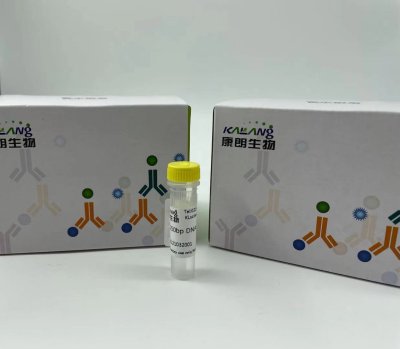
Anti-GNGT1 KL20092-001(50ul)
2021-10-11 -
Anti-GNGT1 antibody(50ul) KL20093-001
2021-10-11 -
α-tubulin mouse Monoclonal Antibody
2021-01-08 -
α-tubulin mouse Monoclonal Antibody(8F11)
2021-01-08
热门标签
- Histone H3 rabbit Polyclonal Antibody Histone H3抗体
- EGFR rabbit Polyclonal Antibody EGFR抗体
- Cy3 Conjugated
- AbFluor™ 555 Conjugated
- AbFluor™ 680 Conjugated
- AbFluor™ 350 Conjugated
- AbFluor™ 647 Conjugated
- AbFluor™ 594 Conjugated
- AbFluor™ 405 Conjugated
- Cy5 Conjugated
- AbFluor™ 488 Conjugated
- Cyclophilin B抗体 Cyclophilin B Monoclonal Antibody(2B10)
- COX IV抗体 COX IV Monoclonal Antibody(6C8)
- PCNA抗体 PCNA Monoclonal Antibody(12D10)
- FAK rabbit Polyclonal Antibody FAK抗体
邮箱:3002763590@qq.com
电话:021-61998208

扫码关注微信公众号