QQ:3002763590


客服电话:021-61998208
我们是专业的科研试剂供应服务商
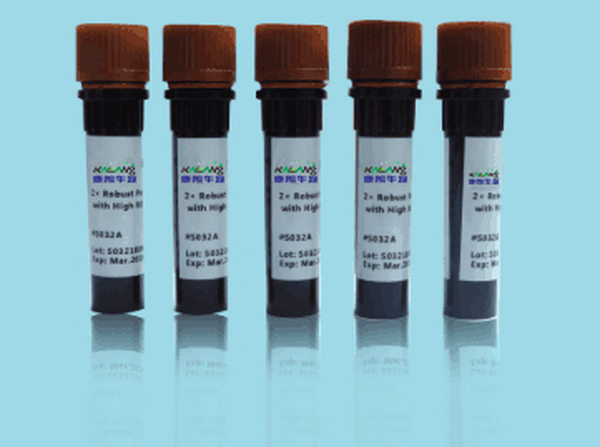
CD272 rabbit Polyclonal Antibody
CD272抗体应用:Western Blot: 1/500 - 1/2000. ELISA: 1/40000. B and T lymphocyte associated(BTLA) Homo sapiens This gene encodes a member of the immunoglobulin superfamily. The encoded protein contains a single immunoglobulin (Ig) domain and is a receptor that relays inhibitory signals to suppress the immune response. Alternative splicing results in multiple transcript variants. Polymorphisms in this gene have been associated with an increased risk of rheumatoid arthritis. [provided by RefSeq, Aug 2011],
CD274 rabbit Polyclonal Antibody
CD274抗体应用:IHC-p 1:50-200, ELISA 1:10000-20000 CD274 molecule(CD274) Homo sapiens This gene encodes an immune inhibitory receptor ligand that is expressed by hematopoietic and non-hematopoietic cells, such as T cells and B cells and various types of tumor cells. The encoded protein is a type I transmembrane protein that has immunoglobulin V-like and C-like domains. Interaction of this ligand with its receptor inhibits T-cell activation and cytokine production. During infection or inflammation of normal tissue, this interaction is important for preventing autoimmunity by maintaining homeostasis of the immune response. In tumor microenvironments, this interaction provides an immune escape for tumor cells through cytotoxic T-cell inactivation. Expression of this gene in tumor cells is considered to be prognostic in many types of human malignancies, including colon cancer and renal cell carcinoma. Alternative splicing results in multiple transcript variants. [provided by RefSeq, Sep 2015],
CD275 rabbit Polyclonal Antibody
CD275抗体应用:IHC-p 1:50-200, ELISA 1:10000-20000 alternative products:Additional isoforms seem to exist,function:Ligand for the T-cell-specific cell surface receptor ICOS. Acts as a costimulatory signal for T-cell proliferation and cytokine secretion; induces also B-cell proliferation and differentiation into plasma cells. Could play an important role in mediating local tissue responses to inflammatory conditions, as well as in modulating the secondary immune response by co-stimulating memory T-cell function.,induction:Constitutive expression is further enhanced by treatment with TNF-alpha in peripheral blood B-cells and monocytes, while it is decreased in dendritic cells.,sequence caution:The sequence differs from that shown in position 300 onward for unknown reason.,sequence caution:Translation N-terminally shortened.,similarity:Belongs to the immunoglobulin superfamily. BTN/MOG family.,similarity:Contains 1 Ig-like C2-type (immunoglobulin-like) domain.,similarity:Contains 1 Ig-like V-t
CD276 rabbit Polyclonal Antibody
CD276抗体应用:Western Blot: 1/500 - 1/2000. IHC-p: 1:100-300 ELISA: 1/20000. CD276 molecule(CD276) Homo sapiens The protein encoded by this gene belongs to the immunoglobulin superfamily, and thought to participate in the regulation of T-cell-mediated immune response. Studies show that while the transcript of this gene is ubiquitously expressed in normal tissues and solid tumors, the protein is preferentially expressed only in tumor tissues. Additionally, it was observed that the 3' UTR of this transcript contains a target site for miR29 microRNA, and there is an inverse correlation between the expression of this protein and miR29 levels, suggesting regulation of expression of this gene product by miR29. Alternatively spliced transcript variants encoding different isoforms have been found for this gene. [provided by RefSeq, Sep 2011],
CD28 rabbit Polyclonal Antibody
CD28抗体应用:Western Blot: 1/500 - 1/2000. ELISA: 1/20000. CD28 molecule(CD28) Homo sapiens The protein encoded by this gene is essential for T-cell proliferation and survival, cytokine production, and T-helper type-2 development. Several alternatively spliced transcript variants encoding different isoforms have been found for this gene.[provided by RefSeq, Jul 2011],
CD284 rabbit Polyclonal Antibody
CD284抗体应用:IF: 1:50-200 Western Blot: 1/500 - 1/2000. Immunohistochemistry: 1/100 - 1/300. ELISA: 1/40000. toll like receptor 4(TLR4) Homo sapiens The protein encoded by this gene is a member of the Toll-like receptor (TLR) family which plays a fundamental role in pathogen recognition and activation of innate immunity. TLRs are highly conserved from Drosophila to humans and share structural and functional similarities. They recognize pathogen-associated molecular patterns that are expressed on infectious agents, and mediate the production of cytokines necessary for the development of effective immunity. The various TLRs exhibit different patterns of expression. This receptor has been implicated in signal transduction events induced by lipopolysaccharide (LPS) found in most gram-negative bacteria. Mutations in this gene have been associated with differences in LPS responsiveness. Multiple transcript variants encoding different isoforms have been found for this gene. [provided by RefSeq,
CD292 rabbit Polyclonal Antibody
CD292抗体应用:Western Blot: 1/500 - 1/2000. ELISA: 1/20000. bone morphogenetic protein receptor type 1A(BMPR1A) Homo sapiens The bone morphogenetic protein (BMP) receptors are a family of transmembrane serine/threonine kinases that include the type I receptors BMPR1A and BMPR1B and the type II receptor BMPR2. These receptors are also closely related to the activin receptors, ACVR1 and ACVR2. The ligands of these receptors are members of the TGF-beta superfamily. TGF-betas and activins transduce their signals through the formation of heteromeric complexes with 2 different types of serine (threonine) kinase receptors: type I receptors of about 50-55 kD and type II receptors of about 70-80 kD. Type II receptors bind ligands in the absence of type I receptors, but they require their respective type I receptors for signaling, whereas type I receptors require their respective type II receptors for ligand binding. [provided by RefSeq, Jul 2008],
CD294 rabbit Polyclonal Antibody
CD294抗体应用:Western Blot: 1/500 - 1/2000. IHC-p: 1/100-1/300. ELISA: 1/20000. prostaglandin D2 receptor 2(PTGDR2) Homo sapiens This gene encodes a G-protein-coupled receptor that is preferentially expressed in CD4+ effector T helper 2 (Th2) cells. This protein is a prostaglandin D2 receptor that mediates the pro-inflammatory chemotaxis of eosinophils, basophils, and Th2 lymphocytes generated during allergic inflammation. Single nucleotide polymorphisms in the 3' UTR of this gene have been associated with asthma susceptibility.[provided by RefSeq, Mar 2011],
CD296 rabbit Polyclonal Antibody
CD296抗体应用:WB 1:500-2000 ADP-ribosyltransferase 1(ART1) Homo sapiens ADP-ribosyltransferase catalyzes the ADP-ribosylation of arginine residues in proteins. Mono-ADP-ribosylation is a posttranslational modification of proteins that is interfered with by a variety of bacterial toxins including cholera, pertussis, and heat-labile enterotoxins of E. coli. The amino acid sequence consists of predominantly hydrophobic N- and C-terminal regions, which is characteristic of glycosylphosphatidylinositol (GPI)-anchored proteins. This gene was previously designated ART2. [provided by RefSeq, Jul 2008],
CD297 rabbit Polyclonal Antibody
CD297抗体应用:IHC-p 1:50-200, ELISA 1:10000-20000 ADP-ribosyltransferase 4 (Dombrock blood group)(ART4) Homo sapiens This gene encodes a protein that contains a mono-ADP-ribosylation (ART) motif. It is a member of the ADP-ribosyltransferase gene family but enzymatic activity has not been demonstrated experimentally. Antigens of the Dombrock blood group system are located on the gene product, which is glycosylphosphatidylinosotol-anchored to the erythrocyte membrane. Allelic variants, some of which lead to adverse transfusion reactions, are known. [provided by RefSeq, Jul 2008],
最新动态
-
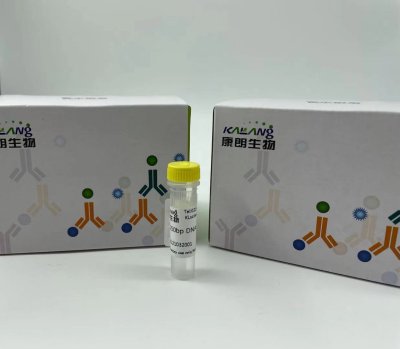
Anti-GNGT1 KL20092-001(50ul)
2021-10-11 -
Anti-GNGT1 antibody(50ul) KL20093-001
2021-10-11 -
α-tubulin mouse Monoclonal Antibody
2021-01-08 -
α-tubulin mouse Monoclonal Antibody(8F11)
2021-01-08
热门标签
- Histone H3 rabbit Polyclonal Antibody Histone H3抗体
- EGFR rabbit Polyclonal Antibody EGFR抗体
- Cy3 Conjugated
- AbFluor™ 555 Conjugated
- AbFluor™ 680 Conjugated
- AbFluor™ 350 Conjugated
- AbFluor™ 647 Conjugated
- AbFluor™ 594 Conjugated
- AbFluor™ 405 Conjugated
- Cy5 Conjugated
- AbFluor™ 488 Conjugated
- Cyclophilin B抗体 Cyclophilin B Monoclonal Antibody(2B10)
- COX IV抗体 COX IV Monoclonal Antibody(6C8)
- PCNA抗体 PCNA Monoclonal Antibody(12D10)
- FAK rabbit Polyclonal Antibody FAK抗体
邮箱:3002763590@qq.com
电话:021-61998208

扫码关注微信公众号