QQ:3002763590


客服电话:021-61998208
我们是专业的科研试剂供应服务商
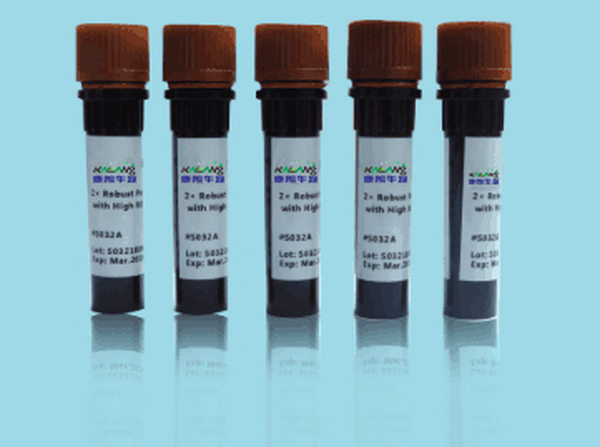
DFFB rabbit Polyclonal Antibody
DFFB抗体应用:WB 1:500-2000 ELISA 1:5000-20000DNA fragmentation factor subunit beta(DFFB) Homo sapiens Apoptosis is a cell death process that removes toxic and/or useless cells during mammalian development. The apoptotic process is accompanied by shrinkage and fragmentation of the cells and nuclei and degradation of the chromosomal DNA into nucleosomal units. DNA fragmentation factor (DFF) is a heterodimeric protein of 40-kD (DFFB) and 45-kD (DFFA) subunits. DFFA is the substrate for caspase-3 and triggers DNA fragmentation during apoptosis. DFF becomes activated when DFFA is cleaved by caspase-3. The cleaved fragments of DFFA dissociate from DFFB, the active component of DFF. DFFB has been found to trigger both DNA fragmentation and chromatin condensation during apoptosis. Alternatively spliced transcript variants encoding distinct isoforms have been found for this gene but the biological validity of some of these variants has not been determined. [provided by RefSeq, Sep 2013],
DGAT1 rabbit Polyclonal Antibody
DGAT1抗体应用:WB 1:500-2000 This gene encodes an multipass transmembrane protein that functions as a key metabolic enzyme. The encoded protein catalyzes the conversion of diacylglycerol and fatty acyl CoA to triacylglycerol. This enzyme can also transfer acyl CoA to retinol. Activity of this protein may be associated with obesity and other metabolic diseases. [provided by RefSeq, Jul 2013],
DGAT2 rabbit Polyclonal Antibody
DGAT2抗体应用:WB 1:500-2000 ELISA 1:5000-20000diacylglycerol O-acyltransferase 2(DGAT2) Homo sapiens This gene encodes one of two enzymes which catalyzes the final reaction in the synthesis of triglycerides in which diacylglycerol is covalently bound to long chain fatty acyl-CoAs. The encoded protein catalyzes this reaction at low concentrations of magnesium chloride while the other enzyme has high activity at high concentrations of magnesium chloride. Multiple transcript variants encoding different isoforms have been found for this gene. [provided by RefSeq, Dec 2011],
DGCR8 rabbit Polyclonal Antibody
DGCR8抗体应用:WB 1:500-2000This gene encodes a subunit of the microprocessor complex which mediates the biogenesis of microRNAs from the primary microRNA transcript. The encoded protein is a double-stranded RNA binding protein that functions as the non-catalytic subunit of the microprocessor complex. This protein is required for binding the double-stranded RNA substrate and facilitates cleavage of the RNA by the ribonuclease III protein, Drosha. Alternate splicing results in multiple transcript variants. [provided by RefSeq, Jun 2010],
DHB1 rabbit Polyclonal Antibody
DHB1抗体应用:WB 1:500-2000 ELISA 1:5000-20000hydroxysteroid 17-beta dehydrogenase 1(HSD17B1) Homo sapiens This gene encodes a member of the 17beta-hydroxysteroid dehydrogenase family of short-chain dehydrogenases/reductases. It has a dual function in estrogen activation and androgen inactivation and plays a major role in establishing the estrogen E2 concentration gradient between serum and peripheral tissues. The encoded protein catalyzes the last step in estrogen activation, using NADPH to convert estrogens E1 and E2 and androgens like 4-androstenedione, to testosterone. It has an N-terminal short-chain dehydrogenase domain with a cofactor binding site, and a narrow, hydrophobic C-terminal domain with a steroid substrate binding site. This gene is expressed primarily in the placenta and ovarian granulosa cells, and to a lesser extent, in the endometrium, adipose tissue, and prostate. Polymorphisms in this gene have been linked to breast and prostate cancer. A pseudogene of this gene has
DHB12 rabbit Polyclonal Antibody
DHB12抗体应用:WB 1:500-2000 ELISA 1:5000-20000hydroxysteroid 17-beta dehydrogenase 12(HSD17B12) Homo sapiens This gene encodes a very important 17beta-hydroxysteroid dehydrogenase (17beta-HSD) that converts estrone into estradiol in ovarian tissue. This enzyme is also involved in fatty acid elongation. [provided by RefSeq, Oct 2011],
DHB14 rabbit Polyclonal Antibody
DHB14抗体应用:WB 1:500-2000 ELISA 1:5000-20000hydroxysteroid 17-beta dehydrogenase 14(HSD17B14) Homo sapiens 17-beta-hydroxysteroid dehydrogenases, such as HSD17B14, are primarily involved in metabolism of steroids at the C17 position and also of other substrates, such as fatty acids, prostaglandins, and xenobiotics (Lukacik et al., 2007 [PubMed 17067289]).[supplied by OMIM, Jun 2009],
DHB2 rabbit Polyclonal Antibody
DHB2抗体应用:WB 1:500-2000 ELISA 1:5000-20000catalytic activity:Estradiol-17-beta + NAD(P)(+) = estrone + NAD(P)H.,catalytic activity:Testosterone + NAD(+) = androst-4-ene-3,17-dione + NADH.,function:Capable of catalyzing the interconversion of testosterone and androstenedione, as well as estradiol and estrone. Also has 20-alpha-HSD activity. Uses NADH while EDH17B3 uses NADPH.,similarity:Belongs to the short-chain dehydrogenases/reductases (SDR) family.,
DHB8 rabbit Polyclonal Antibody
DHB8抗体应用:WB 1:500-2000 ELISA 1:5000-20000hydroxysteroid 17-beta dehydrogenase 8(HSD17B8) Homo sapiens In mice, the Ke6 protein is a 17-beta-hydroxysteroid dehydrogenase that can regulate the concentration of biologically active estrogens and androgens. It is preferentially an oxidative enzyme and inactivates estradiol, testosterone, and dihydrotestosterone. However, the enzyme has some reductive activity and can synthesize estradiol from estrone. The protein encoded by this gene is similar to Ke6 and is a member of the short-chain dehydrogenase superfamily. An alternatively spliced transcript of this gene has been detected, but the full-length nature of this variant has not been determined. [provided by RefSeq, Jul 2008],
最新动态
-
Anti-GNGT1 KL20092-001(50ul)
2021-10-11 -
Anti-GNGT1 antibody(50ul) KL20093-001
2021-10-11 -

骨组织快速脱钙液Ⅰ
2021-09-07 -
外泌体(exosomes)染色试剂盒
2021-09-07 -
外泌体(exosomes)吸附抑制剂
2021-09-07
热门标签
- Histone H3 rabbit Polyclonal Antibody Histone H3抗体
- EGFR rabbit Polyclonal Antibody EGFR抗体
- Cy3 Conjugated
- AbFluor™ 555 Conjugated
- AbFluor™ 680 Conjugated
- AbFluor™ 350 Conjugated
- AbFluor™ 647 Conjugated
- AbFluor™ 594 Conjugated
- AbFluor™ 405 Conjugated
- Cy5 Conjugated
- AbFluor™ 488 Conjugated
- Cyclophilin B抗体 Cyclophilin B Monoclonal Antibody(2B10)
- COX IV抗体 COX IV Monoclonal Antibody(6C8)
- PCNA抗体 PCNA Monoclonal Antibody(12D10)
- FAK rabbit Polyclonal Antibody FAK抗体
邮箱:3002763590@qq.com
电话:021-61998208

扫码关注微信公众号