QQ:3002763590


客服电话:021-61998208
我们是专业的科研试剂供应服务商
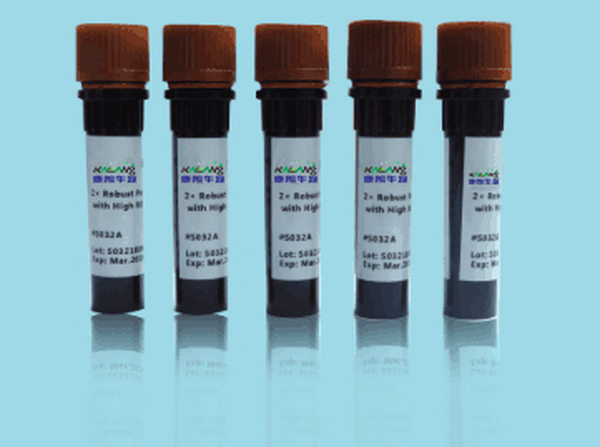
FKTN rabbit Polyclonal Antibody
FKTN抗体应用:WB 1:500-2000 ELISA 1:5000-20000fukutin(FKTN) Homo sapiens The protein encoded by this gene is a putative transmembrane protein that is localized to the cis-Golgi compartment, where it may be involved in the glycosylation of alpha-dystroglycan in skeletal muscle. The encoded protein is thought to be a glycosyltransferase and could play a role in brain development. Defects in this gene are a cause of Fukuyama-type congenital muscular dystrophy (FCMD), Walker-Warburg syndrome (WWS), limb-girdle muscular dystrophy type 2M (LGMD2M), and dilated cardiomyopathy type 1X (CMD1X). Alternatively spliced transcript variants have been found for this gene. [provided by RefSeq, Nov 2010],
FLIP1 rabbit Polyclonal Antibody
FLIP1抗体应用:WB 1:500-2000 ELISA 1:5000-20000function:By acting through a filamin-A/F-actin axis, it controls the start of neocortical cell migration from the ventricular zone. May be able to induce the degradation of filamin-A.,similarity:Belongs to the FILIP1 family.,subunit:Interacts with FLNA.,tissue specificity:Moderately expressed in adult heart and brain. Weakly expressed in lung, skeletal muscle, ovary, testis, kidney, and fetal brain, and hardly detectable in liver, pancreas, spleen, and fetal liver. Within brain, moderate expression is found in amygdala and caudate nucleus.,
FLNC rabbit Polyclonal Antibody
FLNC抗体应用:IHC-p 1:50-200This gene encodes one of three related filamin genes, specifically gamma filamin. These filamin proteins crosslink actin filaments into orthogonal networks in cortical cytoplasm and participate in the anchoring of membrane proteins for the actin cytoskeleton. Three functional domains exist in filamin: an N-terminal filamentous actin-binding domain, a C-terminal self-association domain, and a membrane glycoprotein-binding domain. Two transcript variants encoding different isoforms have been found for this gene. [provided by RefSeq, Jul 2008],
FLRT1 rabbit Polyclonal Antibody
FLRT1抗体应用:WB 1:500-2000 ELISA 1:5000-20000fibronectin leucine rich transmembrane protein 1(FLRT1) Homo sapiens This gene encodes a member of the fibronectin leucine rich transmembrane protein (FLRT) family. The family members may function in cell adhesion and/or receptor signalling. Their protein structures resemble small leucine-rich proteoglycans found in the extracellular matrix. The encoded protein shares sequence similarity with two other family members, FLRT2 and FLRT3. This gene is expressed in kidney and brain. [provided by RefSeq, Jul 2008],
FLRT2 rabbit Polyclonal Antibody
FLRT2抗体应用:WB 1:500-2000 ELISA 1:5000-20000fibronectin leucine rich transmembrane protein 2(FLRT2) Homo sapiens This gene encodes a member of the fibronectin leucine rich transmembrane (FLRT) family of cell adhesion molecules, which regulate early embryonic vascular and neural development. The encoded type I transmembrane protein has an extracellular region consisting of an N-terminal leucine-rich repeat domain and a type 3 fibronectin domain, followed by a transmembrane domain and a short C-terminal cytoplasmic tail domain. It functions as both a homophilic cell adhesion molecule and a heterophilic chemorepellent through its interaction with members of the uncoordinated-5 receptor family. Proteolytic removal of the extracellular region controls the migration of neurons in the developing cortex. Alternative splicing results in multiple transcript variants. [provided by RefSeq, Sep 2016],
FLRT3 rabbit Polyclonal Antibody
FLRT3抗体应用:WB 1:500-2000 ELISA 1:5000-20000fibronectin leucine rich transmembrane protein 3(FLRT3) Homo sapiens This gene encodes a member of the fibronectin leucine rich transmembrane protein (FLRT) family. FLRTs may function in cell adhesion and/or receptor signalling. Their protein structures resemble small leucine-rich proteoglycans found in the extracellular matrix. This gene is expressed in many tissues. Two alternatively spliced transcript variants encoding the same protein have been described for this gene. [provided by RefSeq, Jul 2010],
FLVC1 rabbit Polyclonal Antibody
FLVC1抗体应用:WB 1:500-2000 ELISA 1:5000-20000feline leukemia virus subgroup C cellular receptor 1(FLVCR1) Homo sapiens This gene encodes a member of the major facilitator superfamily of transporter proteins. The encoded protein is a heme transporter that may play a critical role in erythropoiesis by protecting developing erythroid cells from heme toxicity. This gene may play a role in posterior column ataxia with retinitis pigmentosa and the hematological disorder Diamond-Blackfan syndrome. [provided by RefSeq, Jan 2011],
FLVC2 rabbit Polyclonal Antibody
FLVC2抗体应用:WB 1:500-2000This gene encodes a member of the major facilitator superfamily. The encoded transmembrane protein is a calcium transporter. Unlike the related protein feline leukemia virus subgroup C receptor 1, the protein encoded by this locus does not bind to feline leukemia virus subgroup C envelope protein. The encoded protein may play a role in development of brain vascular endothelial cells, as mutations at this locus have been associated with proliferative vasculopathy and hydranencephaly-hydrocephaly syndrome. Alternatively spliced transcript variants have been described.[provided by RefSeq, Aug 2010],
最新动态
-
Anti-GNGT1 KL20092-001(50ul)
2021-10-11 -
Anti-GNGT1 antibody(50ul) KL20093-001
2021-10-11 -

骨组织快速脱钙液Ⅰ
2021-09-07 -
外泌体(exosomes)染色试剂盒
2021-09-07 -
外泌体(exosomes)吸附抑制剂
2021-09-07
热门标签
- Histone H3 rabbit Polyclonal Antibody Histone H3抗体
- EGFR rabbit Polyclonal Antibody EGFR抗体
- Cy3 Conjugated
- AbFluor™ 555 Conjugated
- AbFluor™ 680 Conjugated
- AbFluor™ 350 Conjugated
- AbFluor™ 647 Conjugated
- AbFluor™ 594 Conjugated
- AbFluor™ 405 Conjugated
- Cy5 Conjugated
- AbFluor™ 488 Conjugated
- Cyclophilin B抗体 Cyclophilin B Monoclonal Antibody(2B10)
- COX IV抗体 COX IV Monoclonal Antibody(6C8)
- PCNA抗体 PCNA Monoclonal Antibody(12D10)
- FAK rabbit Polyclonal Antibody FAK抗体
邮箱:3002763590@qq.com
电话:021-61998208

扫码关注微信公众号