QQ:3002763590


客服电话:021-61998208
我们是专业的科研试剂供应服务商
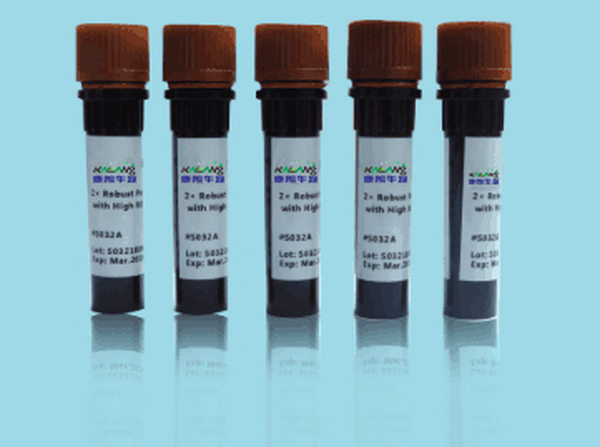
KLK13 rabbit Polyclonal Antibody
KLK13抗体应用:WB 1:500-2000 ELISA 1:5000-20000kallikrein related peptidase 13(KLK13) Homo sapiens Kallikreins are a subgroup of serine proteases having diverse physiological functions. Growing evidence suggests that many kallikreins are implicated in carcinogenesis and some have potential as novel cancer and other disease biomarkers. This gene is one of the fifteen kallikrein subfamily members located in a cluster on chromosome 19. Expression of this gene is regulated by steroid hormones and may be useful as a marker for breast cancer. An additional transcript variant has been identified, but its full length sequence has not been determined. [provided by RefSeq, Jul 2008],
KLK15 rabbit Polyclonal Antibody
KLK15抗体应用:WB 1:500-2000 ELISA 1:5000-20000kallikrein related peptidase 15(KLK15) Homo sapiens Kallikreins are a subgroup of serine proteases having diverse physiological functions. Growing evidence suggests that many kallikreins are implicated in carcinogenesis and some have potential as novel cancer and other disease biomarkers. This gene is one of the fifteen kallikrein subfamily members located in a cluster on chromosome 19. In prostate cancer, this gene has increased expression, which indicates its possible use as a diagnostic or prognostic marker for prostate cancer. The gene contains multiple polyadenylation sites and alternative splicing results in multiple transcript variants encoding distinct isoforms. [provided by RefSeq, Jul 2008],
KLK5 rabbit Polyclonal Antibody
KLK5抗体应用:WB 1:500-2000 ELISA 1:5000-20000kallikrein related peptidase 5(KLK5) Homo sapiens Kallikreins are a subgroup of serine proteases having diverse physiological functions. Growing evidence suggests that many kallikreins are implicated in carcinogenesis and some have potential as novel cancer and other disease biomarkers. This gene is one of the fifteen kallikrein subfamily members located in a cluster on chromosome 19. Its expression is up-regulated by estrogens and progestins. The encoded protein is secreted and may be involved in desquamation in the epidermis. Alternative splicing results in multiple transcript variants encoding the same protein. [provided by RefSeq, Jul 2008],
KLOT rabbit Polyclonal Antibody
KLOT抗体应用:WB 1:500-2000 ELISA 1:5000-20000klotho(KL) Homo sapiens This gene encodes a type-I membrane protein that is related to beta-glucosidases. Reduced production of this protein has been observed in patients with chronic renal failure (CRF), and this may be one of the factors underlying the degenerative processes (e.g., arteriosclerosis, osteoporosis, and skin atrophy) seen in CRF. Also, mutations within this protein have been associated with ageing and bone loss. [provided by RefSeq, Jul 2008],
KLOTB rabbit Polyclonal Antibody
KLOTB抗体应用:WB 1:500-2000 ELISA 1:5000-20000domain:Contains 2 glycosyl hydrolase 1 regions. However, the first region lacks the essential Glu active site residue at position 241, and the second one lacks the essential Glu active site residue at position 889. These domains are therefore predicted to be inactive.,function:Contributes to the transcriptional repression of cholesterol 7-alpha-hydroxylase (CYP7A1), the rate-limiting enzyme in bile acid synthesis. Probably inactive as a glycosidase. Increases the ability of FGFR1 and FGFR4 to bind FGF21.,similarity:Belongs to the glycosyl hydrolase 1 family.,similarity:Belongs to the glycosyl hydrolase 1 family. Klotho subfamily.,subunit:Interacts with FGFR1 and FGFR4.,
KLRF1 rabbit Polyclonal Antibody
KLRF1抗体应用:WB 1:500-2000 ELISA 1:5000-20000killer cell lectin like receptor F1(KLRF1) Homo sapiens KLRF1, an activating homodimeric C-type lectin-like receptor (CTLR), is expressed on nearly all natural killer (NK) cells and stimulates their cytoxicity and cytokine release (Kuttruff et al., 2009 [PubMed 18922855]).[supplied by OMIM, Oct 2009],
KPCD2 rabbit Polyclonal Antibody
KPCD2抗体应用:WB 1:500-2000 ELISA 1:5000-20000protein kinase D2(PRKD2) Homo sapiens The protein encoded by this gene belongs to the protein kinase D (PKD) family of serine/threonine protein kinases. This kinase can be activated by phorbol esters as well as by gastrin via the cholecystokinin B receptor (CCKBR) in gastric cancer cells. It can bind to diacylglycerol (DAG) in the trans-Golgi network (TGN) and may regulate basolateral membrane protein exit from TGN. Alternative splicing results in multiple transcript variants encoding different isoforms. [provided by RefSeq, Jul 2008],
KPCD3 rabbit Polyclonal Antibody
KPCD3抗体应用:WB 1:500-2000 ELISA 1:5000-20000protein kinase D3(PRKD3) Homo sapiens This gene belongs to the multigene protein kinase D family of serine/threonine kinases, which bind diacylglycerol and phorbol esters. Members of this family are characterized by an N-terminal regulatory domain comprised of a tandem repeat of cysteine-rich zinc-finger motifs and a pleckstrin domain. The C-terminal region contains the catalytic domain and is distantly related to calcium-regulated kinases. Catalytic activity of this enzyme promotes its nuclear localization. This protein has been implicated in a variety of functions including negative regulation of human airway epithelial barrier formation, growth regulation of breast and prostate cancer cells, and vesicle trafficking. [provided by RefSeq, Jan 2015],
KPCI rabbit Polyclonal Antibody
KPCI抗体应用:WB 1:500-2000 ELISA 1:5000-20000protein kinase C iota(PRKCI) Homo sapiens This gene encodes a member of the protein kinase C (PKC) family of serine/threonine protein kinases. The PKC family comprises at least eight members, which are differentially expressed and are involved in a wide variety of cellular processes. This protein kinase is calcium-independent and phospholipid-dependent. It is not activated by phorbolesters or diacylglycerol. This kinase can be recruited to vesicle tubular clusters (VTCs) by direct interaction with the small GTPase RAB2, where this kinase phosphorylates glyceraldehyde-3-phosphate dehydrogenase (GAPD/GAPDH) and plays a role in microtubule dynamics in the early secretory pathway. This kinase is found to be necessary for BCL-ABL-mediated resistance to drug-induced apoptosis and therefore protects leukemia cells against drug-induced apoptosis. There is a single exon pseudogene mapped on chromosome X. [provided by RefSeq, Jul 2008],
最新动态
-
Anti-GNGT1 KL20092-001(50ul)
2021-10-11 -
Anti-GNGT1 antibody(50ul) KL20093-001
2021-10-11 -

骨组织快速脱钙液Ⅰ
2021-09-07 -
外泌体(exosomes)染色试剂盒
2021-09-07 -
外泌体(exosomes)吸附抑制剂
2021-09-07
热门标签
- Histone H3 rabbit Polyclonal Antibody Histone H3抗体
- EGFR rabbit Polyclonal Antibody EGFR抗体
- Cy3 Conjugated
- AbFluor™ 555 Conjugated
- AbFluor™ 680 Conjugated
- AbFluor™ 350 Conjugated
- AbFluor™ 647 Conjugated
- AbFluor™ 594 Conjugated
- AbFluor™ 405 Conjugated
- Cy5 Conjugated
- AbFluor™ 488 Conjugated
- Cyclophilin B抗体 Cyclophilin B Monoclonal Antibody(2B10)
- COX IV抗体 COX IV Monoclonal Antibody(6C8)
- PCNA抗体 PCNA Monoclonal Antibody(12D10)
- FAK rabbit Polyclonal Antibody FAK抗体
邮箱:3002763590@qq.com
电话:021-61998208

扫码关注微信公众号