QQ:3002763590


客服电话:021-61998208
我们是专业的科研试剂供应服务商
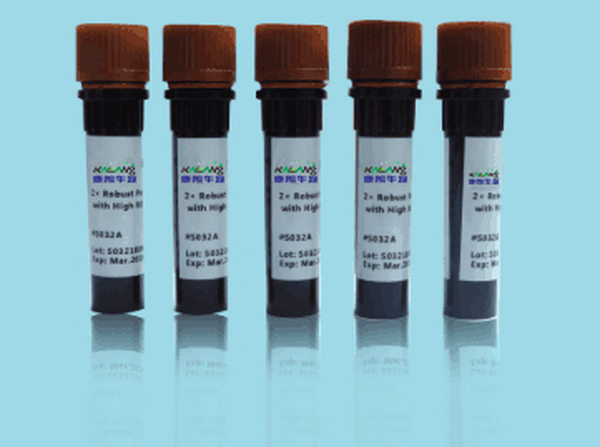
NSD3 rabbit Polyclonal Antibody
NSD3抗体应用:WB 1:500-2000 This gene is related to the Wolf-Hirschhorn syndrome candidate-1 gene and encodes a protein with PWWP (proline-tryptophan-tryptophan-proline) domains. This protein methylates histone H3 at lysine residues 4 and 27, which represses gene transcription. Two alternatively spliced variants have been described. [provided by RefSeq, May 2015],
NSE2 rabbit Polyclonal Antibody
NSE2抗体应用:WB 1:500-2000 ELISA 1:5000-20000function:E3 SUMO-protein ligase component of the SMC5-SMC6 complex, a complex involved in DNA double-strand breaks by homologous recombination. The complex may promote sister chromatid homologous recombination by recruiting the SMC1-SMC3 cohesin complex to double-strand breaks. Acts as a E3 ligase mediating SUMO attachment to various proteins such as SMC6L1 and TRAX, and maybe the cohesin components RAD21 and STAG2. SUMO protein-ligase activity is required for the prevention of DNA damage-induced apoptosis by facilitating DNA repair.,pathway:Protein modification; protein sumoylation.,PTM:Sumoylated, possibly via autosumoylation.,similarity:Belongs to the NSE2 family.,similarity:Contains 1 SP-RING-type zinc finger.,subunit:Component of the SMC5-SMC6 complex which consists of SMC5, SMC6, NSMCE2/MMS21 and probably NSMCE1.,
NSUN2 rabbit Polyclonal Antibody
NSUN2抗体应用:WB 1:500-2000 This gene encodes a methyltransferase that catalyzes the methylation of cytosine to 5-methylcytosine (m5C) at position 34 of intron-containing tRNA(Leu)(CAA) precursors. This modification is necessary to stabilize the anticodon-codon pairing and correctly translate the mRNA. Alternatively spliced transcript variants encoding different isoforms have been noted for this gene.[provided by RefSeq, Mar 2011],
NSUN5 rabbit Polyclonal Antibody
NSUN5抗体应用:WB 1:500-2000 ELISA 1:5000-20000NOP2/Sun RNA methyltransferase family member 5(NSUN5) Homo sapiens This gene encodes a member of an evolutionarily conserved family of proteins that may function as methyltransferases. This gene is located in a larger region of chromosome 7 that is deleted in Williams-Beuren syndrome, a multisystem developmental disorder. There are two pseudogenes for this gene located in the same region of chromosome 7. Alternative splicing results in multiple transcript variants encoding different isoforms. [provided by RefSeq, Jul 2013],
NTAL rabbit Polyclonal Antibody
NTAL抗体应用:WB 1:500-2000 ELISA 1:5000-20000linker for activation of T-cells family member 2(LAT2) Homo sapiens This gene is one of the contiguous genes at 7q11.23 commonly deleted in Williams syndrome, a multisystem developmental disorder. This gene consists of at least 14 exons, and its alternative splicing generates 3 transcript variants, all encoding the same protein. [provided by RefSeq, Jul 2008],
NTCP2 rabbit Polyclonal Antibody
NTCP2抗体应用:WB 1:500-2000 This gene encodes a sodium/bile acid cotransporter. This transporter is the primary mechanism for uptake of intestinal bile acids by apical cells in the distal ileum. Bile acids are the catabolic product of cholesterol metabolism, so this protein is also critical for cholesterol homeostasis. Mutations in this gene cause primary bile acid malabsorption (PBAM); muatations in this gene may also be associated with other diseases of the liver and intestines, such as familial hypertriglyceridemia (FHTG). [provided by RefSeq, Mar 2010],
NTHL1 rabbit Polyclonal Antibody
NTHL1抗体应用:WB 1:500-2000 ELISA 1:5000-20000nth like DNA glycosylase 1(NTHL1) Homo sapiens The protein encoded by this gene is a DNA N-glycosylase of the endonuclease III family. Like a similar protein in E. coli, the encoded protein has DNA glycosylase activity on DNA substrates containing oxidized pyrimidine residues and has apurinic/apyrimidinic lyase activity. [provided by RefSeq, Oct 2008],
NU107 rabbit Polyclonal Antibody
NU107抗体应用:WB 1:500-2000 ELISA 1:5000-20000nucleoporin 107(NUP107) Homo sapiens This gene encodes a member of the nucleoporin family. The protein is localized to the nuclear rim and is an essential component of the nuclear pore complex (NPC). All molecules entering or leaving the nucleus either diffuse through or are actively transported by the NPC. Alternate transcriptional splice variants of this gene have been observed but have not been thoroughly characterized. [provided by RefSeq, Jul 2008],
NU133 rabbit Polyclonal Antibody
NU133抗体应用:WB 1:500-2000 ELISA 1:5000-20000nucleoporin 133(NUP133) Homo sapiens The nuclear envelope creates distinct nuclear and cytoplasmic compartments in eukaryotic cells. It consists of two concentric membranes perforated by nuclear pores, large protein complexes that form aqueous channels to regulate the flow of macromolecules between the nucleus and the cytoplasm. These complexes are composed of at least 100 different polypeptide subunits, many of which belong to the nucleoporin family. The nucleoporin protein encoded by this gene displays evolutionarily conserved interactions with other nucleoporins. This protein, which localizes to both sides of the nuclear pore complex at interphase, remains associated with the complex during mitosis and is targeted at early stages to the reforming nuclear envelope. This protein also localizes to kinetochores of mitotic cells. [provided by RefSeq, Jul 2008],
最新动态
-
Anti-GNGT1 KL20092-001(50ul)
2021-10-11 -
Anti-GNGT1 antibody(50ul) KL20093-001
2021-10-11 -

骨组织快速脱钙液Ⅰ
2021-09-07 -
外泌体(exosomes)染色试剂盒
2021-09-07 -
外泌体(exosomes)吸附抑制剂
2021-09-07
热门标签
- Histone H3 rabbit Polyclonal Antibody Histone H3抗体
- EGFR rabbit Polyclonal Antibody EGFR抗体
- Cy3 Conjugated
- AbFluor™ 555 Conjugated
- AbFluor™ 680 Conjugated
- AbFluor™ 350 Conjugated
- AbFluor™ 647 Conjugated
- AbFluor™ 594 Conjugated
- AbFluor™ 405 Conjugated
- Cy5 Conjugated
- AbFluor™ 488 Conjugated
- Cyclophilin B抗体 Cyclophilin B Monoclonal Antibody(2B10)
- COX IV抗体 COX IV Monoclonal Antibody(6C8)
- PCNA抗体 PCNA Monoclonal Antibody(12D10)
- FAK rabbit Polyclonal Antibody FAK抗体
邮箱:3002763590@qq.com
电话:021-61998208

扫码关注微信公众号