QQ:3002763590


客服电话:021-61998208
我们是专业的科研试剂供应服务商
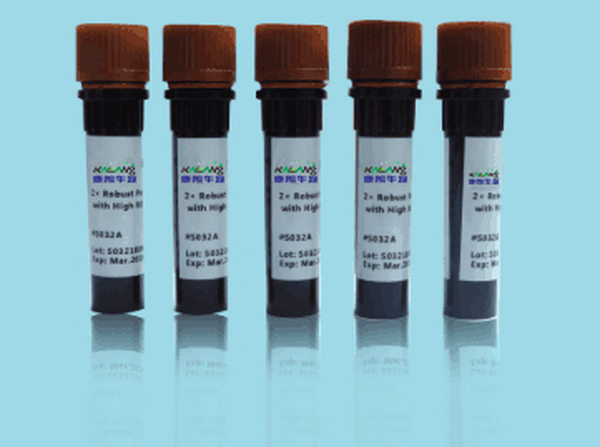
RT14 rabbit Polyclonal Antibody
RT14抗体应用:WB 1:500-2000 ELISA 1:5000-20000mitochondrial ribosomal protein S14(MRPS14) Homo sapiens Mammalian mitochondrial ribosomal proteins are encoded by nuclear genes and help in protein synthesis within the mitochondrion. Mitochondrial ribosomes (mitoribosomes) consist of a small 28S subunit and a large 39S subunit. They have an estimated 75% protein to rRNA composition compared to prokaryotic ribosomes, where this ratio is reversed. Another difference between mammalian mitoribosomes and prokaryotic ribosomes is that the latter contain a 5S rRNA. Among different species, the proteins comprising the mitoribosome differ greatly in sequence, and sometimes in biochemical properties, which prevents easy recognition by sequence homology. This gene encodes a 28S subunit protein that belongs to the ribosomal protein S14P family. Alternative splicing results in multiple transcript variants. [provided by RefSeq, Nov 2010],
RT15 rabbit Polyclonal Antibody
RT15抗体应用:WB 1:500-2000 ELISA 1:5000-20000mitochondrial ribosomal protein S15(MRPS15) Homo sapiens Mammalian mitochondrial ribosomal proteins are encoded by nuclear genes and help in protein synthesis within the mitochondrion. Mitochondrial ribosomes (mitoribosomes) consist of a small 28S subunit and a large 39S subunit. They have an estimated 75% protein to rRNA composition compared to prokaryotic ribosomes, where this ratio is reversed. Another difference between mammalian mitoribosomes and prokaryotic ribosomes is that the latter contain a 5S rRNA. Among different species, the proteins comprising the mitoribosome differ greatly in sequence, and sometimes in biochemical properties, which prevents easy recognition by sequence homology. This gene encodes a 28S subunit protein that belongs to the ribosomal protein S15P family. The encoded protein is more than two times the size of its E. coli counterpart, with the 12S rRNA binding sites conserved. Between human and mouse, the encod
SAA1 rabbit Polyclonal Antibody
SAA1抗体应用:WB 1:500-2000 ELISA 1:5000-20000serum amyloid A1(SAA1) Homo sapiens This gene encodes a member of the serum amyloid A family of apolipoproteins. The encoded preproprotein is proteolytically processed to generate the mature protein. This protein is a major acute phase protein that is highly expressed in response to inflammation and tissue injury. This protein also plays an important role in HDL metabolism and cholesterol homeostasis. High levels of this protein are associated with chronic inflammatory diseases including atherosclerosis, rheumatoid arthritis, Alzheimer's disease and Crohn's disease. This protein may also be a potential biomarker for certain tumors. Alternate splicing results in multiple transcript variants that encode the same protein. A pseudogene of this gene is found on chromosome 11. [provided by RefSeq, Feb 2016],
SACS rabbit Polyclonal Antibody
SACS抗体应用:IHC-p 1:50-300sacsin molecular chaperone(SACS) Homo sapiens This gene encodes the sacsin protein, which includes a UbL domain at the N-terminus, a DnaJ domain, and a HEPN domain at the C-terminus. The gene is highly expressed in the central nervous system, also found in skin, skeletal muscles and at low levels in the pancreas. This gene includes a very large exon spanning more than 12.8 kb. Mutations in this gene result in autosomal recessive spastic ataxia of Charlevoix-Saguenay (ARSACS), a neurodegenerative disorder characterized by early-onset cerebellar ataxia with spasticity and peripheral neuropathy. The authors of a publication on the effects of siRNA-mediated sacsin knockdown concluded that sacsin protects against mutant ataxin-1 and suggest that "the large multi-domain sacsin protein is able to recruit Hsp70 chaperone action and has the potential to regulate the effects of other ataxia proteins" (Parfitt et al., PubMed: 19208651).
SAFB2 rabbit Polyclonal Antibody
SAFB2抗体应用:WB 1:500-2000The protein encoded by this gene, along with its paralog (scaffold attachment factor B1), is a repressor of estrogen receptor alpha. The encoded protein binds scaffold/matrix attachment region (S/MAR) DNA and is involved in cell cycle regulation, apoptosis, differentiation, the stress response, and regulation of immune genes. [provided by RefSeq, May 2016],
SALL1 rabbit Polyclonal Antibody
SALL1抗体应用:WB 1:500-2000 ELISA 1:5000-20000spalt like transcription factor 1(SALL1) Homo sapiens The protein encoded by this gene is a zinc finger transcriptional repressor and may be part of the NuRD histone deacetylase complex (HDAC). Defects in this gene are a cause of Townes-Brocks syndrome (TBS) as well as bronchio-oto-renal syndrome (BOR). Two transcript variants encoding different isoforms have been found for this gene. [provided by RefSeq, Jul 2008],
SALL4 rabbit Polyclonal Antibody
SALL4抗体应用:WB 1:500-2000 ELISA 1:5000-20000spalt like transcription factor 4(SALL4) Homo sapiens This gene encodes a zinc finger transcription factor thought to play a role in the development of abducens motor neurons. Defects in this gene are a cause of Duane-radial ray syndrome (DRRS). Alternative splicing results in multiple transcript variants encoding different isoforms. [provided by RefSeq, Dec 2015],
SAP30 rabbit Polyclonal Antibody
SAP30抗体应用:WB 1:500-2000 ELISA 1:5000-20000Sin3A associated protein 30(SAP30) Homo sapiens Histone acetylation plays a key role in the regulation of eukaryotic gene expression. Histone acetylation and deacetylation are catalyzed by multisubunit complexes. The protein encoded by this gene is a component of the histone deacetylase complex, which includes SIN3, SAP18, HDAC1, HDAC2, RbAp46, RbAp48, and other polypeptides. This complex is active in deacetylating core histone octamers, but inactive in deacetylating nucleosomal histones. A pseudogene of this gene is located on chromosome 3. [provided by RefSeq, Jul 2008],
最新动态
-
Anti-GNGT1 KL20092-001(50ul)
2021-10-11 -
Anti-GNGT1 antibody(50ul) KL20093-001
2021-10-11 -

骨组织快速脱钙液Ⅰ
2021-09-07 -
外泌体(exosomes)染色试剂盒
2021-09-07 -
外泌体(exosomes)吸附抑制剂
2021-09-07
热门标签
- Histone H3 rabbit Polyclonal Antibody Histone H3抗体
- EGFR rabbit Polyclonal Antibody EGFR抗体
- Cy3 Conjugated
- AbFluor™ 555 Conjugated
- AbFluor™ 680 Conjugated
- AbFluor™ 350 Conjugated
- AbFluor™ 647 Conjugated
- AbFluor™ 594 Conjugated
- AbFluor™ 405 Conjugated
- Cy5 Conjugated
- AbFluor™ 488 Conjugated
- Cyclophilin B抗体 Cyclophilin B Monoclonal Antibody(2B10)
- COX IV抗体 COX IV Monoclonal Antibody(6C8)
- PCNA抗体 PCNA Monoclonal Antibody(12D10)
- FAK rabbit Polyclonal Antibody FAK抗体
邮箱:3002763590@qq.com
电话:021-61998208

扫码关注微信公众号