QQ:3002763590


客服电话:021-61998208
我们是专业的科研试剂供应服务商
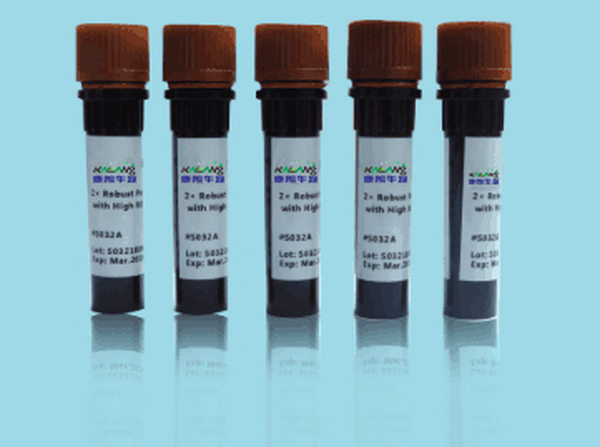
STAU2 rabbit Polyclonal Antibody
STAU2抗体应用:WB 1:500-2000Staufen homolog 2 is a member of the family of double-stranded RNA (dsRNA)-binding proteins involved in the transport and/or localization of mRNAs to different subcellular compartments and/or organelles. These proteins are characterized by the presence of multiple dsRNA-binding domains which are required to bind RNAs having double-stranded secondary structures. Staufen homolog 2 shares 48.5% and 59.9% similarity with drosophila and human staufen, respectively. The exact function of Staufen homolog 2 is not known, but since it contains 3 copies of conserved dsRNA binding domain, it could be involved in double-stranded RNA binding events. Several transcript variants encoding different isoforms have been found for this gene. [provided by RefSeq, Aug 2009],
STC1 rabbit Polyclonal Antibody
STC1抗体应用:WB 1:500-2000 ELISA 1:5000-20000stanniocalcin 1(STC1) Homo sapiens This gene encodes a secreted, homodimeric glycoprotein that is expressed in a wide variety of tissues and may have autocrine or paracrine functions. The gene contains a 5' UTR rich in CAG trinucleotide repeats. The encoded protein contains 11 conserved cysteine residues and is phosphorylated by protein kinase C exclusively on its serine residues. The protein may play a role in the regulation of renal and intestinal calcium and phosphate transport, cell metabolism, or cellular calcium/phosphate homeostasis. Overexpression of human stanniocalcin 1 in mice produces high serum phosphate levels, dwarfism, and increased metabolic rate. This gene has altered expression in hepatocellular, ovarian, and breast cancers. [provided by RefSeq, Jul 2008],
STC2 rabbit Polyclonal Antibody
STC2抗体应用:WB 1:500-2000 ELISA 1:5000-20000stanniocalcin 2(STC2) Homo sapiens This gene encodes a secreted, homodimeric glycoprotein that is expressed in a wide variety of tissues and may have autocrine or paracrine functions. The encoded protein has 10 of its 15 cysteine residues conserved among stanniocalcin family members and is phosphorylated by casein kinase 2 exclusively on its serine residues. Its C-terminus contains a cluster of histidine residues which may interact with metal ions. The protein may play a role in the regulation of renal and intestinal calcium and phosphate transport, cell metabolism, or cellular calcium/phosphate homeostasis. Constitutive overexpression of human stanniocalcin 2 in mice resulted in pre- and postnatal growth restriction, reduced bone and skeletal muscle growth, and organomegaly. Expression of this gene is induced by estrogen and altered in some breast cancers. [provided by RefSeq, Jul 2008],
STIP1 rabbit Polyclonal Antibody
STIP1抗体应用:WB 1:500-2000 ELISA 1:5000-20000stress induced phosphoprotein 1(STIP1) Homo sapiens STIP1 is an adaptor protein that coordinates the functions of HSP70 (see HSPA1A; MIM 140550) and HSP90 (see HSP90AA1; MIM 140571) in protein folding. It is thought to assist in the transfer of proteins from HSP70 to HSP90 by binding both HSP90 and substrate-bound HSP70. STIP1 also stimulates the ATPase activity of HSP70 and inhibits the ATPase activity of HSP90, suggesting that it regulates both the conformations and ATPase cycles of these chaperones (Song and Masison, 2005 [PubMed 16100115]).[supplied by OMIM, Jul 2009],
STK19 rabbit Polyclonal Antibody
STK19抗体应用:WB 1:500-2000This gene encodes a serine/threonine kinase which localizes predominantly to the nucleus. Its specific function is unknown; it is possible that phosphorylation of this protein is involved in transcriptional regulation. This gene localizes to the major histocompatibility complex (MHC) class III region on chromosome 6 and expresses two transcript variants. [provided by RefSeq, Jul 2008],
STK25 rabbit Polyclonal Antibody
STK25抗体应用:WB 1:500-2000 ELISA 1:5000-20000serine/threonine kinase 25(STK25) Homo sapiens This gene encodes a member of the germinal centre kinase III (GCK III) subfamily of the sterile 20 superfamily of kinases. The encoded enzyme plays a role in serine-threonine liver kinase B1 (LKB1) signaling pathway to regulate neuronal polarization and morphology of the Golgi apparatus. The protein is translocated from the Golgi apparatus to the nucleus in response to chemical anoxia and plays a role in regulation of cell death. A pseudogene associated with this gene is located on chromosome 18. Multiple alternatively spliced transcript variants have been observed for this gene. [provided by RefSeq, Dec 2012],
STK3 rabbit Polyclonal Antibody
STK3抗体应用:WB 1:500-2000 ELISA 1:5000-20000serine/threonine kinase 3(STK3) Homo sapiens This gene encodes a serine/threonine protein kinase activated by proapoptotic molecules indicating the encoded protein functions as a growth suppressor. Cleavage of the protein product by caspase removes the inhibitory C-terminal portion. The N-terminal portion is transported to the nucleus where it homodimerizes to form the active kinase which promotes the condensation of chromatin during apoptosis. Multiple transcript variants encoding different isoforms have been found for this gene. [provided by RefSeq, Jan 2012],
STK31 rabbit Polyclonal Antibody
STK31抗体应用:WB 1:500-2000 ELISA 1:5000-20000serine/threonine kinase 31(STK31) Homo sapiens This gene is similar to a mouse gene that encodes a putative protein kinase with a tudor domain, and shows testis-specific expression. Alternative splicing results in multiple transcript variants encoding different isoforms. [provided by RefSeq, Jul 2008],
STK38 rabbit Polyclonal Antibody
STK38抗体应用:WB 1:500-2000 ELISA 1:5000-20000serine/threonine kinase 38(STK38) Homo sapiens This gene encodes a member of the AGC serine/threonine kinase family of proteins. The kinase activity of this protein is regulated by autophosphorylation and phosphorylation by other upstream kinases. This protein has been shown to function in the cell cycle and apoptosis. This protein has also been found to regulate the protein stability and transcriptional activity of the MYC oncogene. Alternative splicing results in multiple transcript variants. [provided by RefSeq, Feb 2015],
最新动态
-
Anti-GNGT1 KL20092-001(50ul)
2021-10-11 -
Anti-GNGT1 antibody(50ul) KL20093-001
2021-10-11 -

骨组织快速脱钙液Ⅰ
2021-09-07 -
外泌体(exosomes)染色试剂盒
2021-09-07 -
外泌体(exosomes)吸附抑制剂
2021-09-07
热门标签
- Histone H3 rabbit Polyclonal Antibody Histone H3抗体
- EGFR rabbit Polyclonal Antibody EGFR抗体
- Cy3 Conjugated
- AbFluor™ 555 Conjugated
- AbFluor™ 680 Conjugated
- AbFluor™ 350 Conjugated
- AbFluor™ 647 Conjugated
- AbFluor™ 594 Conjugated
- AbFluor™ 405 Conjugated
- Cy5 Conjugated
- AbFluor™ 488 Conjugated
- Cyclophilin B抗体 Cyclophilin B Monoclonal Antibody(2B10)
- COX IV抗体 COX IV Monoclonal Antibody(6C8)
- PCNA抗体 PCNA Monoclonal Antibody(12D10)
- FAK rabbit Polyclonal Antibody FAK抗体
邮箱:3002763590@qq.com
电话:021-61998208

扫码关注微信公众号