QQ:3002763590


客服电话:021-61998208
我们是专业的科研试剂供应服务商
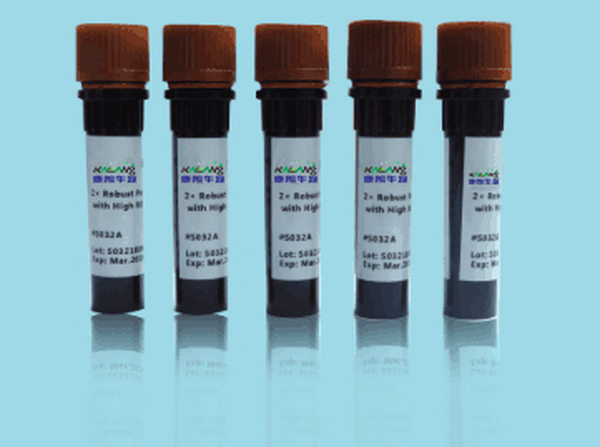
CCK rabbit Polyclonal Antibody
CCK抗体应用:Immunohistochemistry: 1/100 - 1/300. ELISA: 1/20000. cholecystokinin(CCK) Homo sapiens This gene encodes a member of the gastrin/cholecystokinin family of proteins. The encoded preproprotein is proteolytically processed to generate multiple protein products, including the peptide hormones cholecystokinin-8, -12, -33, and others. The encoded peptides have been shown to regulate gastric acid secretion and food intake. A sulfated form of cholecystokinin-8 may modulate neuronal activity in the brain. Alternative splicing results in multiple transcript variants. [provided by RefSeq, Nov 2015],
CCK-AR rabbit Polyclonal Antibody
CCK-AR抗体应用:Western Blot: 1/500 - 1/2000. Immunohistochemistry: 1/100 - 1/300. Immunofluorescence: 1/200 - 1/1000. ELISA: 1/10000. cholecystokinin A receptor(CCKAR) Homo sapiens This gene encodes a G-protein coupled receptor that binds non-sulfated members of the cholecystokinin (CCK) family of peptide hormones. This receptor is a major physiologic mediator of pancreatic enzyme secretion and smooth muscle contraction of the gallbladder and stomach. In the central and peripheral nervous system this receptor regulates satiety and the release of beta-endorphin and dopamine. [provided by RefSeq, Jul 2008],
CCK-BR rabbit Polyclonal Antibody
CCK-BR抗体应用:Western Blot: 1/500 - 1/2000. ELISA: 1/20000. cholecystokinin B receptor(CCKBR) Homo sapiens This gene encodes a G-protein coupled receptor for gastrin and cholecystokinin (CCK), regulatory peptides of the brain and gastrointestinal tract. This protein is a type B gastrin receptor, which has a high affinity for both sulfated and nonsulfated CCK analogs and is found principally in the central nervous system and the gastrointestinal tract. Alternative splicing results in multiple transcript variants. A misspliced transcript variant including an intron has been observed in cells from colorectal and pancreatic tumors. [provided by RefSeq, Dec 2015],
CCL14 rabbit Polyclonal Antibody
CCL14抗体应用:IHC-p 1:50-200, ELISA 1:10000-20000 C-C motif chemokine ligand 14(CCL14) Homo sapiens This gene, chemokine (C-C motif) ligand 14, is one of several CC cytokine genes clustered on 17q11.2. The CC cytokines are secreted proteins characterized by two adjacent cysteines. The cytokine encoded by this gene induces changes in intracellular calcium concentration and enzyme release in monocytes. Multiple transcript variants encoding different isoforms have been found for this gene. Read-through transcripts are also expressed that include exons from the upstream cytokine gene, chemokine (C-C motif) ligand 15, and are represented as GeneID: 348249. [provided by RefSeq, Dec 2009],
CCL17 rabbit Polyclonal Antibody
CCL17抗体应用:WB 1:500-2000, ELISA(peptide)1:5000-20000 C-C motif chemokine ligand 17(CCL17) Homo sapiens This antimicrobial gene is one of several Cys-Cys (CC) cytokine genes clustered on the q arm of chromosome 16. Cytokines are a family of secreted proteins involved in immunoregulatory and inflammatory processes. The CC cytokines are proteins characterized by two adjacent cysteines. The cytokine encoded by this gene displays chemotactic activity for T lymphocytes, but not monocytes or granulocytes. The product of this gene binds to chemokine receptors CCR4 and CCR8. This chemokine plays important roles in T cell development in thymus as well as in trafficking and activation of mature T cells. [provided by RefSeq, Sep 2014],
CCL18 Polyclona Antibody
CCL18抗体应用:IHC-p 1:50-200, ELISA(peptide)1:5000-20000 C-C motif chemokine ligand 18(CCL18) Homo sapiens This antimicrobial gene is one of several Cys-Cys (CC) cytokine genes clustered on the q arm of chromosome 17. Cytokines are a family of secreted proteins involved in immunoregulatory and inflammatory processes. The CC cytokines are proteins characterized by two adjacent cysteines. The cytokine encoded by this gene displays chemotactic activity for naive T cells, CD4+ and CD8+ T cells and nonactivated lymphocytes, but not for monocytes or granulocytes. This chemokine attracts naive T lymphocytes toward dendritic cells and activated macrophages in lymph nodes. It may play a role in both humoral and cell-mediated immunity responses. [provided by RefSeq, Sep 2014],
CCP2 rabbit Polyclonal Antibody
CCP2抗体应用:Western Blot: 1/500 - 1/2000. Immunohistochemistry: 1/100 - 1/300. ELISA: 1/40000. cofactor:Binds 1 zinc ion per subunit.,function:May play a role in the processing of tubulin.,sequence caution:Translated as Lys.,similarity:Belongs to the peptidase M14 family.,
CCR5 rabbit Polyclonal Antibody
CCR5抗体应用:WB 1:500-2000, ELISA 1:10000-20000 C-C motif chemokine receptor 5 (gene/pseudogene)(CCR5) Homo sapiens This gene encodes a member of the beta chemokine receptor family, which is predicted to be a seven transmembrane protein similar to G protein-coupled receptors. This protein is expressed by T cells and macrophages, and is known to be an important co-receptor for macrophage-tropic virus, including HIV, to enter host cells. Defective alleles of this gene have been associated with the HIV infection resistance. The ligands of this receptor include monocyte chemoattractant protein 2 (MCP-2), macrophage inflammatory protein 1 alpha (MIP-1 alpha), macrophage inflammatory protein 1 beta (MIP-1 beta) and regulated on activation normal T expressed and secreted protein (RANTES). Expression of this gene was also detected in a promyeloblastic cell line, suggesting that this protein may play a role in granulocyte lineage proliferation and differentiation. This gene is located at the chemok
最新动态
-
Anti-GNGT1 KL20092-001(50ul)
2021-10-11 -
Anti-GNGT1 antibody(50ul) KL20093-001
2021-10-11 -

骨组织快速脱钙液Ⅰ
2021-09-07 -
外泌体(exosomes)染色试剂盒
2021-09-07 -
外泌体(exosomes)吸附抑制剂
2021-09-07
热门标签
- Histone H3 rabbit Polyclonal Antibody Histone H3抗体
- EGFR rabbit Polyclonal Antibody EGFR抗体
- Cy3 Conjugated
- AbFluor™ 555 Conjugated
- AbFluor™ 680 Conjugated
- AbFluor™ 350 Conjugated
- AbFluor™ 647 Conjugated
- AbFluor™ 594 Conjugated
- AbFluor™ 405 Conjugated
- Cy5 Conjugated
- AbFluor™ 488 Conjugated
- Cyclophilin B抗体 Cyclophilin B Monoclonal Antibody(2B10)
- COX IV抗体 COX IV Monoclonal Antibody(6C8)
- PCNA抗体 PCNA Monoclonal Antibody(12D10)
- FAK rabbit Polyclonal Antibody FAK抗体
邮箱:3002763590@qq.com
电话:021-61998208

扫码关注微信公众号