QQ:3002763590


客服电话:021-61998208
我们是专业的科研试剂供应服务商
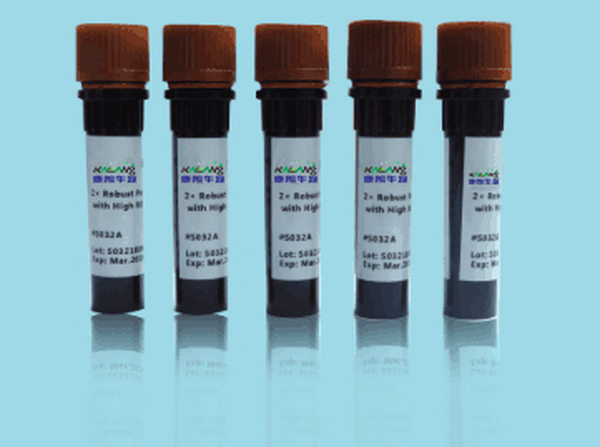
Cdc34 rabbit Polyclonal Antibody
Cdc34 抗体应用:Western Blot: 1/500 - 1/2000. ELISA: 1/10000. cell division cycle 34(CDC34) Homo sapiens The protein encoded by this gene is a member of the ubiquitin-conjugating enzyme family. Ubiquitin-conjugating enzyme catalyzes the covalent attachment of ubiquitin to other proteins. This protein is a part of the large multiprotein complex, which is required for ubiquitin-mediated degradation of cell cycle G1 regulators, and for the initiation of DNA replication. [provided by RefSeq, Jul 2008],
Cdc37 rabbit Polyclonal Antibody
Cdc37抗体应用:Western Blot: 1/500 - 1/2000. Immunohistochemistry: 1/100 - 1/300. Immunofluorescence: 1/200 - 1/1000. ELISA: 1/20000. cell division cycle 37(CDC37) Homo sapiens The protein encoded by this gene is highly similar to Cdc 37, a cell division cycle control protein of Sacchromyces cerevisiae. This protein is a molecular chaperone with specific function in cell signal transduction. It has been shown to form complex with Hsp90 and a variety of protein kinases including CDK4, CDK6, SRC, RAF-1, MOK, as well as eIF2 alpha kinases. It is thought to play a critical role in directing Hsp90 to its target kinases. [provided by RefSeq, Jul 2008],
Cdc37 rabbit Polyclonal Antibody
Cdc37抗体应用:Western Blot: 1/500 - 1/2000. Immunohistochemistry: 1/100 - 1/300. Immunofluorescence: 1/200 - 1/1000. ELISA: 1/20000. cell division cycle 37(CDC37) Homo sapiens The protein encoded by this gene is highly similar to Cdc 37, a cell division cycle control protein of Sacchromyces cerevisiae. This protein is a molecular chaperone with specific function in cell signal transduction. It has been shown to form complex with Hsp90 and a variety of protein kinases including CDK4, CDK6, SRC, RAF-1, MOK, as well as eIF2 alpha kinases. It is thought to play a critical role in directing Hsp90 to its target kinases. [provided by RefSeq, Jul 2008],
Cdc37L1 rabbit Polyclonal Antibody
Cdc37L1抗体应用:Western Blot: 1/500 - 1/2000. ELISA: 1/40000. cell division cycle 37 like 1(CDC37L1) Homo sapiens CDC37L1 is a cytoplasmic phosphoprotein that exists in complex with HSP90 (HSPCA; MIM 140571) as well as several other proteins involved in HSP90-mediated protein folding (Scholz et al., 2001 [PubMed 11413142]).[supplied by OMIM, Mar 2008],
Cdc40 rabbit Polyclonal Antibody
Cdc40抗体应用:Western Blot: 1/500 - 1/2000. Immunohistochemistry: 1/100 - 1/300. ELISA: 1/40000. cell division cycle 40(CDC40) Homo sapiens Pre-mRNA splicing occurs in two sequential transesterification steps. The protein encoded by this gene is found to be essential for the catalytic step II in pre-mRNA splicing process. It is found in the spliceosome, and contains seven WD repeats, which function in protein-protein interactions. This protein has a sequence similarity to yeast Prp17 protein, which functions in two different cellular processes: pre-mRNA splicing and cell cycle progression. It suggests that this protein may play a role in cell cycle progression. [provided by RefSeq, Jul 2008],
Cdc42EP2 rabbit Polyclonal Antibody
Cdc42EP2抗体应用:Western Blot: 1/500 - 1/2000. Immunohistochemistry: 1/100 - 1/300. ELISA: 1/40000. CDC42 effector protein 2(CDC42EP2) Homo sapiens CDC42, a small Rho GTPase, regulates the formation of F-actin-containing structures through its interaction with the downstream effector proteins. The protein encoded by this gene is a member of the Borg family of CDC42 effector proteins. Borg family proteins contain a CRIB (Cdc42/Rac interactive-binding) domain. They bind to, and negatively regulate the function of CDC42. Coexpression of this protein with CDC42 suggested a role of this protein in actin filament assembly and cell shape control. [provided by RefSeq, Aug 2011],
Cdc42EP3 rabbit Polyclonal Antibody
Cdc42EP3抗体应用:Western Blot: 1/500 - 1/2000. ELISA: 1/40000. CDC42 effector protein 3(CDC42EP3) Homo sapiens This gene encodes a member of a small family of guanosine triphosphate (GTP) metabolizing proteins that contain a CRIB (Cdc42, Rac interactive binding) domain. Members of this family of proteins act as effectors of CDC42 function. The encoded protein is involved in actin cytoskeleton re-organization during cell shape changes, including pseudopodia formation. A pseudogene of this gene is found on chromosome 19. Alternative splicing results in multiple transcript variants. [provided by RefSeq, Jul 2012],
Cdc42EP4 rabbit Polyclonal Antibody
Cdc42EP4抗体应用:Western Blot: 1/500 - 1/2000. Immunohistochemistry: 1/100 - 1/300. ELISA: 1/20000. CDC42 effector protein 4(CDC42EP4) Homo sapiens The product of this gene is a member of the CDC42-binding protein family. Members of this family interact with Rho family GTPases and regulate the organization of the actin cytoskeleton. This protein has been shown to bind both CDC42 and TC10 GTPases in a GTP-dependent manner. When overexpressed in fibroblasts, this protein was able to induce pseudopodia formation, which suggested a role in inducing actin filament assembly and cell shape control. [provided by RefSeq, Jul 2008],
Cdc42EP5 rabbit Polyclonal Antibody
Cdc42EP5抗体应用:Western Blot: 1/500 - 1/2000. Immunohistochemistry: 1/100 - 1/300. ELISA: 1/40000. CDC42 effector protein 5(CDC42EP5) Homo sapiens Cell division control protein 42 (CDC42), a small Rho GTPase, regulates the formation of F-actin-containing structures through its interaction with the downstream effector proteins. The protein encoded by this gene is a member of the Borg (binder of Rho GTPases) family of CDC42 effector proteins. Borg family proteins contain a CRIB (Cdc42/Rac interactive-binding) domain. They bind to CDC42 and regulate its function negatively. The encoded protein may inhibit c-Jun N-terminal kinase (JNK) independently of CDC42 binding. The protein may also play a role in septin organization and inducing pseudopodia formation in fibroblasts [provided by RefSeq, Jul 2013],
CDC46 rabbit Polyclonal Antibody
CDC46抗体应用:Western Blot: 1/500 - 1/2000. Immunohistochemistry: 1/100 - 1/300. Immunofluorescence: 1/200 - 1/1000. ELISA: 1/20000. minichromosome maintenance complex component 5(MCM5) Homo sapiens The protein encoded by this gene is structurally very similar to the CDC46 protein from S. cerevisiae, a protein involved in the initiation of DNA replication. The encoded protein is a member of the MCM family of chromatin-binding proteins and can interact with at least two other members of this family. The encoded protein is upregulated in the transition from the G0 to G1/S phase of the cell cycle and may actively participate in cell cycle regulation. [provided by RefSeq, Jul 2008],
最新动态
-
Anti-GNGT1 KL20092-001(50ul)
2021-10-11 -
Anti-GNGT1 antibody(50ul) KL20093-001
2021-10-11 -

骨组织快速脱钙液Ⅰ
2021-09-07 -
外泌体(exosomes)染色试剂盒
2021-09-07 -
外泌体(exosomes)吸附抑制剂
2021-09-07
热门标签
- Histone H3 rabbit Polyclonal Antibody Histone H3抗体
- EGFR rabbit Polyclonal Antibody EGFR抗体
- Cy3 Conjugated
- AbFluor™ 555 Conjugated
- AbFluor™ 680 Conjugated
- AbFluor™ 350 Conjugated
- AbFluor™ 647 Conjugated
- AbFluor™ 594 Conjugated
- AbFluor™ 405 Conjugated
- Cy5 Conjugated
- AbFluor™ 488 Conjugated
- Cyclophilin B抗体 Cyclophilin B Monoclonal Antibody(2B10)
- COX IV抗体 COX IV Monoclonal Antibody(6C8)
- PCNA抗体 PCNA Monoclonal Antibody(12D10)
- FAK rabbit Polyclonal Antibody FAK抗体
邮箱:3002763590@qq.com
电话:021-61998208

扫码关注微信公众号