QQ:3002763590


客服电话:021-61998208
我们是专业的科研试剂供应服务商
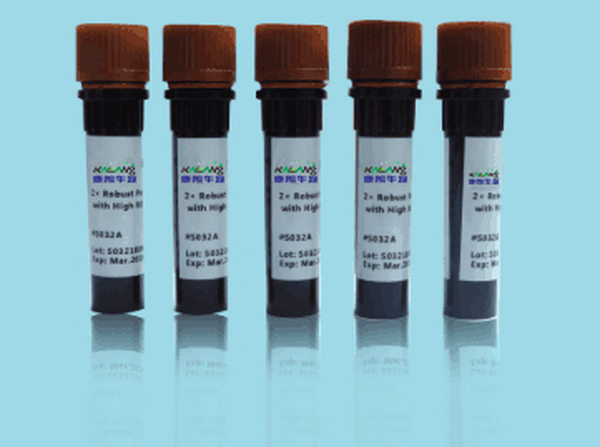
Gz-α rabbit Polyclonal Antibody
Gz-α抗体应用:Western Blot: 1/500 - 1/2000. Immunohistochemistry: 1/100 - 1/300. ELISA: 1/40000. G protein subunit alpha z(GNAZ) Homo sapiens The protein encoded by this gene is a member of a G protein subfamily that mediates signal transduction in pertussis toxin-insensitive systms. This encoded protein may play a role in maintaining the ionic balance of perilymphatic and endolymphatic cochlear fluids. [provided by RefSeq, Jul 2008],
Gα 14 rabbit Polyclonal Antibody
Gα 14抗体应用:Western Blot: 1/500 - 1/2000. ELISA: 1/40000. G protein subunit alpha 14(GNA14) Homo sapiens This gene encodes a member of the guanine nucleotide-binding, or G protein family. G proteins are heterotrimers consisting of alpha, beta and gamma subunits. The encoded protein is a member of the alpha family of G proteins, more specifically the alpha q subfamily of G proteins. The encoded protein may play a role in pertussis-toxin resistant activation of phospholipase C-beta and its downstream effectors.[provided by RefSeq, Feb 2009],
Gα i-3 rabbit Polyclonal Antibody
Gα i-3抗体应用:Western Blot: 1/500 - 1/2000. ELISA: 1/40000. G protein subunit alpha i3(GNAI3) Homo sapiens Guanine nucleotide-binding proteins (G proteins) are involved as modulators or transducers in various transmembrane signaling pathways. G proteins are composed of 3 units: alpha, beta and gamma. This gene encodes an alpha subunit and belongs to the G-alpha family. Mutation in this gene, resulting in a gly40-to-arg substitution, is associated with auriculocondylar syndrome, and shown to affect downstream targets in the G protein-coupled endothelin receptor pathway. [provided by RefSeq, Jun 2012],
Gα olf rabbit Polyclonal Antibody
Gα olf抗体应用:Western Blot: 1/500 - 1/2000. Immunohistochemistry: 1/100 - 1/300. ELISA: 1/20000. G protein subunit alpha L(GNAL) Homo sapiens This gene encodes a stimulatory G protein alpha subunit which mediates odorant signaling in the olfactory epithelium. This protein couples dopamine type 1 receptors and adenosine A2A receptors and is widely expressed in the central nervous system. Mutations in this gene have been associated with dystonia 25 and this gene is located in a susceptibility region for bipolar disorder and schizophrenia. Alternative splicing results in multiple transcript variants. [provided by RefSeq, Dec 2013],
Gα t1 rabbit Polyclonal Antibody
Gα t1抗体应用:Western Blot: 1/500 - 1/2000. ELISA: 1/40000. G protein subunit alpha transducin 1(GNAT1) Homo sapiens Transducin is a 3-subunit guanine nucleotide-binding protein (G protein) which stimulates the coupling of rhodopsin and cGMP-phoshodiesterase during visual impulses. The transducin alpha subunits in rods and cones are encoded by separate genes. This gene encodes the alpha subunit in rods. This gene is also expressed in other cells, and has been implicated in bitter taste transduction in rat taste cells. Mutations in this gene result in autosomal dominant congenital stationary night blindness. Multiple alternatively spliced variants, encoding the same protein, have been identified. [provided by RefSeq, Feb 2009],
Gα t2 rabbit Polyclonal Antibody
Gα t2抗体应用:Western Blot: 1/500 - 1/2000. Immunohistochemistry: 1/100 - 1/300. ELISA: 1/10000. G protein subunit alpha transducin 2(GNAT2) Homo sapiens Transducin is a 3-subunit guanine nucleotide-binding protein (G protein) which stimulates the coupling of rhodopsin and cGMP-phoshodiesterase during visual impulses. The transducin alpha subunits in rods and cones are encoded by separate genes. This gene encodes the alpha subunit in cones. [provided by RefSeq, Jul 2008],
Gβ 5 rabbit Polyclonal Antibody
Gβ 5抗体应用:Western Blot: 1/500 - 1/2000. Immunohistochemistry: 1/100 - 1/300. ELISA: 1/40000.G protein subunit beta 5(GNB5) Homo sapiens Heterotrimeric guanine nucleotide-binding proteins (G proteins), which integrate signals between receptors and effector proteins, are composed of an alpha, a beta, and a gamma subunit. These subunits are encoded by families of related genes. This gene encodes a beta subunit. Beta subunits are important regulators of alpha subunits, as well as of certain signal transduction receptors and effectors. Alternatively spliced transcript variants encoding different isoforms exist. [provided by RefSeq, Jul 2008],
Gγ 5 rabbit Polyclonal Antibody
Gγ 5抗体应用:Immunofluorescence: 1/200 - 1/1000. ELISA: 1/20000. G protein subunit gamma 5(GNG5) Homo sapiens G proteins are trimeric (alpha-beta-gamma) membrane-associated proteins that regulate flow of information from cell surface receptors to a variety of internal metabolic effectors. Interaction of a G protein with its activated receptor promotes exchange of GTP for GDP that is bound to the alpha subunit. The alpha-GTP complex dissociates from the beta-gamma heterodimer so that the subunits, in turn, may interact with and regulate effector molecules (Gilman, 1987 [PubMed 3113327]; summary by Ahmad et al., 1995) [PubMed 7606925].[supplied by OMIM, Nov 2010],
H11 rabbit Polyclonal Antibody
H11抗体应用:WB 1:500-2000 histone cluster 1 H1 family member a(HIST1H1A) Homo sapiens Histones are basic nuclear proteins responsible for nucleosome structure of the chromosomal fiber in eukaryotes. Two molecules of each of the four core histones (H2A, H2B, H3, and H4) form an octamer, around which approximately 146 bp of DNA is wrapped in repeating units, called nucleosomes. The linker histone, H1, interacts with linker DNA between nucleosomes and functions in the compaction of chromatin into higher order structures. This gene is intronless and encodes a replication-dependent histone that is a member of the histone H1 family. Transcripts from this gene lack polyA tails but instead contain a palindromic termination element. This gene is found in the large histone gene cluster on chromosome 6. [provided by RefSeq, Aug 2015],
最新动态
-
Anti-GNGT1 KL20092-001(50ul)
2021-10-11 -
Anti-GNGT1 antibody(50ul) KL20093-001
2021-10-11 -

骨组织快速脱钙液Ⅰ
2021-09-07 -
外泌体(exosomes)染色试剂盒
2021-09-07 -
外泌体(exosomes)吸附抑制剂
2021-09-07
热门标签
- Histone H3 rabbit Polyclonal Antibody Histone H3抗体
- EGFR rabbit Polyclonal Antibody EGFR抗体
- Cy3 Conjugated
- AbFluor™ 555 Conjugated
- AbFluor™ 680 Conjugated
- AbFluor™ 350 Conjugated
- AbFluor™ 647 Conjugated
- AbFluor™ 594 Conjugated
- AbFluor™ 405 Conjugated
- Cy5 Conjugated
- AbFluor™ 488 Conjugated
- Cyclophilin B抗体 Cyclophilin B Monoclonal Antibody(2B10)
- COX IV抗体 COX IV Monoclonal Antibody(6C8)
- PCNA抗体 PCNA Monoclonal Antibody(12D10)
- FAK rabbit Polyclonal Antibody FAK抗体
邮箱:3002763590@qq.com
电话:021-61998208

扫码关注微信公众号