QQ:3002763590


客服电话:021-61998208
我们是专业的科研试剂供应服务商
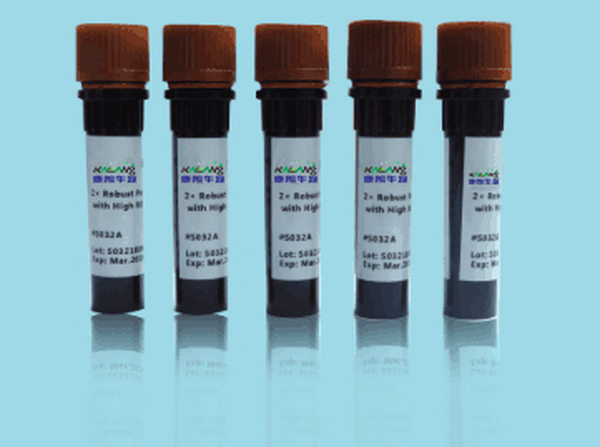
GPR116 rabbit Polyclonal Antibody
GPR116抗体应用:WB 1:500-2000 function:May have a role in the regulation of acid-base balance.,PTM:Proteolytically cleaved into 2 highly conserved sites: one in the SEA domain and the other in the stalk domain region preceding the first transmembrane. The later 2 subunits, the extracellular subunit and the seven-transmembrane subunit, remain tightly associated and non-covalently linked.,sequence caution:Contaminating sequence. Potential poly-A sequence.,similarity:Belongs to the G-protein coupled receptor 2 family. LN-TM7 subfamily.,similarity:Contains 1 GPS domain.,similarity:Contains 1 SEA domain.,similarity:Contains 3 Ig-like (immunoglobulin-like) domains.,subunit:Exists as disulfide-linked dimers at the cell surface.,
GPR116 rabbit Polyclonal Antibody
GPR116抗体应用:Immunohistochemistry: 1/100 - 1/300. Immunofluorescence: 1/200 - 1/1000. ELISA: 1/40000. function:May have a role in the regulation of acid-base balance.,PTM:Proteolytically cleaved into 2 highly conserved sites: one in the SEA domain and the other in the stalk domain region preceding the first transmembrane. The later 2 subunits, the extracellular subunit and the seven-transmembrane subunit, remain tightly associated and non-covalently linked.,sequence caution:Contaminating sequence. Potential poly-A sequence.,similarity:Belongs to the G-protein coupled receptor 2 family. LN-TM7 subfamily.,similarity:Contains 1 GPS domain.,similarity:Contains 1 SEA domain.,similarity:Contains 3 Ig-like (immunoglobulin-like) domains.,subunit:Exists as disulfide-linked dimers at the cell surface.,
GPR119 rabbit Polyclonal Antibody
GPR119抗体应用:Western Blot: 1/500 - 1/2000. Immunofluorescence: 1/200 - 1/1000. ELISA: 1/10000. G protein-coupled receptor 119(GPR119) Homo sapiens This gene encodes a member of the rhodopsin subfamily of G-protein-coupled receptors that is expressed in the pancreas and gastrointestinal tract. The encoded protein is activated by lipid amides including lysophosphatidylcholine and oleoylethanolamide and may be involved in glucose homeostasis. This protein is a potential drug target in the treatment of type 2 diabetes.[provided by RefSeq, Jan 2010],
GPR120 rabbit Polyclonal Antibody
GPR120抗体应用:Western Blot: 1/500 - 1/2000. Immunofluorescence: 1/200 - 1/1000. ELISA: 1/5000. free fatty acid receptor 4(FFAR4) Homo sapiens This gene encodes a G protein-coupled receptor (GPR) which belongs to the rhodopsin family of GPRs. The encoded protein functions as a receptor for free fatty acids, including omega-3, and participates in suppressing anti-inflammatory responses and insulin sensitizing. Multiple transcript variants encoding different isoforms have been found for this gene. [provided by RefSeq, Feb 2012],
GPR123 rabbit Polyclonal Antibody
GPR123抗体应用:Immunofluorescence: 1/200 - 1/1000. ELISA: 1/5000. adhesion G protein-coupled receptor A1(ADGRA1) Homo sapiens This gene encodes a protein that belongs to the adhesion family of G-protein-coupled receptors. Members of this family function in several sensory systems and regulate blood pressure, immune responses, food intake and development. A similar protein in rodents is thought to play a role in in the regulation of neuronal signaling pathways. Several alternatively spliced transcript variants of this gene have been described, but the full-length nature of some of these variants has not been determined. [provided by RefSeq, Mar 2014],
GPR124 rabbit Polyclonal Antibody
GPR124抗体应用:Western Blot: 1/500 - 1/2000. Immunofluorescence: 1/200 - 1/1000. ELISA: 1/10000. caution:It is uncertain whether Met-1 or Met-8 is the initiator.,domain:Binds to DLG1 through its PDZ-binding motif.,function:Orphan receptor.,similarity:Belongs to the G-protein coupled receptor 2 family. LN-TM7 subfamily.,similarity:Contains 1 GPS domain.,similarity:Contains 1 Ig-like (immunoglobulin-like) domain.,similarity:Contains 5 LRR (leucine-rich) repeats.,subunit:Interacts with DLG1.,tissue specificity:Expressed in endothelial cells (at protein level). Abundantly expressed in tumor vessels, heart, placenta, ovary, small intestine, and colon.,
GPR126 rabbit Polyclonal Antibody
GPR126抗体应用:Western Blot: 1/500 - 1/2000. Immunohistochemistry: 1/100 - 1/300. Immunofluorescence: 1/200 - 1/1000. ELISA: 1/5000. adhesion G protein-coupled receptor G6(ADGRG6) Homo sapiens This gene, which is upregulated in human umbilical vein endothelial cells, encodes a G protein-coupled receptor. Variations in this gene can affect a person's stature. Multiple transcript variants encoding different proteins have been found for this gene. [provided by RefSeq, Mar 2009],
最新动态
-
Anti-GNGT1 KL20092-001(50ul)
2021-10-11 -
Anti-GNGT1 antibody(50ul) KL20093-001
2021-10-11 -

骨组织快速脱钙液Ⅰ
2021-09-07 -
外泌体(exosomes)染色试剂盒
2021-09-07 -
外泌体(exosomes)吸附抑制剂
2021-09-07
热门标签
- Histone H3 rabbit Polyclonal Antibody Histone H3抗体
- EGFR rabbit Polyclonal Antibody EGFR抗体
- Cy3 Conjugated
- AbFluor™ 555 Conjugated
- AbFluor™ 680 Conjugated
- AbFluor™ 350 Conjugated
- AbFluor™ 647 Conjugated
- AbFluor™ 594 Conjugated
- AbFluor™ 405 Conjugated
- Cy5 Conjugated
- AbFluor™ 488 Conjugated
- Cyclophilin B抗体 Cyclophilin B Monoclonal Antibody(2B10)
- COX IV抗体 COX IV Monoclonal Antibody(6C8)
- PCNA抗体 PCNA Monoclonal Antibody(12D10)
- FAK rabbit Polyclonal Antibody FAK抗体
邮箱:3002763590@qq.com
电话:021-61998208

扫码关注微信公众号