QQ:3002763590


客服电话:021-61998208
我们是专业的科研试剂供应服务商
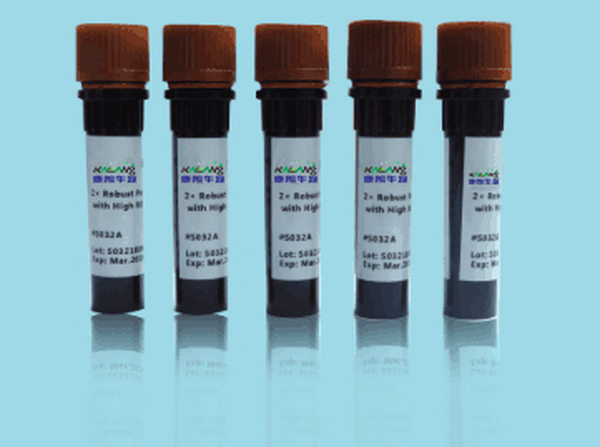
eIF4E3 rabbit Polyclonal Antibody
eIF4E3抗体应用:Western Blot: 1/500 - 1/2000. ELISA: 1/10000. eukaryotic translation initiation factor 4E family member 3(EIF4E3) Homo sapiens EIF4E3 belongs to the EIF4E family of translational initiation factors that interact with the 5-prime cap structure of mRNA and recruit mRNA to the ribosome (Joshi et al., 2004 [PubMed 15153109]).[supplied by OMIM, Mar 2008],
eIF4G rabbit Polyclonal Antibody
eIF4G抗体应用:WB 1:500-2000 Immunohistochemistry: 1/100 - 1/300. Immunofluorescence: 1/200 - 1/1000. ELISA: 1/5000.eukaryotic translation initiation factor 4 gamma 1(EIF4G1) Homo sapiens The protein encoded by this gene is a component of the multi-subunit protein complex EIF4F. This complex facilitates the recruitment of mRNA to the ribosome, which is a rate-limiting step during the initiation phase of protein synthesis. The recognition of the mRNA cap and the ATP-dependent unwinding of 5'-terminal secondary structure is catalyzed by factors in this complex. The subunit encoded by this gene is a large scaffolding protein that contains binding sites for other members of the EIF4F complex. A domain at its N-terminus can also interact with the poly(A)-binding protein, which may mediate the circularization of mRNA during translation. Alternative splicing results in multiple transcript variants, some of which are derived from alternative promoter usage. [provided by RefSeq, Aug 2010],
eIF5 rabbit Polyclonal Antibody
eIF5抗体应用:Immunohistochemistry: 1/100 - 1/300. ELISA: 1/40000. eukaryotic translation initiation factor 5(EIF5) Homo sapiens Eukaryotic translation initiation factor-5 (EIF5) interacts with the 40S initiation complex to promote hydrolysis of bound GTP with concomitant joining of the 60S ribosomal subunit to the 40S initiation complex. The resulting functional 80S ribosomal initiation complex is then active in peptidyl transfer and chain elongations (summary by Si et al., 1996 [PubMed 8663286]).[supplied by OMIM, May 2010],
eIF5A2 rabbit Polyclonal Antibody
eIF5A2抗体应用:Western Blot: 1/500 - 1/2000. ELISA: 1/10000. function:The precise role of eIF-5A in protein biosynthesis is not known but it functions by promoting the formation of the first peptide bond.,PTM:eIF-5A seems to be the only eukaryotic protein to have an hypusine residue which is a post-translational modification of a lysine by the addition of a butylamino group (from spermidine).,similarity:Belongs to the eIF-5A family.,tissue specificity:Expressed in ovarian and colorectal cancer cell lines (at protein level). Highly expressed in testis. Overexpressed in some cancer cells.,
eIF5B rabbit Polyclonal Antibody
eIF5B抗体应用:Western Blot: 1/500 - 1/2000. Immunohistochemistry: 1/100 - 1/300. ELISA: 1/40000. eukaryotic translation initiation factor 5B(EIF5B) Homo sapiens Accurate initiation of translation in eukaryotes is complex and requires many factors, some of which are composed of multiple subunits. The process is simpler in prokaryotes which have only three initiation factors (IF1, IF2, IF3). Two of these factors are conserved in eukaryotes: the homolog of IF1 is eIF1A and the homolog of IF2 is eIF5B. This gene encodes eIF5B. Factors eIF1A and eIF5B interact on the ribosome along with other initiation factors and GTP to position the initiation methionine tRNA on the start codon of the mRNA so that translation initiates accurately. [provided by RefSeq, Jul 2008],
EKLF rabbit Polyclonal Antibody
EKLF抗体应用:Western Blot: 1/500 - 1/2000. ELISA: 1/20000. Kruppel like factor 1(KLF1) Homo sapiens This gene encodes a hematopoietic-specific transcription factor that induces high-level expression of adult beta-globin and other erythroid genes. The zinc-finger protein binds to the DNA sequence CCACACCCT found in the beta hemoglobin promoter. Heterozygous loss-of-function mutations in this gene result in the dominant In(Lu) blood phenotype. [provided by RefSeq, Oct 2009],
HURP rabbit Polyclonal Antibody
HURP抗体应用:Western Blot: 1/500 - 1/2000. ELISA: 1/40000.developmental stage:Elevated levels of expression detected in the G2/M phase of synchronized cultures of HeLa cells.,function:Potential cell cycle regulator that may play a role in carcinogenesis of cancer cells. Mitotic phosphoprotein regulated by the ubiquitin-proteasome pathway. Key regulator of adherens junction integrity and differentiation that may be involved in CDH1-mediated adhesion and signaling in epithelial cells.,PTM:Phosphorylated upon DNA damage, probably by ATM or ATR. Decreased phosphorylation levels are associated with the differentiation of intestinal epithelial cells.,PTM:Ubiquitinated, leading to its degradation.,similarity:Belongs to the SAPAP family.,subcellular location:Localizes to the spindle poles in mitotic cells. Colocalizes with CDH1 at sites of cell-cell contact in intestinal epithelial cells.,subunit:Interacts with CDC2. Interacts with the C-terminal proline-rich region of FBXO7. Recruited by FBXO7 to
HXA10 rabbit Polyclonal Antibody
HXA10抗体应用:IHC-p 1:50-200, WB 1:500-2000 homeobox A10(HOXA10) Homo sapiens In vertebrates, the genes encoding the class of transcription factors called homeobox genes are found in clusters named A, B, C, and D on four separate chromosomes. Expression of these proteins is spatially and temporally regulated during embryonic development. This gene is part of the A cluster on chromosome 7 and encodes a DNA-binding transcription factor that may regulate gene expression, morphogenesis, and differentiation. More specifically, it may function in fertility, embryo viability, and regulation of hematopoietic lineage commitment. Alternatively spliced transcript variants have been described. Read-through transcription also exists between this gene and the downstream homeobox A9 (HOXA9) gene. [provided by RefSeq, Mar 2011],
HXC5 rabbit Polyclonal Antibody
HXC5抗体应用:WB 1:500-2000 This gene belongs to the homeobox family of genes. The homeobox genes encode a highly conserved family of transcription factors that play an important role in morphogenesis in all multicellular organisms. Mammals possess four similar homeobox gene clusters, HOXA, HOXB, HOXC and HOXD, which are located on different chromosomes and consist of 9 to 11 genes arranged in tandem. This gene, HOXC5, is one of several homeobox HOXC genes located in a cluster on chromosome 12. Three genes, HOXC5, HOXC4 and HOXC6, share a 5' non-coding exon. Transcripts may include the shared exon spliced to the gene-specific exons, or they may include only the gene-specific exons. Two alternatively spliced variants have been described for HOXC5. The transcript variant which includes the shared exon apparently doesn't encode a protein. The protein-coding transcript variant contains gene-specific exons only. [provided by RefSeq, Jul 2008],
最新动态
-
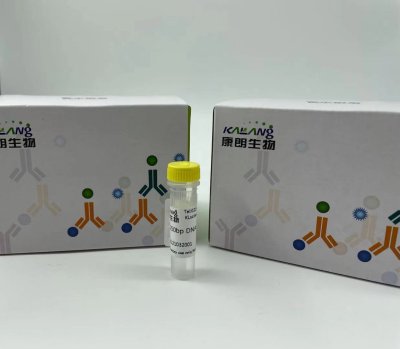
Anti-GNGT1 KL20092-001(50ul)
2021-10-11 -
Anti-GNGT1 antibody(50ul) KL20093-001
2021-10-11 -

骨组织快速脱钙液Ⅰ
2021-09-07 -
外泌体(exosomes)染色试剂盒
2021-09-07 -
外泌体(exosomes)吸附抑制剂
2021-09-07
热门标签
- Histone H3 rabbit Polyclonal Antibody Histone H3抗体
- EGFR rabbit Polyclonal Antibody EGFR抗体
- Cy3 Conjugated
- AbFluor™ 555 Conjugated
- AbFluor™ 680 Conjugated
- AbFluor™ 350 Conjugated
- AbFluor™ 647 Conjugated
- AbFluor™ 594 Conjugated
- AbFluor™ 405 Conjugated
- Cy5 Conjugated
- AbFluor™ 488 Conjugated
- Cyclophilin B抗体 Cyclophilin B Monoclonal Antibody(2B10)
- COX IV抗体 COX IV Monoclonal Antibody(6C8)
- PCNA抗体 PCNA Monoclonal Antibody(12D10)
- FAK rabbit Polyclonal Antibody FAK抗体
邮箱:3002763590@qq.com
电话:021-61998208

扫码关注微信公众号