QQ:3002763590


客服电话:021-61998208
我们是专业的科研试剂供应服务商
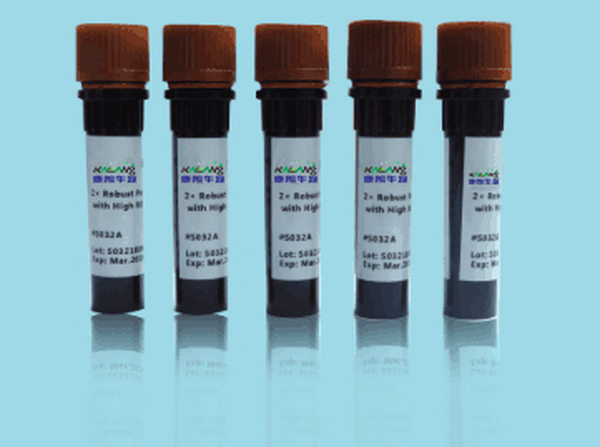
MCLN2 rabbit Polyclonal Antibody
MCLN2抗体应用:WB 1:500-2000 Mucolipins constitute a family of cation channel proteins with homology to the transient receptor potential superfamily. In mammals, the mucolipin family includes 3 members, MCOLN1 (MIM 605248), MCOLN2, and MCOLN3 (MIM 607400), that exhibit a common 6-membrane-spanning topology. Homologs of mammalian mucolipins exist in Drosophila and C. elegans. Mutations in the human MCOLN1 gene cause mucolipodosis IV (MIM 262650) (Karacsonyi et al., 2007 [PubMed 17662026]).[supplied by OMIM, Sep 2009],
MCM8 rabbit Polyclonal Antibody
MCM8抗体应用:WB 1:500-2000 ELISA 1:5000-20000minichromosome maintenance 8 homologous recombination repair factor(MCM8) Homo sapiens The protein encoded by this gene is one of the highly conserved mini-chromosome maintenance proteins (MCM) that are essential for the initiation of eukaryotic genome replication. The hexameric protein complex formed by the mini-chromosome maintenance proteins is a key component of the pre-replication complex and may be involved in the formation of replication forks and in the recruitment of other DNA replication related proteins. This protein contains the central domain that is conserved among the mini-chromosome maintenance proteins. The encoded protein may interact with other mini-chromosome maintenance proteins and play a role in DNA replication. This gene may be associated with length of reproductive lifespan and menopause. Alternatively spliced transcript variants encoding distinct isoforms have been described. [provided by RefSeq, Jul 2013],
MCM9 rabbit Polyclonal Antibody
MCM9抗体应用:WB 1:500-2000 ELISA 1:5000-20000minichromosome maintenance 9 homologous recombination repair factor(MCM9) Homo sapiens The protein encoded by this gene is a member of the mini-chromosome maintenance (MCM) protein family that are essential for the initiation of eukaryotic genome replication. Binding of this protein to chromatin has been shown to be a pre-requisite for recruiting the MCM2-7 helicase to DNA replication origins. This protein also binds, and is a positive regulator of, the chromatin licensing and DNA replication factor 1, CDT1. [provided by RefSeq, Nov 2010],
MCP rabbit Polyclonal Antibody
MCP抗体应用:WB 1:500-2000 ELISA 1:5000-20000CD46 molecule(CD46) Homo sapiens The protein encoded by this gene is a type I membrane protein and is a regulatory part of the complement system. The encoded protein has cofactor activity for inactivation of complement components C3b and C4b by serum factor I, which protects the host cell from damage by complement. In addition, the encoded protein can act as a receptor for the Edmonston strain of measles virus, human herpesvirus-6, and type IV pili of pathogenic Neisseria. Finally, the protein encoded by this gene may be involved in the fusion of the spermatozoa with the oocyte during fertilization. Mutations at this locus have been associated with susceptibility to hemolytic uremic syndrome. Alternatively spliced transcript variants encoding different isoforms have been described. [provided by RefSeq, Jun 2010],
MCR rabbit Polyclonal Antibody
MCR抗体应用:WB 1:500-2000 ELISA 1:5000-20000nuclear receptor subfamily 3 group C member 2(NR3C2) Homo sapiens This gene encodes the mineralocorticoid receptor, which mediates aldosterone actions on salt and water balance within restricted target cells. The protein functions as a ligand-dependent transcription factor that binds to mineralocorticoid response elements in order to transactivate target genes. Mutations in this gene cause autosomal dominant pseudohypoaldosteronism type I, a disorder characterized by urinary salt wasting. Defects in this gene are also associated with early onset hypertension with severe exacerbation in pregnancy. Alternative splicing results in multiple transcript variants. [provided by RefSeq, Oct 2009],
MDFIC rabbit Polyclonal Antibody
MDFIC抗体应用:WB 1:500-2000 ELISA 1:5000-20000MyoD family inhibitor domain containing(MDFIC) Homo sapiens This gene product is a member of a family of proteins characterized by a specific cysteine-rich C-terminal domain, which is involved in transcriptional regulation of viral genome expression. Alternative translation initiation from an upstream non-AUG (GUG), and an in-frame, downstream AUG codon, results in the production of two isoforms, p40 and p32, respectively, which have different subcellular localization; p32 is mainly found in the cytoplasm, whereas p40 is targeted to the nucleolus. Both isoforms have transcriptional regulatory activity that is attributable to the cysteine-rich C-terminal domain. Alternative splicing results in multiple transcript variants. [provided by RefSeq, Oct 2009],
MDGA1 rabbit Polyclonal Antibody
MDGA1抗体应用:WB 1:500-2000 ELISA 1:5000-20000MAM domain containing glycosylphosphatidylinositol anchor 1(MDGA1) Homo sapiens This gene encodes a glycosylphosphatidylinositol (GPI)-anchored cell surface glycoprotein that is expressed predominantly in the developing nervous system. In addition to possessing several cell adhesion molecule-like domains, the mature protein has six Ig-like domains, a single fibronectin type III domain, a MAM domain and a C-terminal GPI-anchoring site. Studies in other mammals suggest this protein plays a role in cell adhesion, migration, and axon guidance and, in the developing brain, neuronal migration. In humans, this gene is associated with bipolar disorder and schizophrenia. [provided by RefSeq, Oct 2016],
MDHC rabbit Polyclonal Antibody
MDHC抗体应用:WB 1:500-2000 ELISA 1:5000-20000malate dehydrogenase 1(MDH1) Homo sapiens This gene encodes an enzyme that catalyzes the NAD/NADH-dependent, reversible oxidation of malate to oxaloacetate in many metabolic pathways, including the citric acid cycle. Two main isozymes are known to exist in eukaryotic cells: one is found in the mitochondrial matrix and the other in the cytoplasm. This gene encodes the cytosolic isozyme, which plays a key role in the malate-aspartate shuttle that allows malate to pass through the mitochondrial membrane to be transformed into oxaloacetate for further cellular processes. Alternatively spliced transcript variants have been found for this gene. A recent study showed that a C-terminally extended isoform is produced by use of an alternative in-frame translation termination codon via a stop codon readthrough mechanism, and that this isoform is localized in the peroxisomes. Pseudogenes have been identified on chromosomes X and 6. [provided by RefSeq,
MDR3 rabbit Polyclonal Antibody
MDR3抗体应用:WB 1:500-2000 ELISA 1:5000-20000ATP binding cassette subfamily B member 4(ABCB4) Homo sapiens The membrane-associated protein encoded by this gene is a member of the superfamily of ATP-binding cassette (ABC) transporters. ABC proteins transport various molecules across extra- and intra-cellular membranes. ABC genes are divided into seven distinct subfamilies (ABC1, MDR/TAP, MRP, ALD, OABP, GCN20, White). This protein is a member of the MDR/TAP subfamily. Members of the MDR/TAP subfamily are involved in multidrug resistance as well as antigen presentation. This gene encodes a full transporter and member of the p-glycoprotein family of membrane proteins with phosphatidylcholine as its substrate. The function of this protein has not yet been determined; however, it may involve transport of phospholipids from liver hepatocytes into bile. Alternative splicing of this gene results in several products of undetermined function. [provided by RefSeq, Jul 2008],
最新动态
-
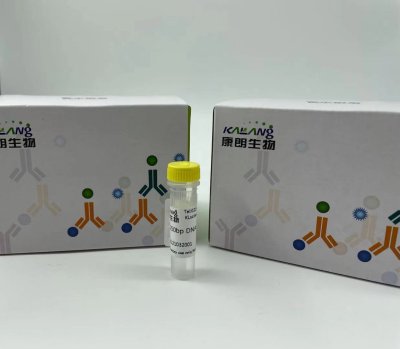
Anti-GNGT1 KL20092-001(50ul)
2021-10-11 -
Anti-GNGT1 antibody(50ul) KL20093-001
2021-10-11 -
α-tubulin mouse Monoclonal Antibody
2021-01-08 -
α-tubulin mouse Monoclonal Antibody(8F11)
2021-01-08
热门标签
- Histone H3 rabbit Polyclonal Antibody Histone H3抗体
- EGFR rabbit Polyclonal Antibody EGFR抗体
- Cy3 Conjugated
- AbFluor™ 555 Conjugated
- AbFluor™ 680 Conjugated
- AbFluor™ 350 Conjugated
- AbFluor™ 647 Conjugated
- AbFluor™ 594 Conjugated
- AbFluor™ 405 Conjugated
- Cy5 Conjugated
- AbFluor™ 488 Conjugated
- Cyclophilin B抗体 Cyclophilin B Monoclonal Antibody(2B10)
- COX IV抗体 COX IV Monoclonal Antibody(6C8)
- PCNA抗体 PCNA Monoclonal Antibody(12D10)
- FAK rabbit Polyclonal Antibody FAK抗体
邮箱:3002763590@qq.com
电话:021-61998208

扫码关注微信公众号