QQ:3002763590


客服电话:021-61998208
我们是专业的科研试剂供应服务商
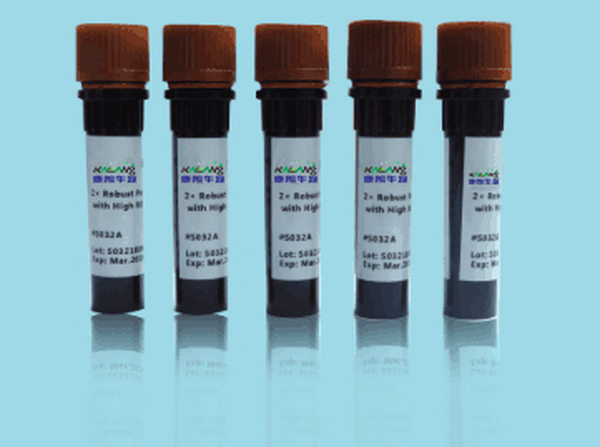
NP1L1 rabbit Polyclonal Antibody
NP1L1抗体应用:WB 1:500-2000 This gene encodes a member of the nucleosome assembly protein (NAP) family. This protein participates in DNA replication and may play a role in modulating chromatin formation and contribute to the regulation of cell proliferation. Alternative splicing results in multiple transcript variants encoding different isoforms; however, not all have been fully described. [provided by RefSeq, Apr 2015],
NPAP1 rabbit Polyclonal Antibody
NPAP1抗体应用:WB 1:500-2000 This gene is located in the Prader-Willi syndrome region on chromosome 15. This gene is biallelically expressed in adult testis and brain but is paternally imprinted in fetal brain. Defects in this gene may be associated with Prader-Willi syndrome. [provided by RefSeq, Aug 2012],
NPB rabbit Polyclonal Antibody
NPB抗体应用:WB 1:500-2000 ELISA 1:5000-20000neuropeptide B(NPB) Homo sapiens This gene encodes a member of the neuropeptide B/W family of proteins and preproprotein that is proteolytically processed to generate multiple protein products. The encoded products include neuropeptide B-23 and a C-terminally extended form, neuropeptide B-29, which are characterized by an N-terminal brominated tryptophan amino acid. Both of the encoded peptides bind with higher affinity to neuropeptide B/W (NPB/W) receptor 1 compared to the related NPB/W receptor 2. These peptides may regulate feeding, pain perception, and stress in rodents. [provided by RefSeq, Jul 2015],
NPBW1 rabbit Polyclonal Antibody
NPBW1抗体应用:WB 1:500-2000 ELISA 1:5000-20000function:Interacts specifically with a number of opioid ligands. Receptor for neuropeptides B and W, which may be involved in neuroendocrine system regulation, food intake and the organization of other signals. Has a higher affinity for neuropeptide B.,similarity:Belongs to the G-protein coupled receptor 1 family.,tissue specificity:Found in cerebellum and frontal cortex. Detected at high levels in hipppocampus, amygdala and trachea; at moderate levels in fetal brain, pituitary gland and prostate. Not in caudate, accumbens, kidney or liver. Also detected at high levels in lung carcinoma.,
NPBW2 rabbit Polyclonal Antibody
NPBW2抗体应用:WB 1:500-2000 ELISA 1:5000-20000neuropeptides B/W receptor 2(NPBWR2) Homo sapiens The protein encoded by this gene is an integral membrane protein and G protein-coupled receptor. The encoded protein is similar in sequence to another G protein-coupled receptor (GPR7), and it is structurally similar to opioid and somatostatin receptors. This protein binds neuropeptides B and W. This gene is intronless and is expressed primarily in the frontal cortex of the brain. [provided by RefSeq, Jul 2008],
NPFF1 rabbit Polyclonal Antibody
NPFF1抗体应用:WB 1:500-2000 ELISA 1:5000-20000function:Receptor for NPAF (A-18-F-amide) and NPFF (F-8-F-amide) neuropeptides, also known as morphine-modulating peptides. Can also be activated by a variety of naturally occurring or synthetic FMRF-amide like ligands. This receptor mediates its action by association with G proteins that activate a phosphatidylinositol-calcium second messenger system.,similarity:Belongs to the G-protein coupled receptor 1 family.,
NPFF2 rabbit Polyclonal Antibody
NPFF2抗体应用:WB 1:500-2000 ELISA 1:5000-20000neuropeptide FF receptor 2(NPFFR2) Homo sapiens This gene encodes a member of a subfamily of G-protein-coupled neuropeptide receptors. This protein is activated by the neuropeptides A-18-amide (NPAF) and F-8-amide (NPFF) and may function in pain modulation and regulation of the opioid system. Alternative splicing results in multiple transcript variants. [provided by RefSeq, Jan 2009],
NPHP1 rabbit Polyclonal Antibody
NPHP1抗体应用:WB 1:500-2000 ELISA 1:5000-20000nephrocystin 1(NPHP1) Homo sapiens This gene encodes a protein with src homology domain 3 (SH3) patterns. This protein interacts with Crk-associated substrate, and it appears to function in the control of cell division, as well as in cell-cell and cell-matrix adhesion signaling, likely as part of a multifunctional complex localized in actin- and microtubule-based structures. Mutations in this gene cause familial juvenile nephronophthisis type 1, a kidney disorder involving both tubules and glomeruli. Defects in this gene are also associated with Senior-Loken syndrome type 1, also referred to as juvenile nephronophthisis with Leber amaurosis, which is characterized by kidney and eye disease, and with Joubert syndrome type 4, which is characterized by cerebellar ataxia, oculomotor apraxia, psychomotor delay and neonatal breathing abnormalities, sometimes including retinal dystrophy and renal disease. Multiple transcript variants encoding diffe
NPIP rabbit Polyclonal Antibody
NPIP抗体应用:WB 1:500-2000 ELISA 1:5000-20000similarity:Belongs to the NPIP family.,similarity:Contains 1 GPS domain.,subcellular location:Colocalizes with nuclear pore complex protein NUP62.,subunit:May associate with the nuclear pore complex.,tissue specificity:Widely expressed.,
NPL4 rabbit Polyclonal Antibody
NPL4抗体应用:WB 1:500-2000 ELISA 1:5000-20000domain:Binds ubiquitinated proteins via its RanBP2-type zinc finger.,function:The ternary complex containing UFD1L, VCP and NPLOC4 binds ubiquitinated proteins and is necessary for the export of misfolded proteins from the ER to the cytoplasm, where they are degraded by the proteasome. The NPLOC4-UFD1L-VCP complex regulates spindle disassembly at the end of mitosis and is necessary for the formation of a closed nuclear envelope.,pathway:Protein degradation; proteasomal ubiquitin-dependent pathway.,similarity:Belongs to the NPL4 family.,similarity:Contains 1 RanBP2-type zinc finger.,subcellular location:Associated with the endoplasmic reticulum and nuclear.,subunit:Heterodimer with UFD1L. The heterodimer binds ubiquitinated proteins. The heterodimer binds to VCP and inhibits Golgi membrane fusion.,tissue specificity:Expressed at highest levels in brain, heart, skeletal muscle, kidney and fetal liver.,
最新动态
-
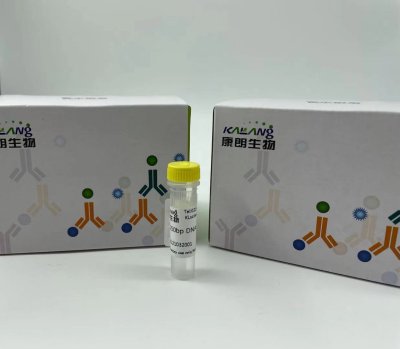
Anti-GNGT1 KL20092-001(50ul)
2021-10-11 -
Anti-GNGT1 antibody(50ul) KL20093-001
2021-10-11 -
α-tubulin mouse Monoclonal Antibody
2021-01-08 -
α-tubulin mouse Monoclonal Antibody(8F11)
2021-01-08
热门标签
- Histone H3 rabbit Polyclonal Antibody Histone H3抗体
- EGFR rabbit Polyclonal Antibody EGFR抗体
- Cy3 Conjugated
- AbFluor™ 555 Conjugated
- AbFluor™ 680 Conjugated
- AbFluor™ 350 Conjugated
- AbFluor™ 647 Conjugated
- AbFluor™ 594 Conjugated
- AbFluor™ 405 Conjugated
- Cy5 Conjugated
- AbFluor™ 488 Conjugated
- Cyclophilin B抗体 Cyclophilin B Monoclonal Antibody(2B10)
- COX IV抗体 COX IV Monoclonal Antibody(6C8)
- PCNA抗体 PCNA Monoclonal Antibody(12D10)
- FAK rabbit Polyclonal Antibody FAK抗体
邮箱:3002763590@qq.com
电话:021-61998208

扫码关注微信公众号