QQ:3002763590


客服电话:021-61998208
我们是专业的科研试剂供应服务商
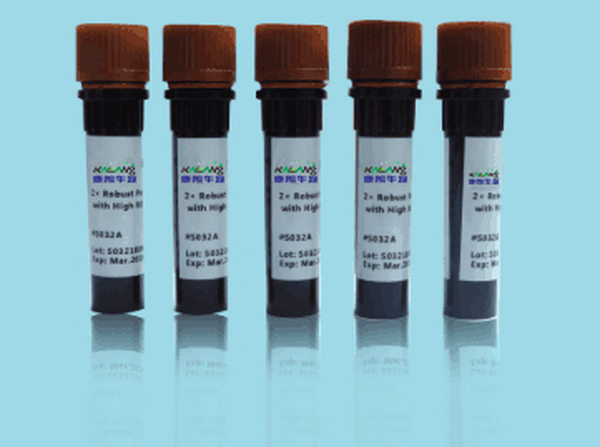
PSYR rabbit Polyclonal Antibody
PSYR抗体应用:WB 1:500-2000 ELISA 1:5000-20000function:Receptor for the glycosphingolipid psychosine (PSY) and several related glycosphingolipids. May have a role in activation-induced cell death or differentiation of T-cells.,similarity:Belongs to the G-protein coupled receptor 1 family.,tissue specificity:Predominantly expressed in thymus, spleen, lymph nodes, small intestine, lung, placenta and peripheral blood leukocytes.,
PTBP3 rabbit Polyclonal Antibody
PTBP3抗体应用:WB 1:500-2000 The protein encoded by this gene binds RNA and is a regulator of cell differentiation. The encoded protein preferentially binds to poly(G) and poly(U) sequences in vitro. Several transcript variants encoding different isoforms have been found for this gene. [provided by RefSeq, Oct 2011],
PTCD1 rabbit Polyclonal Antibody
PTCD1抗体应用:WB 1:500-2000This gene encodes a mitochondrial protein that binds leucine tRNAs and other mitochondrial RNAs and plays a role in the regulation of translation. Increased expression of this gene results in decreased mitochondrial leucine tRNA levels. Naturally occurring read-through transcription exists between upstream ATP5J2 (ATP synthase, H+ transporting, mitochondrial Fo complex, subunit F2) and this gene. [provided by RefSeq, Aug 2015],
PTH2R rabbit Polyclonal Antibody
PTH2R抗体应用:WB 1:500-2000 ELISA 1:5000-20000parathyroid hormone 2 receptor(PTH2R) Homo sapiens The protein encoded by this gene is a member of the G-protein coupled receptor 2 family. This protein is a receptor for parathyroid hormone (PTH). This receptor is more selective in ligand recognition and has a more specific tissue distribution compared to parathyroid hormone receptor 1 (PTHR1). It is activated only by PTH and not by parathyroid hormone-like hormone (PTHLH) and is particularly abundant in brain and pancreas. Alternative splicing results in multiple transcript variants. [provided by RefSeq, Jan 2013],
PTMA rabbit Polyclonal Antibody
PTMA抗体应用:WB 1:500-2000 ELISA 1:5000-20000function:Prothymosin alpha may mediate immune function by conferring resistance to certain opportunistic infections.,PTM:Covalently linked to a small RNA of about 20 nucleotides.,similarity:Belongs to the pro/parathymosin family.,
PTN12 rabbit Polyclonal Antibody
PTN12抗体应用:WB 1:500-2000 ELISA 1:5000-20000protein tyrosine phosphatase, non-receptor type 12(PTPN12) Homo sapiens The protein encoded by this gene is a member of the protein tyrosine phosphatase (PTP) family. PTPs are signaling molecules that regulate a variety of cellular processes including cell growth, differentiation, mitotic cycle, and oncogenic transformation. This PTP contains a C-terminal PEST motif, which serves as a protein-protein interaction domain, and may regulate protein intracellular half-life. This PTP was found to bind and dephosphorylate the product of the oncogene c-ABL and thus may play a role in oncogenesis. This PTP was also shown to interact with, and dephosphorylate, various products related to cytoskeletal structure and cell adhesion, such as p130 (Cas), CAKbeta/PTK2B, PSTPIP1, and paxillin. This suggests it has a regulatory role in controlling cell shape and mobility. Alternative splicing results in multiple transcript variants encoding distinct isoform
PTN13 rabbit Polyclonal Antibody
PTN13抗体应用:IHC-p 1:50-300protein tyrosine phosphatase, non-receptor type 13(PTPN13) Homo sapiens The protein encoded by this gene is a member of the protein tyrosine phosphatase (PTP) family. PTPs are signaling molecules that regulate a variety of cellular processes including cell growth, differentiation, mitotic cycle, and oncogenic transformation. This PTP is a large intracellular protein. It has a catalytic PTP domain at its C-terminus and two major structural domains: a region with five PDZ domains and a FERM domain that binds to plasma membrane and cytoskeletal elements. This PTP was found to interact with, and dephosphorylate, Fas receptor and IkappaBalpha through the PDZ domains. This suggests it has a role in Fas mediated programmed cell death. This PTP was also shown to interact with GTPase-activating protein, and thus may function as a regulator of Rho signaling pathways. Four alternatively spliced transcript variants, which encode distinct proteins, ha
最新动态
-
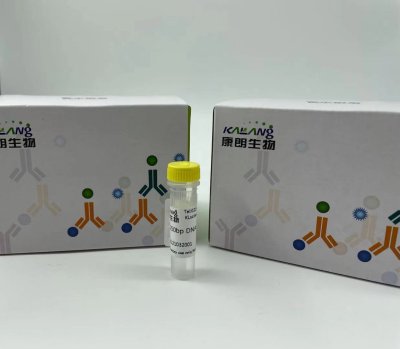
Anti-GNGT1 KL20092-001(50ul)
2021-10-11 -
Anti-GNGT1 antibody(50ul) KL20093-001
2021-10-11 -
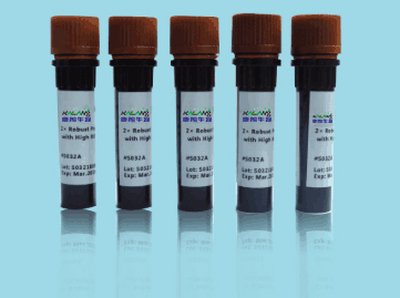
α-tubulin mouse Monoclonal Antibody
2021-01-08 -
α-tubulin mouse Monoclonal Antibody(8F11)
2021-01-08
热门标签
- Histone H3 rabbit Polyclonal Antibody Histone H3抗体
- EGFR rabbit Polyclonal Antibody EGFR抗体
- Cy3 Conjugated
- AbFluor™ 555 Conjugated
- AbFluor™ 680 Conjugated
- AbFluor™ 350 Conjugated
- AbFluor™ 647 Conjugated
- AbFluor™ 594 Conjugated
- AbFluor™ 405 Conjugated
- Cy5 Conjugated
- AbFluor™ 488 Conjugated
- Cyclophilin B抗体 Cyclophilin B Monoclonal Antibody(2B10)
- COX IV抗体 COX IV Monoclonal Antibody(6C8)
- PCNA抗体 PCNA Monoclonal Antibody(12D10)
- FAK rabbit Polyclonal Antibody FAK抗体
邮箱:3002763590@qq.com
电话:021-61998208

扫码关注微信公众号