QQ:3002763590


客服电话:021-61998208
我们是专业的科研试剂供应服务商
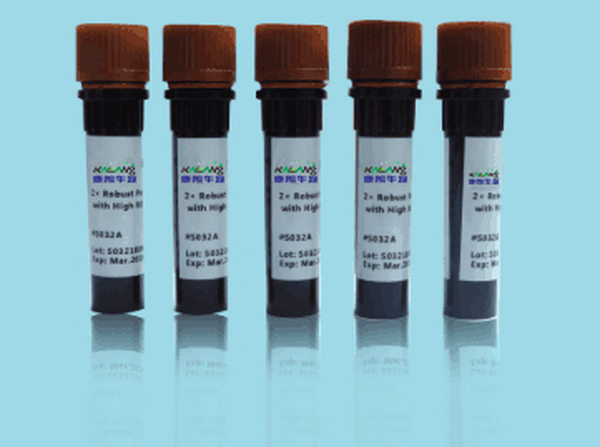
UTER rabbit Polyclonal Antibody
UTER抗体应用:WB 1:500-2000 ELISA 1:5000-20000secretoglobin family 1A member 1(SCGB1A1) Homo sapiens This gene encodes a member of the secretoglobin family of small secreted proteins. The encoded protein has been implicated in numerous functions including anti-inflammation, inhibition of phospholipase A2 and the sequestering of hydrophobic ligands. Defects in this gene are associated with a susceptibility to asthma. [provided by RefSeq, May 2010],
UTF1 rabbit Polyclonal Antibody
UTF1抗体应用:WB 1:500-2000 ELISA 1:5000-20000undifferentiated embryonic cell transcription factor 1(UTF1) Homo sapiens The protein encoded by this gene is a leucine zipper-containing transcriptional coactivator that may link the upstream activator ATF2 with the basal transcription complex. The encoded protein is closely associated with chromatin and is required for the proper differentiation of embryonic carcinoma and embryonic stem cells. Found nearly exclusively in pluripotent cells, this protein can also serve as a transcriptional repressor. [provided by RefSeq, Nov 2015],
UTRO rabbit Polyclonal Antibody
UTRO抗体应用:IHC-p 1:50-300utrophin(UTRN) Homo sapiens This gene shares both structural and functional similarities with the dystrophin gene. It contains an actin-binding N-terminus, a triple coiled-coil repeat central region, and a C-terminus that consists of protein-protein interaction motifs which interact with dystroglycan protein components. The protein encoded by this gene is located at the neuromuscular synapse and myotendinous junctions, where it participates in post-synaptic membrane maintenance and acetylcholine receptor clustering. Mouse studies suggest that this gene may serve as a functional substitute for the dystrophin gene and therefore, may serve as a potential therapeutic alternative to muscular dystrophy which is caused by mutations in the dystrophin gene. Alternative splicing of the utrophin gene has been described; however, the full-length nature of these variants has not yet been determined. [provided by RefSeq, Jul 2008],
UVRAG rabbit Polyclonal Antibody
UVRAG抗体应用:WB 1:500-2000 ELISA 1:5000-20000UV radiation resistance associated(UVRAG) Homo sapiens This gene complements the ultraviolet sensitivity of xeroderma pigmentosum group C cells and encodes a protein with a C2 domain. The protein activates the Beclin1-PI(3)KC3 complex, promoting autophagy and suppressing the proliferation and tumorigenicity of human colon cancer cells. Chromosomal aberrations involving this gene are associated with left-right axis malformation and mutations in this gene have been associated with colon cancer. [provided by RefSeq, Jul 2008],
VA0D2 rabbit Polyclonal Antibody
VA0D2抗体应用:WB 1:500-2000 ELISA 1:5000-20000function:Subunit of the integral membrane V0 complex of vacuolar ATPase. Vacuolar ATPase is responsible for acidifying a variety of intracellular compartments in eukaryotic cells, thus providing most of the energy required for transport processes in the vacuolar system. May play a role in coupling of proton transport and ATP hydrolysis.,similarity:Belongs to the V-ATPase V0D/AC39 subunit family.,subunit:V-ATPase is an heteromultimeric enzyme composed of a peripheral catalytic V1 complex (components A to H) attached to an integral membrane V0 proton pore complex (components: a, c, c', c'' and d).,tissue specificity:Kidney, osteoclast and lung.,
VAMP1 rabbit Polyclonal Antibody
VAMP1抗体应用:WB 1:500-2000 ELISA 1:5000-20000vesicle associated membrane protein 1(VAMP1) Homo sapiens Synapotobrevins, syntaxins, and the synaptosomal-associated protein SNAP25 are the main components of a protein complex involved in the docking and/or fusion of synaptic vesicles with the presynaptic membrane. The protein encoded by this gene is a member of the vesicle-associated membrane protein (VAMP)/synaptobrevin family. Mutations in this gene are associated with autosomal dominant spastic ataxia 1. Multiple alternative splice variants have been described, but the full-length nature of some variants has not been defined. [provided by RefSeq, Jul 2014],
VAMP7 rabbit Polyclonal Antibody
VAMP7抗体应用:WB 1:500-2000 ELISA 1:5000-20000vesicle associated membrane protein 7(VAMP7) Homo sapiens This gene encodes a transmembrane protein that is a member of the soluble N-ethylmaleimide-sensitive factor attachment protein receptor (SNARE) family. The encoded protein localizes to late endosomes and lysosomes and is involved in the fusion of transport vesicles to their target membranes. Alternate splicing results in multiple transcript variants.[provided by RefSeq, Jun 2010],
VANG2 rabbit Polyclonal Antibody
VANG2抗体应用:WB 1:500-2000 ELISA 1:5000-20000VANGL planar cell polarity protein 2(VANGL2) Homo sapiens The protein encoded by this gene is a membrane protein involved in the regulation of planar cell polarity, especially in the stereociliary bundles of the cochlea. The encoded protein transmits directional signals to individual cells or groups of cells in epithelial sheets. This protein is also involved in the development of the neural plate. [provided by RefSeq, Sep 2011],
VAPB rabbit Polyclonal Antibody
VAPB抗体应用:WB 1:500-2000 The protein encoded by this gene is a type IV membrane protein found in plasma and intracellular vesicle membranes. The encoded protein is found as a homodimer and as a heterodimer with VAPA. This protein also can interact with VAMP1 and VAMP2 and may be involved in vesicle trafficking. [provided by RefSeq, Jul 2008],
最新动态
-
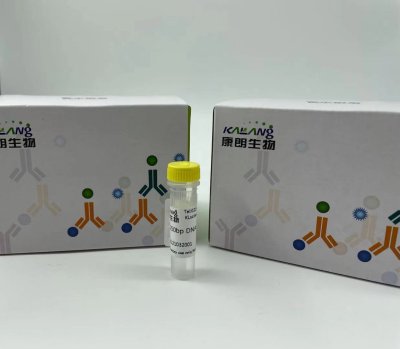
Anti-GNGT1 KL20092-001(50ul)
2021-10-11 -
Anti-GNGT1 antibody(50ul) KL20093-001
2021-10-11 -
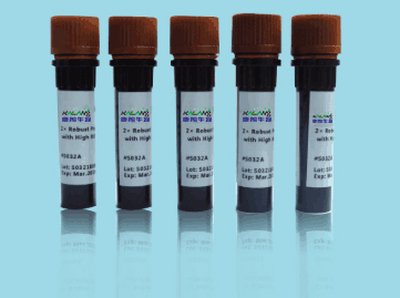
α-tubulin mouse Monoclonal Antibody
2021-01-08 -
α-tubulin mouse Monoclonal Antibody(8F11)
2021-01-08
热门标签
- Histone H3 rabbit Polyclonal Antibody Histone H3抗体
- EGFR rabbit Polyclonal Antibody EGFR抗体
- Cy3 Conjugated
- AbFluor™ 555 Conjugated
- AbFluor™ 680 Conjugated
- AbFluor™ 350 Conjugated
- AbFluor™ 647 Conjugated
- AbFluor™ 594 Conjugated
- AbFluor™ 405 Conjugated
- Cy5 Conjugated
- AbFluor™ 488 Conjugated
- Cyclophilin B抗体 Cyclophilin B Monoclonal Antibody(2B10)
- COX IV抗体 COX IV Monoclonal Antibody(6C8)
- PCNA抗体 PCNA Monoclonal Antibody(12D10)
- FAK rabbit Polyclonal Antibody FAK抗体
邮箱:3002763590@qq.com
电话:021-61998208

扫码关注微信公众号