QQ:3002763590


客服电话:021-61998208
我们是专业的科研试剂供应服务商
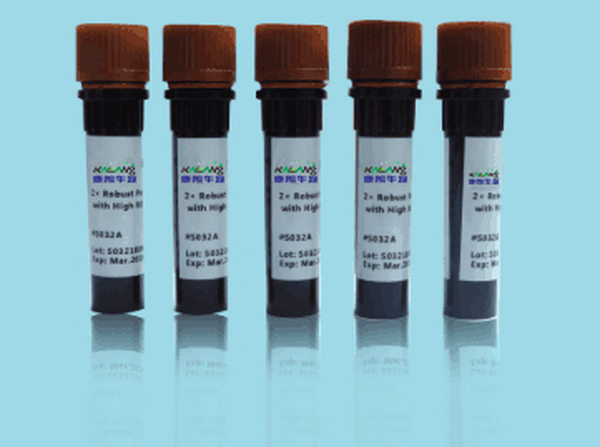
BHE22 rabbit Polyclonal Antibody
BHE22抗体应用:WB 1:500-2000This gene encodes a protein that belongs to the basic helix-loop-helix (bHLH) family of transcription factors that regulate cell fate determination, proliferation, and differentiation. A similar protein in mouse is required for the development of the dorsal cochlear nuclei, and is thought to play a role in in the differentiation of neurons involved in sensory input. The mouse protein also functions in retinogenesis. [provided by RefSeq, Oct 2016],
BID rabbit Polyclonal Antibody
BID抗体应用:Western Blot: 1/500 - 1/2000. Immunohistochemistry: 1/100 - 1/300. ELISA: 1/10000.BH3 interacting domain death agonist(BID) Homo sapiens This gene encodes a death agonist that heterodimerizes with either agonist BAX or antagonist BCL2. The encoded protein is a member of the BCL-2 family of cell death regulators. It is a mediator of mitochondrial damage induced by caspase-8 (CASP8); CASP8 cleaves this encoded protein, and the COOH-terminal part translocates to mitochondria where it triggers cytochrome c release. Multiple alternatively spliced transcript variants have been found, but the full-length nature of some variants has not been defined. [provided by RefSeq, Jul 2008],
BIG2 rabbit Polyclonal Antibody
BIG2抗体应用:Western Blot: 1/500 - 1/2000. Immunohistochemistry: 1/100 - 1/300. Immunofluorescence: 1/200 - 1/1000. ELISA: 1/20000.ADP ribosylation factor guanine nucleotide exchange factor 2(ARFGEF2) Homo sapiens ADP-ribosylation factors (ARFs) play an important role in intracellular vesicular trafficking. The protein encoded by this gene is involved in the activation of ARFs by accelerating replacement of bound GDP with GTP and is involved in Golgi transport. It contains a Sec7 domain, which may be responsible for its guanine-nucleotide exchange activity and also brefeldin A inhibition. [provided by RefSeq, Jul 2008],
Bim rabbit Polyclonal Antibody
Bim抗体应用:Western Blot: 1/500 - 1/2000. Immunohistochemistry: 1/100 - 1/300. ELISA: 1/20000.BCL2 like 11(BCL2L11) Homo sapiens The protein encoded by this gene belongs to the BCL-2 protein family. BCL-2 family members form hetero- or homodimers and act as anti- or pro-apoptotic regulators that are involved in a wide variety of cellular activities. The protein encoded by this gene contains a Bcl-2 homology domain 3 (BH3). It has been shown to interact with other members of the BCL-2 protein family and to act as an apoptotic activator. The expression of this gene can be induced by nerve growth factor (NGF), as well as by the forkhead transcription factor FKHR-L1, which suggests a role of this gene in neuronal and lymphocyte apoptosis. Transgenic studies of the mouse counterpart suggested that this gene functions as an essential initiator of apoptosis in thymocyte-negative selection. Several alternatively spliced transcript variants of this gene have been identified. [provided by RefSeq, Ju
BIN3 rabbit Polyclonal Antibody
BIN3抗体应用:WB 1:500-2000 The product of this gene is a member of the BAR domain protein family. The encoded protein is comprised solely of a BAR domain which is predicted to form coiled-coil structures and proposed to mediate dimerization, sense and induce membrane curvature, and bind small GTPases. BAR domain proteins have been implicated in endocytosis, intracellular transport, and a diverse set of other processes. [provided by RefSeq, Jul 2008],
BinCARD rabbit Polyclonal Antibody
BinCARD抗体应用:Immunohistochemistry: 1/100 - 1/300. ELISA: 1/40000.function:Plays a role in inhibiting the effects of BCL10-induced activation of NF-kappa-B. May inhibit the phosphorylation of BCL10 in a CARD-dependent manner.,PTM:Isoform 2 is phosphorylated upon DNA damage, probably by ATM or ATR.,similarity:Contains 1 CARD domain.,subcellular location:Co-expression with BCL10 induced translocation from nucleus to cytosol.,subunit:Associates with BCL10 by CARD-CARD interaction.,tissue specificity:Expressed in ovary, testis, placenta, skeletal muscle, kidney, lung, heart and liver (at protein level). Expressed in thymus and brain.,
BL1S3 rabbit Polyclonal Antibody
BL1S3抗体应用:WB 1:500-2000This gene encodes a protein that is a component of the BLOC1 multi-subunit protein complex. This complex is necessary for the biogenesis of specialized organelles of the endosomal-lysosomal system, including platelet dense granules and melanosomes. Mutations in this gene cause Hermansky-Pudlak syndrome 8, a disease characterized by lysosomal storage defects, bleeding due to platelet storage pool deficiency, and oculocutaneous albinism. [provided by RefSeq, Jul 2008],
BLBP rabbit Polyclonal Antibody
BLBP抗体应用:WB 1:500-2000, ELISA 1:10000-20000fatty acid binding protein 7(FABP7) Homo sapiens The gene encodes a small, highly conserved cytoplasmic protein that bind long-chain fatty acids and other hydrophobic ligands. The encoded protein is important in the establishment of the radial glial fiber in the developing brain. Alternative splicing and promoter usage results in multiple transcript variants encoding different isoforms. Pseudogenes of this gene are found on multiple chromosomes. [provided by RefSeq, Jan 2016],
BLC rabbit Polyclonal Antibody
BLC抗体应用:Western Blot: 1/500 - 1/2000. IHC-p: 1:100-300 ELISA: 1/20000.C-X-C motif chemokine ligand 13(CXCL13) Homo sapiens B lymphocyte chemoattractant, independently cloned and named Angie, is an antimicrobial peptide and CXC chemokine strongly expressed in the follicles of the spleen, lymph nodes, and Peyer's patches. It preferentially promotes the migration of B lymphocytes (compared to T cells and macrophages), apparently by stimulating calcium influx into, and chemotaxis of, cells expressing Burkitt's lymphoma receptor 1 (BLR-1). It may therefore function in the homing of B lymphocytes to follicles. [provided by RefSeq, Oct 2014],
Blk rabbit Polyclonal Antibody
Blk抗体应用:Immunohistochemistry: 1/100 - 1/300. ELISA: 1/40000.BLK proto-oncogene, Src family tyrosine kinase(BLK) Homo sapiens This gene encodes a nonreceptor tyrosine-kinase of the src family of proto-oncogenes that are typically involved in cell proliferation and differentiation. The protein has a role in B-cell receptor signaling and B-cell development. The protein also stimulates insulin synthesis and secretion in response to glucose and enhances the expression of several pancreatic beta-cell transcription factors. [provided by RefSeq, Aug 2010],
最新动态
-
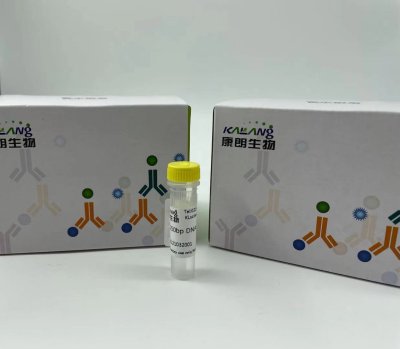
Anti-GNGT1 KL20092-001(50ul)
2021-10-11 -
Anti-GNGT1 antibody(50ul) KL20093-001
2021-10-11 -
α-tubulin mouse Monoclonal Antibody
2021-01-08 -
α-tubulin mouse Monoclonal Antibody(8F11)
2021-01-08
热门标签
- Histone H3 rabbit Polyclonal Antibody Histone H3抗体
- EGFR rabbit Polyclonal Antibody EGFR抗体
- Cy3 Conjugated
- AbFluor™ 555 Conjugated
- AbFluor™ 680 Conjugated
- AbFluor™ 350 Conjugated
- AbFluor™ 647 Conjugated
- AbFluor™ 594 Conjugated
- AbFluor™ 405 Conjugated
- Cy5 Conjugated
- AbFluor™ 488 Conjugated
- Cyclophilin B抗体 Cyclophilin B Monoclonal Antibody(2B10)
- COX IV抗体 COX IV Monoclonal Antibody(6C8)
- PCNA抗体 PCNA Monoclonal Antibody(12D10)
- FAK rabbit Polyclonal Antibody FAK抗体
邮箱:3002763590@qq.com
电话:021-61998208

扫码关注微信公众号